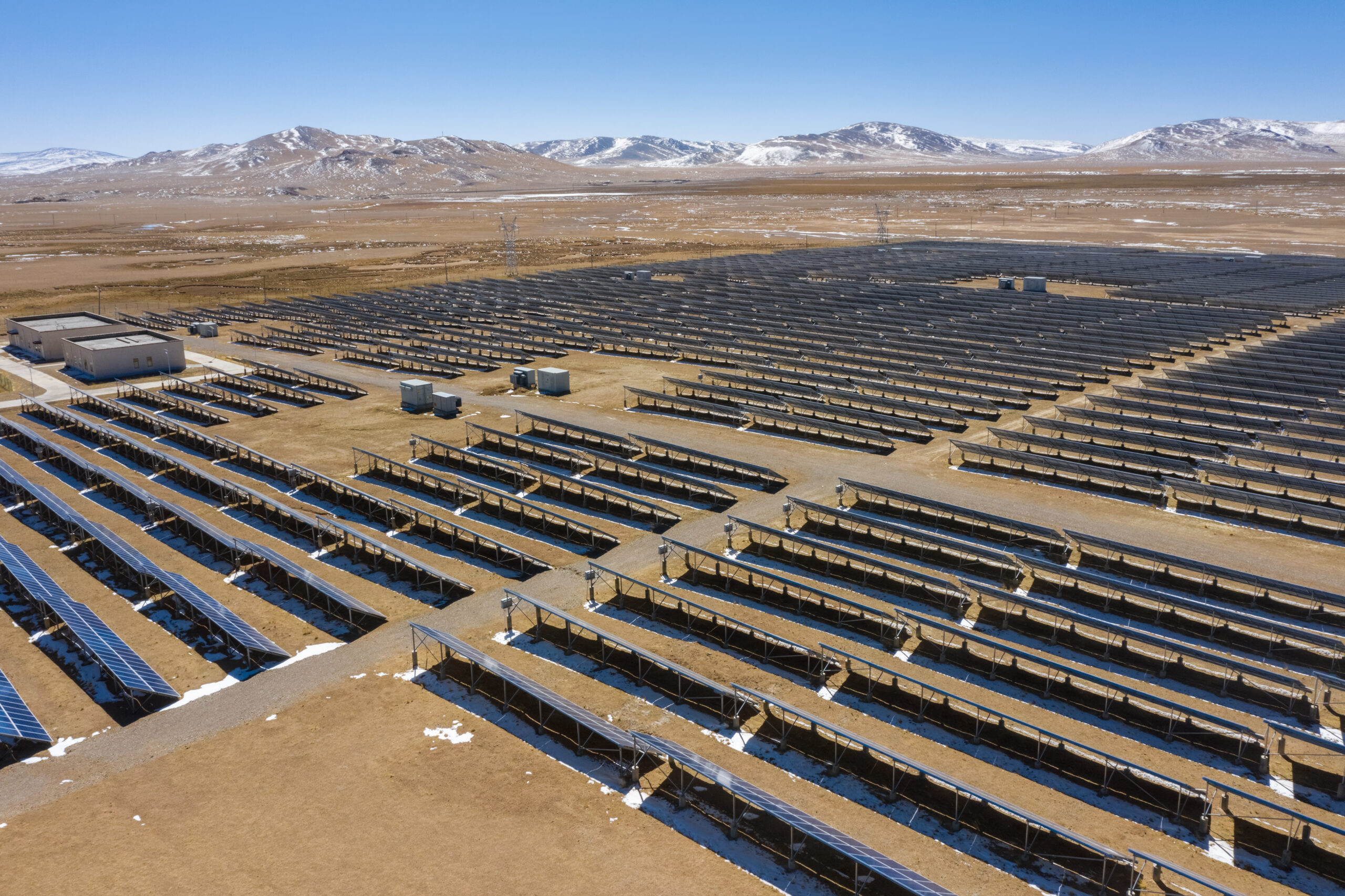
The Pentagon Is Building a 90-Day Fortress. Is Your Retirement Built the Same Way?

The Pentagon has a new plan that asks a simple question: what happens if the outside world stops cooperating? The plan is called FORTRESS, and its goal is for major U.S. military bases to keep running for up to 90 days without the civilian power grid or outside supply chains. As a tax attorney who has spent most of my career helping people get their retirement money out of the Wall Street box, I see a useful lesson here for retirement investors. Self-Directed IRA diversification is how you apply that same thinking to your own nest egg, and the plan’s five pillars make a surprisingly good checklist for doing it.
Key Takeaways
- FORTRESS aims to keep major U.S. bases running for up to 90 days without outside power, water, fuel, or supply chains.
- A portfolio of only publicly traded stocks, bonds, and funds depends on one system, which is the retirement version of a single point of failure.
- A Self-Directed IRA lets you hold real estate, precious metals, private companies, farmland, and energy assets with tax-advantaged dollars.
- IRA-owned gold must stay with an approved custodian or depository, and keeping it at home can turn the whole purchase into a taxable distribution.
- The prohibited transaction rules are your perimeter, so no personal use of IRA assets and no deals with disqualified persons.
What Is the Pentagon’s FORTRESS Plan?
Defense Secretary Pete Hegseth unveiled the initiative in a speech at Quantico in September 2026, and a Pentagon memo dated September 30 directed the creation of a FORTRESS America program office. The name stands for Federal Operations for Resilience, Troop Resources, Energy, Supply, and Survivability. Hegseth described it as the nation’s “insurance policy.”
The headline goal, reported in late October, is that major bases in the continental U.S. should be able to sustain essential operations for at least 90 days on their own. That covers electricity, water, fuel, and communications. The Assistant Secretary of Defense for Energy, Installations, and Environment, Dale Marks, has described the effort as resting on five pillars:
- Energy independence, using microgrids, battery storage, natural gas, geothermal, and in some cases nuclear microreactors.
- Domestic supply chain resilience, reducing reliance on foreign sources for rare earth magnets, semiconductors, titanium, and similar inputs.
- Installation hardening, including physical and cyber protections.
- Strategic reserves, meaning 90-day stockpiles of fuel, parts, munitions, and other critical supplies.
- Space and electromagnetic resilience, so command systems keep working if satellites or communications go down.
The Pentagon has not released a cost estimate or a firm timeline, and officials have said full implementation across roughly 500 continental bases could take decades. They’ve also said they want to share costs with private industry through public-private partnerships rather than going back to Congress for all of it.
I’m not writing this to predict a crisis or to tell you to buy defense stocks. I’m writing it because the logic behind FORTRESS is the same logic I’ve been preaching about retirement investing for years.
Your Retirement Portfolio Probably Has a Single Point of Failure
The Pentagon’s concern is simple. Bases that rely entirely on the civilian grid and global supply chains are only as strong as those outside systems. If the grid goes down, the base goes down with it.
Most retirement accounts are built the same way. The typical IRA or 401(k) holds stocks, bonds, mutual funds, and ETFs, and every one of those assets lives inside the same public market system. Wall Street calls a mix of 30 funds “diversified,” but when markets fall hard, those holdings tend to fall together. It’s one grid with a lot of outlets plugged into it.
I’ve never thought it made sense that the financial industry decides what Americans can hold for retirement. The tax code doesn’t limit you to publicly traded securities. It lists only a few things an IRA can’t own, mainly life insurance and most collectibles. Everything else is fair game, as long as you follow the rules. The big brokerage firms just don’t offer those options, because they make their money on the products they sell.
Applying the FORTRESS Pillars to Self-Directed IRA Diversification
A Self-Directed IRA is the same IRA governed by the same Internal Revenue Code. The difference is that you choose the investments rather than a broker’s menu. Here’s how the Pentagon’s five pillars translate into a retirement plan.
| FORTRESS Pillar | Retirement Equivalent | Self-Directed IRA Examples | Rule to Watch |
|---|---|---|---|
| Energy independence | Income that doesn’t depend on the stock market | Rental real estate, oil and gas royalties, farmland leases | Leveraged real estate can trigger tax on debt-financed income |
| Supply chain resilience | More than one source of return | Private companies, private equity funds, private loans | No investing with disqualified persons |
| Strategic reserves | Assets that hold value through stress | IRS-approved gold, silver, platinum, and palladium | Metals must stay with an approved custodian or depository |
| Installation hardening | Protecting the account’s tax status | Clean documentation and arm’s-length deals | Prohibited transaction rules under IRC Section 4975 |
| Space and electromagnetic resilience | Ability to act quickly | Checkbook control through an IRA LLC | Every payment must be for the IRA’s benefit only |
Energy Independence: Income That Doesn’t Come From Wall Street
The Pentagon wants bases that generate their own power. For a retirement account, the equivalent is assets that produce their own income regardless of what the S&P 500 does on a given day. Rental property is the most common example. Rent checks keep arriving whether the market is up or down.
Energy assets fit here too, which makes sense given that FORTRESS is partly an energy story. A Self-Directed IRA can hold oil and gas investments, but the structure matters. Royalty interests generally don’t create tax inside the IRA, while working interests usually generate unrelated business taxable income (UBTI), which can create a tax bill even inside a tax-advantaged account. Farmland is another option, where the IRA owns the land and collects lease income from a farmer who isn’t a disqualified person.
Supply Chain Resilience: More Than One Source of Return
One FORTRESS requirement I find interesting is that the most critical supplies should have at least two qualified sources. If one supplier fails, the other keeps things moving.
Your retirement should work the same way. If all your growth depends on public equities, you have one supplier. Private investments, such as startups, private equity funds, and private loans secured by real estate, give you a second pathway that doesn’t move in lockstep with the stock market. They come with their own risks, including illiquidity, limited information, and the real possibility of losing your entire investment, so they belong alongside a traditional portfolio rather than in place of it.
Strategic Reserves: Precious Metals the IRS Allows
The Pentagon is stockpiling fuel, parts, and critical minerals. Plenty of investors take the same approach with gold and silver, and a Self-Directed IRA is a tax-efficient way to do it.
The tax code generally treats collectibles purchased by an IRA as an immediate distribution. The IRS explains that certain gold, silver, and platinum coins, along with bullion meeting minimum fineness standards, are carved out of that rule, but only if a bank or approved non-bank trustee keeps physical possession of it. That last condition is where people get burned, and I’ll come back to it below.
Installation Hardening: Compliance Is Your Perimeter
The Pentagon is spending money on hardened structures and cyber defenses because a resilient system is worthless if someone can walk through the front gate. In a Self-Directed IRA, your perimeter is the prohibited transaction rules.
Under IRC Section 4975, your IRA can’t do business with disqualified persons. That includes you, your spouse, your parents and grandparents, your children and their spouses, and entities you control. Your IRA can’t buy property from your son, lend money to your business, or pay you a fee for managing its real estate. If a prohibited transaction occurs, the IRA can lose its tax-advantaged status, and the entire account may be treated as distributed as of the first day of that year. The IRS overview of prohibited transactions is worth reading, and we’ve broken the rules down in detail in our guide to prohibited transactions in Self-Directed IRAs.
Space and Electromagnetic Resilience: The Ability to Act Quickly
FORTRESS puts a lot of weight on keeping command and control working when normal channels fail. For an investor, the parallel is being able to act when an opportunity shows up instead of waiting days for a custodian to process paperwork.
That’s what a Checkbook IRA provides. Your Self-Directed IRA invests in a special-purpose LLC, you serve as the manager, and you can write checks or wire funds for investments directly from the LLC’s bank account. Speed is useful for real estate closings and private deals with short deadlines. The trade-off is that you carry more responsibility for keeping every transaction clean, because there’s no custodian reviewing each payment before it goes out.
What a Self-Directed IRA Can’t Do: Your Retirement Isn’t a Bunker
The FORTRESS headlines have set off a wave of interest in personal preparedness, and I’ve already heard from people asking whether their IRA can pay for it. The answer is no. An IRA is an investment account, and its assets have to be held for investment, not personal use.
That means your IRA can’t buy a generator for your house, a stockpile of food, a cabin you plan to retreat to, or rural land you intend to live on. Even if the IRA owns a property, you and your family can’t use it, stay in it, or store your own things there. Those would be prohibited transactions.
Home storage of IRA gold falls into the same category, and it’s the most common mistake I see. Some promoters have marketed “home storage gold IRAs” built around an IRA-owned LLC that keeps the coins in the owner’s safe. In McNulty v. Commissioner, decided in November 2021, the Tax Court looked at exactly that setup. The taxpayers had their IRA LLC buy American Eagle coins and kept them at home, and the court found they had unrestricted control over the coins. The result was that the purchases were treated as taxable distributions, with penalties on top. If you want metals in your IRA, they belong with an approved depository. We explain why in our post on whether you can hold a precious metals IRA without a depository.
Book a free call with a self-directed retirement specialist
- Review your self-directed retirement options
- Learn about investing in alternative assets
- Get all of your questions answered
Can You Invest in the FORTRESS Supply Chain With Your IRA?
The Pentagon has said openly that it wants private capital involved, whether through public-private partnerships, rare earth producers, microreactor developers, or manufacturers that can convert to defense production in a crisis. The Army’s Janus microreactor program alone has announced up to $2.2 billion in awards. When the government says it wants private capital, private companies in that space raise money, and some of those offerings are open to accredited investors.
A Self-Directed IRA can invest in a private company or fund in these sectors, just as it can invest in any other private business. A few points deserve attention before you do it:
- Know the tax structure. Buying shares of a C corporation generally doesn’t create UBTI. Investing through an LLC or partnership that runs an active business usually does, and the IRA may owe tax and need to file Form 990-T.
- Watch for conflicts if you work in the industry. Many defense engineers and consultants want to invest in companies they know well. That’s often fine, but your IRA can’t invest in a company that you and your family own 50% or more of, and you can’t use the investment to secure a personal benefit, such as a job or a consulting fee.
- Do real due diligence. Hype follows government spending. A press release about a Pentagon contract isn’t the same as a viable business, and private investments are hard to exit.
When I discovered the flexibility of the Self-Directed IRA back in 2008, while researching a client question, it took me two hours in a law library to find the answer. What struck me then still strikes me today: the rules have always allowed this kind of investing, but almost nobody was telling people about it. That’s why I started IRA Financial. Today we support more than 27,000 active accounts and over $8 billion in assets under administration, for a flat $495 annual fee on the Self-Directed IRA, and our in-house tax and ERISA specialists spend a lot of time on structure before a client makes a deal.
Final Thoughts
FORTRESS is a long-term project with no price tag yet and a timeline measured in years, maybe decades. What I take from it is the mindset. The Pentagon has decided that depending on a single outside system is a risk it doesn’t want to carry, so it’s building redundancy, reserves, and its own sources of power.
You can make the same decision about your retirement. A Self-Directed IRA lets you add real estate, precious metals, private businesses, and energy assets alongside the stocks and bonds you already own, while keeping the tax benefits of an IRA. You don’t need to expect a crisis to see the value in a portfolio that doesn’t depend on one system to survive. You just need to build it on purpose, and follow the rules that keep it standing.
Frequently Asked Questions
What is the Pentagon’s FORTRESS plan?
FORTRESS is a Pentagon initiative, outlined in a September 30, 2026 memo, to make major U.S. military bases self-sufficient. The goal is for bases in the continental U.S. to sustain essential operations, including power, water, fuel, and communications, for at least 90 days without the civilian grid or outside supply chains.
What is Self-Directed IRA diversification?
Self-Directed IRA diversification means using a Self-Directed IRA to hold assets beyond publicly traded stocks, bonds, and funds. Those can include real estate, precious metals, private companies, private loans, farmland, and energy investments. The account keeps the same tax advantages as any other IRA, as long as you follow the IRS rules.
Can I use my IRA to prepare for an emergency?
No. An IRA has to hold assets for investment, not personal use. Your IRA can’t buy a generator, food supplies, or a property you or your family will use. Doing so would be a prohibited transaction, and the IRA could lose its tax-advantaged status, with the entire account treated as distributed.
Can I store IRA gold at home?
No. The IRS requires IRA-owned gold, silver, platinum, and palladium to be held by a bank or approved non-bank trustee. In McNulty v. Commissioner, the Tax Court treated gold coins kept at the IRA owner’s home as taxable distributions. Keep IRA metals with an approved depository to protect their tax status.
Can my Self-Directed IRA invest in defense or energy companies?
Yes. A Self-Directed IRA can invest in private companies and funds in any sector, including defense, energy, and critical minerals. Watch for unrelated business taxable income if the investment is an LLC or partnership running an active business, and avoid any company that you and your family own 50% or more of.
This content is for educational purposes only and does not constitute legal, tax, or investment advice. Consult a qualified professional before making any investment decisions.

Related Articles

Cattle and Livestock Investing in a Self-Directed IRA
Every few months a rancher or farmer calls me to ask whether they can put cattle in their retirement account. They can. Livestock investing in a…

Self-Directed IRA Year-End Checklist (FMV, Form 5498)
Year-end is when Self-Directed IRA owners do the housekeeping that keeps an account compliant and the reporting clean. Alternative assets don’t have…

Oil and Gas Investments in a Self-Directed IRA
Energy is one of the oldest alternative investments around, and plenty of retirement savers want a piece of the cash flow that comes from oil and gas…