

Can a 403(b) Be Converted to Roth?
Can a 403(b) Be Converted to Roth?
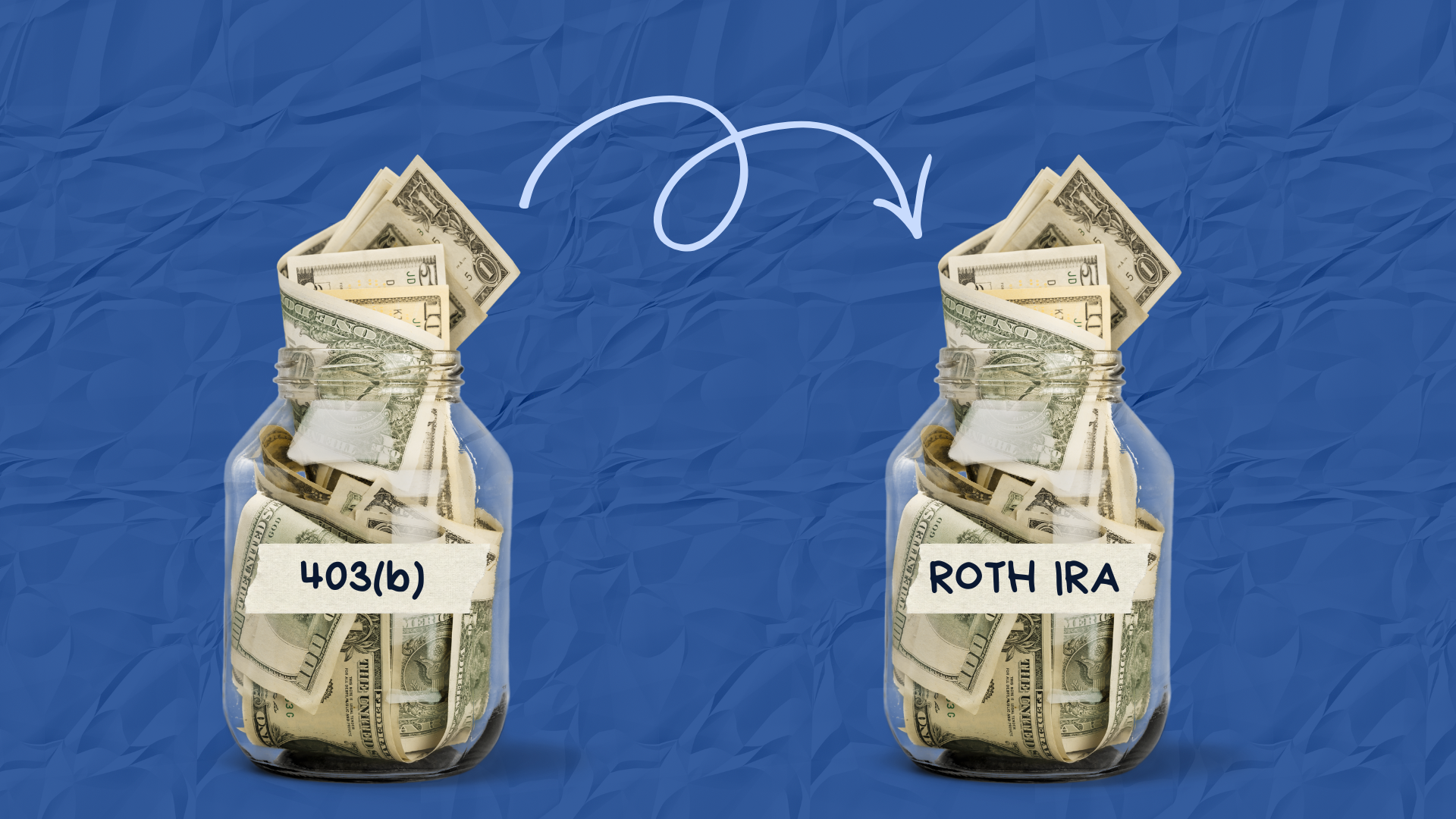
If you are asking whether a 403(b) can be converted to a Roth IRA, the short answer is yes. But how you do it, and whether it makes sense for your situation, depends on a few key factors that are worth understanding before you act.
I have worked with thousands of 403(b) participants over the years, and this is one of the most common questions I get. The good news is that you have real options. The mistake most people make is either not knowing those options exist or waiting too long to use them.
What Is a 403(b) and Who Has One?
A 403(b) plan, sometimes called a tax-sheltered annuity, is a retirement plan offered by public schools, churches, and certain 501(c)(3) organizations. If you work in education or the nonprofit world, there is a good chance this is your version of a 401(k).
The core appeal is straightforward. You defer taxes on contributions and let your retirement savings grow over time. What a lot of people do not realize is that most modern 403(b) plans also offer Roth options, including the ability to convert pretax funds to Roth. That flexibility is more valuable than most participants recognize.
What Types of Contributions Can You Make?
Before getting into conversion strategy, it helps to understand the types of contributions a 403(b) can include.
Elective deferrals are your salary contributions. You can make these on a pretax or Roth basis. For 2026, the base contribution limit is $24,500. If you are age 50 or older, you can contribute an additional $8,000 as a catch-up contribution, bringing your total elective deferral limit to $32,500. If you are between ages 60 and 63, the SECURE Act 2.0 enhanced catch-up applies instead, allowing an additional $11,250 for a total elective deferral limit of $35,750.
Employer contributions include matching or discretionary contributions made by your organization. These are not taxed until you withdraw the funds. Combined with employee contributions, total annual additions across all 403(b) accounts are capped at $72,000 for 2026.
Designated Roth contributions are made with after-tax dollars, but the growth and qualified withdrawals are completely tax free. As long as you are over age 59 and a half and meet the five-year rule, distributions come out with no tax owed. Most modern 403(b) plans offer a Roth option, which gives you real flexibility in how you build your retirement savings between tax-deferred and tax-free growth.
The Two Paths to Roth Conversion
There are two ways to convert a 403(b) to Roth status. Which one is available to you depends on your plan and your employment situation.
The first is an in-plan Roth conversion. If your 403(b) plan offers a Roth option, you may be able to convert some or all of your pretax balance directly within the plan. You will owe ordinary income tax on the amount converted in the year you do it, but from that point forward, the converted funds grow tax free. When you take qualified distributions in retirement, you pay nothing.
The second path is a rollover to a Roth IRA. If your plan does not offer an in-plan conversion, or if you want more flexibility and investment options than your plan allows, you can roll your 403(b) into a Roth IRA after a qualifying triggering event. The tax treatment is the same: you pay income tax on the converted amount now, and the money grows tax free from that point forward.
Both paths lead to the same destination. The right one depends on your plan’s rules, your tax situation, and what you want to do with the money once it is converted.
What Is a Triggering Event and Why Does It Matter?
If you are still employed by the organization sponsoring your 403(b), you generally cannot roll the funds out of the plan until a triggering event occurs. Common triggering events include leaving your employer, retiring, reaching age 59 and a half, or qualifying for an in-service withdrawal if your plan allows it.
This is where I see a lot of people get stuck. They want to convert but assume they have to wait until retirement. That is not always true. If you are over 59 and a half, many plans will allow an in-service distribution even while you are still working, which opens the door to a rollover and conversion without requiring you to leave your job.
If you are not yet at that threshold and your plan does not offer an in-plan conversion, the honest answer is that you may need to wait for the right triggering event. But that waiting period is a good time to plan, because the timing and amount of your conversion will have a direct impact on your tax bill.
Book a free call with a self-directed retirement specialist
- Review your self-directed retirement options
- Learn about investing in alternative assets
- Get all of your questions answered
Why Convert at All? The Case for Going Roth
When you convert pretax 403(b) funds to Roth, you are making a bet that paying taxes now is better than paying them later. In my experience, that bet is right far more often than people expect.
Here is when Roth conversion tends to make the most sense. If you expect to be in a higher tax bracket in retirement than you are today, paying tax now at a lower rate is straightforward math. If you want tax diversification, meaning some money that will never be taxed again regardless of what Congress does to rates in the future, a Roth account gives you that. If you are holding assets with significant long-term growth potential, converting now means all of that future growth is tax free. And if you want to avoid Required Minimum Distributions, Roth IRAs have no RMDs during the original owner’s lifetime, which means you can let the money compound as long as you want.
I often tell clients that the Roth IRA is the best legal tax shelter available to everyday Americans. Converting a 403(b) to Roth is one of the most direct ways to take advantage of it.
What SECURE Act 2.0 Changes in 2026
A few updates under SECURE Act 2.0 are worth knowing as you think through your conversion strategy.
Starting in 2026, if your prior year FICA wages exceed approximately $150,000, catch-up contributions to your 403(b) must be made as designated Roth contributions rather than pretax. This does not affect your ability to convert existing pretax funds. It only changes how future catch-up contributions are classified if you are a higher earner.
Also starting in 2026, participants between ages 60 and 63 can make enhanced catch-up contributions of up to $11,250, bringing total possible contributions to approximately $72,000 for that age group. If you are in that window and have not maxed out your contributions, this is worth paying close attention to.
These changes do not complicate the conversion question, but they do affect how you should be thinking about contributions and tax strategy in the years leading up to a conversion.
Rolling Into a Self-Directed IRA: When It Makes Sense
If your 403(b) plan limits you to a menu of mutual funds and annuities and you want more control over how your retirement money is invested, rolling into a Self-Directed IRA before or after conversion is worth considering.
A Self-Directed IRA opens the door to a much broader range of investments, including real estate, private lending, private equity, physical precious metals, and more. For investors who already understand alternative assets and want to put that knowledge to work inside a tax-advantaged structure, this flexibility can be significant.
The process works as follows. After a triggering event, you request a direct rollover from your 403(b) to a Self-Directed IRA. The funds move directly from the plan administrator to the IRA custodian, preserving their tax-deferred status with no current tax event. From there, you can invest across a much wider universe of assets and convert to a Self-Directed Roth IRA on your own timeline based on your broader tax strategy.
In my experience, this is where sophisticated investors really start to see the difference between a retirement account that is simply holding assets and one that is actively working as part of a wealth building strategy.
Final Thoughts
Yes, a 403(b) can be converted to Roth. You have two paths to get there, and both work. The more important questions are when to convert, how much to convert in a given year, and whether to do it inside your current plan or through a rollover to a Self-Directed IRA.
Those decisions come down to your current tax rate, your expected tax rate in retirement, your investment goals, and how much flexibility you want over your assets going forward.
Structure and timing matter enormously here. A conversion done without planning can result in an unnecessarily large tax bill. Done correctly, it can set you up for decades of tax-free growth.
If you are a 403(b) participant and want to understand which path makes the most sense for your situation, IRA Financial offers free consultations with retirement specialists who can walk you through your options and help you build a plan that fits your specific circumstances.

Related Articles



Carried Interest in Your Roth IRA: What Investment Professionals Need to Know
For private equity managers, venture capital sponsors, real estate syndicators, and hedge fund managers, a carried interest is often the most…

Why I Support the Trump Account: A Tax Attorney’s Perspective
As a tax attorney, I spend my days thinking about one thing: how to legally help Americans keep more of their money and build long-term wealth. For…

The Rise of Progressive Politics and the Roth IRA: Why Locking In Tax-Free Wealth Matters More Than Ever
If there is one lesson I have learned during more than two decades practicing tax law, it is this: tax laws never stand still. Congress changes.…
