

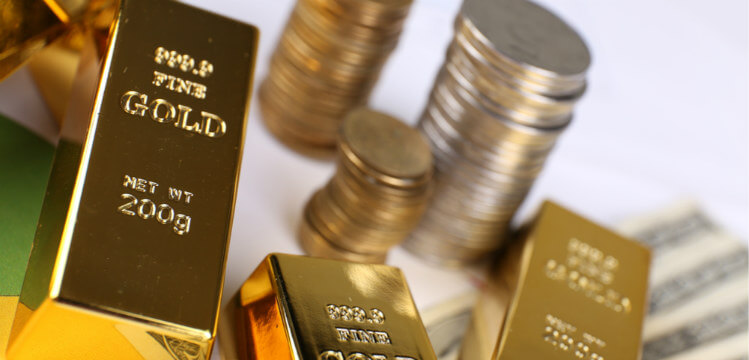
Investing in Precious Metals with Your Retirement Account

It has been almost 50 years since the establishment of IRAs. Yet most retirement account holders are still not aware that they can buy real estate, precious metals, and other alternative assets with an IRA (individual retirement account).
By using a self-directed IRA, an IRA holder can make traditional as well as alternative asset investments. Such investments include:
- Real estate
- Notes
- Tax liens
- Precious metals
- Cryptocurrencies
- Private businesses
In fact, the Internal Revenue Code only describes two assets you cannot invest in: collectibles and the prohibited transactions under IRS 4975. Code Sections 408 and 4975 prohibit Disqualified Persons from engaging in certain types of transactions, but in general, the self-directed IRA can make just about any investment.
Because of advertising by precious metals dealers, more people are becoming aware that they can invest in precious metals with retirement funds. In fact, as an IRA investor, you can purchase some of the most popular metals, such as gold, silver, and palladium.
Individual retirement accounts can even hold certain coins. The IRC has a list of coins and precious metals that you can purchase, because the IRC doesn’t consider them to be “collectibles.” You can find this list in IRC Section 408(m). Section (m) applies to both IRAs and 401(k) plans.
Investing in Precious Metals
Gold, palladium, and silver are always a good investment, especially when being held for retirement. With a Self-Directed IRA, investors can devote their funds to many different alternative assets that are not as affected by stock market fluctuations and other volatility.
Alternative assets are investments outside of traditional investments. Common examples of alternative investments include real estate, private equity, precious metals, such as gold, and venture capital investments. Whereas traditional investments include stocks, bonds and bank CDs. Alternative investments are more complex than traditional investments, which is why they appear to be better suited for “accredited” or “qualified” investors.
Interest in precious metals has grown further since the COVID-19 pandemic. A surge in inflation, combined with record government spending, rapidly rising interest rates, and ongoing geopolitical tension, pushed the price of everyday goods higher across the board, from groceries and housing to automobiles and travel. That environment renewed investor focus on protecting purchasing power, and it is one of the main reasons more retirement investors now consider gold, silver, platinum, and palladium as part of a diversified portfolio.
Is Gold a Good Investment?
Recently, there has been much discussion over the impact of alternative investments with the recent Stock Market downturn. The price of Gold and other precious metals have remained high over the past two years. As the future of gold appears more and more favorable, is now the time to buy?
IG Index contributor and author of the Brookville Capital Newsletter, Simon Popple reiterates what every investor should know: investing is all about timing.
“For the past few years there have been many other, more traditional investments that have been doing very well,” Popple explains. “But all these markets are either at or close to all-time highs, so people are being forced to look elsewhere.”
Gold is an inflation hedge and is a more attractive investment during times of inflation. As the cost of the U.S. dollar declines, the value of gold rises. With the current global financial market, the latent inflationary fears have rebounded and as a result, more individuals are turning to gold investments.
Certainty in an Uncertain World
“In the current market, you have a lot to worry about,” says Popple. “For many, physical gold provides a degree of certainty in an uncertain world.”
The importance of retirement portfolio diversification has increased with the devalue of currencies and the concerns of debt and inflation.
Self-Directed retirement plans, such as the Self-Directed IRA, are perfect retirement vehicles for retirement diversification. For example, retirement investors have the ability to purchase traditional assets, such as stocks and bonds, but they can also purchase alternative assets, like gold, to mitigate risk of investments moving in the same direction.
“Bonds and the U.S. dollar used to be viewed as the go-to assets in weak markets,” says Popple. “But with many bonds offering little or negative yield, investing where you’re going to lose money does not make a huge amount of sense.”
Palladium Emerging as a Hot Investment
Unlike gold and silver, palladium has been relatively ignored by self-directed IRA investors over the years. However, over the last year or so investors are starting to look more positively at palladium as an appropriate investment for their retirement account.
On March 19, 2019, palladium rose to an all-time high as the supply outlook tightened further, while gold dipped ahead of an interest rate decision in the United States.
Spot palladium hit a record $1,608 an ounce earlier before easing back to trade 0.29 percent lower at $1,591.85. Because of the tight supply in the palladium market, along with Russia’s threat of potentially cutting supply, the Palladium market has heated up over the last several months. However, the main reason the price of palladium has increased over the years is because its primary use is as an emissions reducing catalyst in automobiles and gasoline engines.
Common Uses of Palladium
In general, about 80 percent of palladium ends up in the exhaust systems in cars, where it helps turn toxic pollutants into less-harmful carbon dioxide and water vapor. It is also used in electronics, dentistry and jewelry. The metal is mined primarily in Russia and South Africa.
Depending on where the supply goes, the price of palladium may increase in the future. Some self-directed IRA and solo 401(k) plan investors are counting on this.
Buying Silver with Retirement Funds
Silver prices have climbed higher in the last few weeks than they have been in years, lifted by factors such as soaring investor demand for precious metals. Silver has climbed a whopping 68% since the middle of March. Almost all asset classes tanked at the start of this crisis. However, silver has made a remarkable improvement. Investors are encouraged by the steps governments and central banks have taken to strengthen an economy decimated by COVID-19.
In addition, silver prices have also benefited from the reopening of factories in the U.S., China and elsewhere. Silver has industrial applications, medical purposes, and use in consumer electronics, among other uses. From jewelry and table settings, to dentistry and more, there are common uses for silver throughout the world. Although many people flock to gold, silver should not be overlooked!
Why Does the IRS Allow Precious Metals in an IRA?
Most investors know that the Internal Revenue Code generally prohibits IRAs from holding collectibles, such as artwork, antiques, rugs, gems, stamps, alcoholic beverages, and most rare or graded coins. Under IRC Section 408(m), if an IRA acquires a collectible, the purchase is treated as a taxable distribution to the account holder as of the date of purchase.
Congress created a specific exception for certain precious metals because investment grade bullion behaves differently than a collectible. It has a widely recognized market value, trades on established global markets, and has long served as a legitimate store of wealth rather than a personal keepsake. That exception is why an IRA can own certain gold, silver, platinum, and palladium bullion and coins, provided the metals meet strict purity standards and are held the right way.
The exception is narrow, however. Owning something made of gold or silver does not automatically make it IRA eligible. The rules focus on bullion and a limited list of approved coins, not on items whose value comes primarily from rarity, age, or collectability.
What Type of Precious Metals and Coins are IRS Approved?
Internal Revenue Code Section 408(m) lists the type of precious metals and coins that you can purchase with your IRA funds. Generally speaking, the metal must meet a minimum purity standard:
- Gold bullion must be at least 99.5% pure
- Silver bullion must be at least 99.9% pure
- Platinum and palladium bullion must generally meet a 99.95% purity standard
Congress also approved a short list of specific coins, even where a coin does not technically satisfy the purity thresholds above. The best known example is the American Gold Eagle. Other commonly held IRA eligible coins include the Canadian Maple Leaf, the Australian Kangaroo, the Austrian Philharmonic, and bars or rounds produced by approved refiners that meet the statutory purity standards. The Technical and Miscellaneous Revenue Act of 1988 also allows the purchase of certain state minted coins.
On the other hand, many items investors are naturally drawn to do not qualify. Rare coins, numismatic coins, pre-1933 U.S. gold coins, graded collectible coins, jewelry, artwork incorporating precious metals, and most commemorative coins are generally prohibited investments for an IRA. Their value comes from scarcity, condition, or collector demand rather than the underlying metal content, which is exactly what the collectibles rule is meant to prevent.
Getting this wrong is costly. If an IRA purchases a prohibited collectible, the IRS generally treats the purchase as if the IRA had distributed the purchase price to the account holder on the date of acquisition. That can trigger immediate income tax on the amount involved, plus a 10% early distribution penalty if the account holder is under age 59 1/2.
Because the rules are technical, it is worth confirming eligibility with an experienced Self-Directed IRA provider and a reputable precious metals dealer before making a purchase, rather than assuming a metal or coin qualifies.
The Advantage of a Precious Metals IRA
Many IRA investors avoid precious metals investments due to lack of knowledge. But a precious metals IRA is a good way to increase your wealth as the value of the dollar decreases. All it takes to start investing in this asset is due diligence. Make sure you do your research on all investments.
The most popular precious metals are, as you may know, gold and silver. However, all precious metals are in great demand and that doesn’t appear to be changing. Take a look at additional benefits this alternative asset has to offer:

- Easily convert precious metals, like gold and silver, into cash.
- During inflation, precious metals can act as a hedge.
- Because it’s an alternative asset, precious metals help to diversify your retirement account portfolio.
- Precious metals, such as gold and silver, are accepted all over the world. There are a few investments that are accepted across the globe.
Tax Advantages of Holding Precious Metals in an IRA
If precious metals are purchased in a taxable brokerage account, any gain is generally taxed when sold. Physical precious metals are often taxed under the federal collectibles tax rules, which can result in a higher rate than the one that applies to most long term capital gains. State income tax may apply as well.
Holding precious metals inside a retirement account changes that. In a Traditional Self-Directed IRA, gains generally grow on a tax deferred basis. There is no tax due when the value of the metals increases, or when the IRA sells one qualifying metal and buys another. Tax is generally due only when distributions are taken from the IRA.
In a Roth Self-Directed IRA, the benefit can be even greater. As long as the Roth requirements are met, including the five year holding period and the age 59 1/2 distribution rule, qualified distributions, including years of appreciation, can be received completely free of income tax.
While purchasing precious metals in a retirement account has multiple benefits, it is important that you work the right Self-Directed Custodian. Many Self-Directed IRA Custodians allow precious metals to be held in retirement accounts. However, many also charge account valuation fees that can quickly eliminate your profits. Unlike other IRA Custodians, IRA Financial charges a flat annual account fee.
Rules for Holding Precious Metals in an IRA
There are certain IRC rules to be aware of before purchasing, holding, and selling precious metals in an IRA. According to IRC Section 408(m), gold, silver, platinum, and palladium bullion must be held in the physical possession of a U.S. trustee, generally an IRS approved bank, financial institution, or depository.
For years, some promoters marketed so called “home storage IRAs,” telling investors that a Self-Directed IRA LLC, sometimes called a checkbook IRA, allowed them to store IRA owned metals in a home safe, a personal safe deposit box, or an office. That advice put many investors in a very risky position.
McNulty v. Commissioner
The Tax Court’s decision in McNulty v. Commissioner settled the issue. The court held that an IRA owner who took personal possession of IRA owned coins, even though the coins had technically been purchased through an IRA owned LLC, had received a taxable distribution from the IRA. It did not matter that the LLC was the titled owner of the coins. Because the coins were in the IRA owner’s personal control, the IRS treated the full value as a distribution, subject to income tax and, in that case, an early distribution penalty.
The lesson from McNulty is straightforward. An IRA LLC gives the IRA owner investment authority. It does not give the IRA owner personal ownership of IRA assets, and it does not eliminate the custody rules under IRC 408. If a Self-Directed IRA or IRA LLC purchases precious metals, those metals should be delivered directly to an IRS approved U.S. depository and remain there until they are sold or distributed from the account. They should not be kept in a home safe, an office, or a personal safe deposit box, regardless of whether the IRA or an IRA owned LLC is the titled owner.
Several well established U.S. depositories specialize in safeguarding IRA owned precious metals. These facilities provide secure storage, insurance, inventory controls, and independent reporting, allowing investors to hold physical bullion without putting the tax deferred or tax free status of their retirement account at risk. The cost of professional storage is minor compared to the tax consequences of getting this rule wrong.
Holding Precious Metals in a Self-Directed IRA
A number of IRA investors are not aware that they can use their retirement funds to invest in precious metals. This is because traditional financial institutions don’t tell their clients about alternative asset investments. They want IRA holders to invest in their products, such as stocks, bonds and mutual funds. In other words, traditional investments.
However, you can purchase, hold and sell precious metals with a Self-Directed Precious Metals IRA. Additionally, you can make withdrawals of bullion to physically possess this asset once it is properly distributed from the account.
You can use an IRA to invest in precious metals in a few simple steps. You must first establish a Self-Directed individual retirement account.
1. Establish Your Self-Directed IRA or Solo 401(k)
Take control over your investment decisions with a Self-Directed IRA. If you’re self-employed or a small business owner with no full-time employees, you can establish a precious metals IRA with a Solo 401(k) plan. If you have a full-time job and contribute to an employer’s 401(k) plan and have self-employment income, you also have the option to open a Solo 401(k). With IRA Financial, you will be assigned a retirement tax professional to establish your account at a new FDIC and IRS approved custodian.
Choose a self-directed IRA custodian, such as IRA Financial Trust, for a cost-effective, easy solution.
2. Fund Your Self-Directed IRA
Now it’s time to fund your SDIRA. Your new custodian will request the transfer of IRA assets from your current IRA custodian. If done correctly, the transfer will be tax-free and penalty-free. Typically, retirement funds move from one account to another by way of a transfer or rollover.
3. Invest in Precious Metals
With the funds now in your newly established Self-Directed IRA, you are the manager of the IRA LLC and you’re ready to purchase IRS approved precious metals tax and penalty-free.
Choosing the Right Precious Metals Dealer and Depository
Deciding to invest in precious metals through a Self-Directed IRA is only part of the process. Where the metals are purchased and where they are stored matter just as much.
The precious metals industry has its share of bad actors. Some investors have paid excessive markups, purchased coins that were never appropriate for a retirement account, or worked with dealers who pushed high commission collectible products instead of investment grade bullion, often without realizing it until years later. Investors should compare pricing, confirm exactly what they are buying, and work only with dealers who have real experience handling retirement account transactions.
IRA Financial does not manufacture or sell precious metals and does not require clients to use a particular dealer. Instead, IRA Financial maintains relationships with established precious metals dealers who regularly work with Self-Directed IRA investors and can offer guidance on request, while leaving the final decision to the client.
The same approach applies to storage. Because IRA owned precious metals must remain in the custody of an IRS approved U.S. depository, choosing the right facility is an important step. Depositories differ in location, storage fees, segregated versus non-segregated storage options, insurance coverage, and reputation. IRA Financial works with several leading IRS approved depositories and helps clients understand the differences so they can choose the option that fits their goals and budget, while coordinating the paperwork so the metals are shipped directly from the dealer to the depository, never to the investor’s home or office.
Precious Metals as a Diversification Tool, Not a Replacement
Precious metals were never designed to replace stocks, real estate, or other core retirement investments. There have been long stretches when stocks or real estate significantly outperformed gold, and periods when gold outperformed nearly everything else, particularly during high inflation or geopolitical uncertainty. The value of precious metals in a retirement portfolio is less about beating the market every year and more about holding an asset that has historically behaved differently than stocks and bonds during periods of economic stress. Investors should treat an allocation to precious metals as one part of a diversified strategy, not a bet that gold will outperform every other asset class.
The Final Verdict on Precious Metals in an IRA
IRA Financial advises all clients purchasing IRS approved coins or precious metals with a retirement account to hold them with a qualified trustee, such as an IRS approved depository. Following McNulty v. Commissioner, this is no longer just the safest approach, it is the standard the Tax Court has confirmed. Storing IRA owned metals at a bank safe deposit box or anywhere else under the personal control of the IRA holder, whether the metals are owned directly by the IRA or through an IRA LLC, creates a real risk that the IRS will treat the investment as a taxable distribution.
The Final Verdict on the Solo 401(k) Rules
The same principle applies to a Solo 401(k) plan. IRC Section 408(m)(3)(B) refers to “a trustee” rather than “the trustee,” which offers some support for the idea that qualifying metals can be held at any qualified trustee, since a depository is technically a trustee under IRC 408(a). That flexibility, however, is not an invitation to hold metals personally. Whether the plan trustee is the individual serving as trustee of a Solo 401(k) or a bank serving as IRA custodian, the safest and most defensible approach remains the same: precious metals should be held with an IRS approved depository, not personally by the account holder.
Work with a Professional
The rules surrounding the ownership and possession of IRS approved precious metals or coins are complex, and the McNulty decision shows how costly it can be to get them wrong. It is crucial to work with a firm, such as IRA Financial, that can help you navigate the IRS rules, confirm which metals and coins are eligible, and coordinate properly with a reputable dealer and an IRS approved depository from start to finish.

Related Articles

Gold Is Down. Should Retirement Investors Buy the Dip?
Gold has had a rough few months. After reaching an all-time high of $5,500 per ounce in January 2026, gold prices have fallen roughly 20% to around…
Can You Hold a Precious Metals IRA Without a Depository? What the IRS Actually Says
Precious Metals IRAs are one of the most misunderstood corners of self-directed retirement investing. Dozens of promoters advertise "home storage…

How Gold IRA Pricing Works: Spot Price, Premiums, and Custodian Markups Explained
Most Gold IRA investors focus on whether gold prices will go up. Far fewer understand what they actually paid when they bought, and how much of their…
