

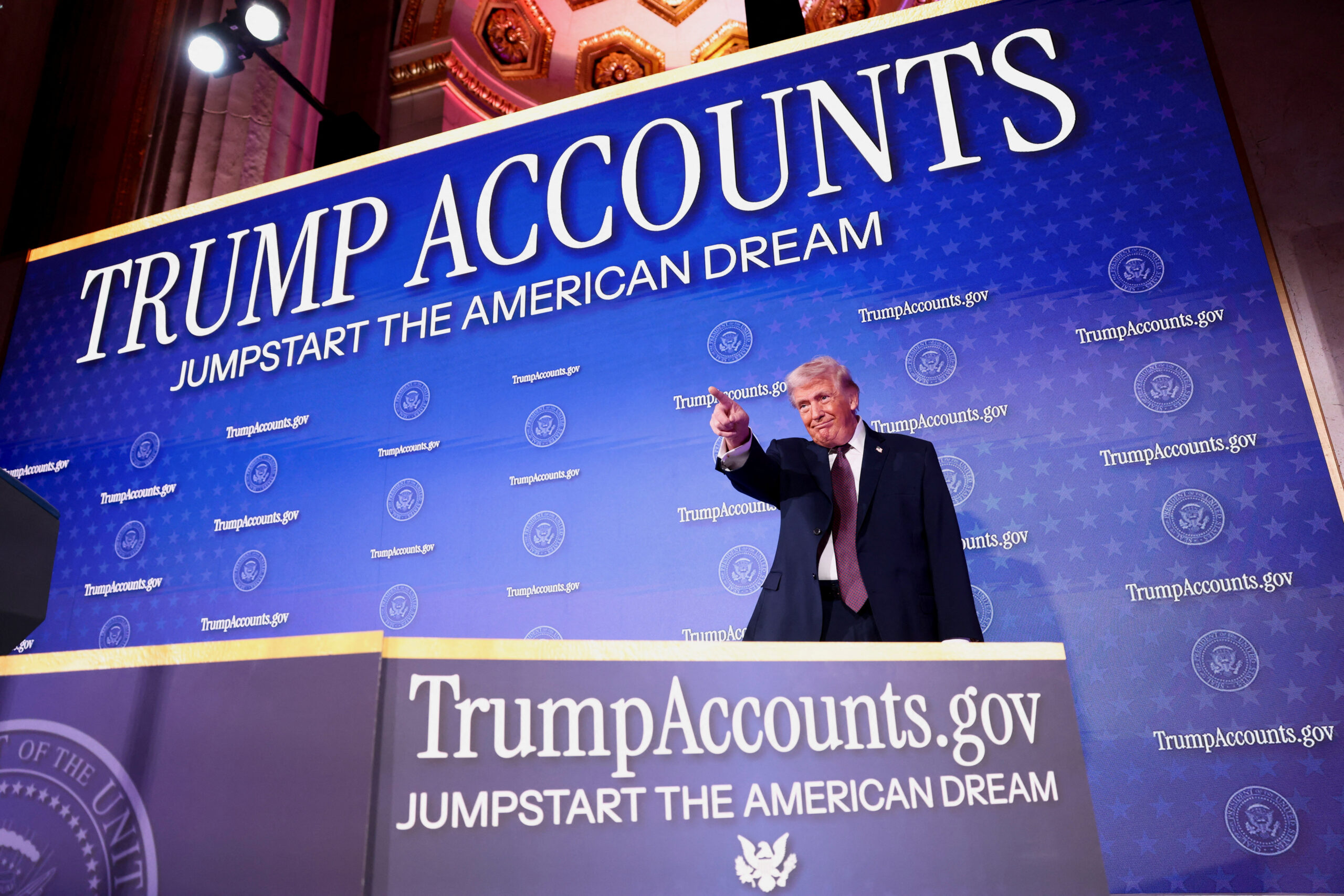
Why I Support the Trump Account: A Tax Attorney’s Perspective
As a tax attorney, I spend my days thinking about one thing: how to legally help Americans keep more of their money and build long-term wealth. For more than 25 years, I have studied the Internal Revenue Code, written books on retirement planning, and helped tens of thousands of Americans use tax-advantaged retirement accounts to invest for their future.
It takes a lot for a new retirement savings program to genuinely excite me. The Trump Account is one of those rare exceptions.
Before anyone stops reading because of the name, let me be direct: this is not a political article. Whether you are a Republican, Democrat, Independent, or somewhere in between does not matter. Good tax policy should never be judged by the name attached to it. It should be judged by one simple question: does it help Americans save more money, build more wealth, and become more financially secure?
In my opinion, the answer here is yes. In fact, I have been advocating for something very similar for well over a decade.
Key Takwaways:
- The Trump Account allows children to begin investing from birth, removing the earned income requirement that has held back early retirement savings for decades.
- A single $1,000 government contribution at birth, earning 8% annually, could grow to nearly $100,000 by retirement without adding another dollar. Families contributing $5,000 per year could potentially reach over $5 million.
- At age 18, the after-tax contribution structure creates a compelling Roth IRA conversion opportunity, potentially locking in decades of tax-free growth during a low-income year.
- The Trump Account is not a replacement for a Roth IRA or 529 plan. It complements both by filling a gap no other account addressed: wealth building that starts from birth.
An Idea I Have Been Fighting For Since Long Before the Trump Account
Over the past ten-plus years, I have had the opportunity to meet with congressional staff and lawmakers from both sides of the aisle, including members of the House Ways and Means Committee and the Senate Finance Committee. My proposal was simple: allow children under age 18 to contribute to a Roth IRA without having earned income.
Under existing Roth IRA rules, a child generally must have earned income before making a contribution. That means the clock does not start until they begin babysitting, mowing lawns, or getting their first part-time job. From a tax perspective, that requirement has never made much sense to me. Children have something every investor wishes they had more of: time. The earlier someone starts investing, the less money they ultimately need to contribute because compound growth begins working immediately. Every year that passes without investing is a year of compounding that can never be recovered.
Congress never embraced that proposal. Then came the Trump Account.
While it is not exactly what I envisioned, it accomplishes something I have hoped Congress would eventually do: it allows Americans to begin investing for retirement at birth rather than waiting until they have earned income. As a tax attorney, I view that as a significant step in the right direction.
Is the Trump Account Better Than a Roth IRA?
No.
If Congress had asked me to design the ideal account, I would still choose a Roth IRA. Nothing in the tax code is more powerful than decades of completely tax-free growth. With a Roth IRA, qualified distributions, including all investment gains, can ultimately be withdrawn completely free of federal income tax. There are also no required minimum distributions during the owner’s lifetime.
The Trump Account does not provide those same tax advantages from day one. Investment earnings generally grow on a tax-deferred basis rather than tax-free, meaning taxes may ultimately be due on the earnings when distributed if no additional planning is done.
So why am I still such a strong supporter? Because the biggest advantage is not the tax treatment. It is the starting line. The Trump Account allows children to begin investing decades earlier than traditional retirement accounts ever allowed. And when you combine an early start with decades of compound growth, the results can be extraordinary.
How the Trump Account Works
The mechanics are straightforward. Here are the key features every parent and grandparent should understand.
Every eligible child starts with a $1,000 investment. Eligible children born after the effective date receive a $1,000 government-funded contribution to start the account. While $1,000 may not sound life-changing today, over 50 or 60 years that initial contribution can grow into a surprisingly large sum. The true power is not the size of the investment. It is the amount of time that investment has to grow.
Families can continue making contributions. Parents, grandparents, relatives, and others can generally make additional annual contributions subject to the limits established by law. Unlike a Roth IRA, these contributions do not require the child to have earned income. For years I have argued that requiring earned income before someone can begin retirement investing unnecessarily delays wealth creation. The Trump Account finally removes that obstacle.
Contributions are made with after-tax dollars. There is no upfront tax deduction, similar to a Roth IRA contribution. Those contributions establish tax basis in the account, meaning you have already paid income tax on the money you contributed. As a result, those contributions generally are not taxed again when distributed. That distinction becomes especially valuable if the account is later converted into a Roth IRA, a strategy I will cover later in this article.
Investment earnings grow tax-deferred. Unlike a Roth IRA, the investment earnings inside a Trump Account generally grow on a tax-deferred basis rather than tax-free. Dividends, interest, and capital appreciation are not taxed each year while the assets remain inside the account. While I would prefer completely tax-free growth, tax-deferred compounding over 40, 50, or 60 years is still an incredibly powerful benefit.
The Power of Compounding: Why Starting at Birth Changes Everything
The greatest wealth-building tool in the Internal Revenue Code is not a tax deduction. It is not a tax credit. It is not even a Roth IRA. It is time.
Every year your investments earn a return, those earnings become part of your principal. The following year, you are earning a return not just on your original investment, but on your previous gains as well. That cycle repeats year after year, decade after decade, until your portfolio begins growing much faster than what you are contributing. That is why someone who starts investing at birth has an almost unfair advantage over someone who waits until their twenties or thirties.
The Trump Account finally makes it possible to start from day one. Here is what that looks like in practice.
Example 1: The $1,000 Government Contribution Alone
Assume a child receives the initial $1,000 contribution at birth and nothing else is ever added. The account simply remains invested at an average annual return of 8%.
| Age | Account Value |
|---|---|
| 18 | Approximately $4,000 |
| 35 | Approximately $14,800 |
| 59½ | Approximately $97,000 |
A single $1,000 contribution, without adding another penny, could potentially grow to nearly $100,000 by retirement. Not because $1,000 is a large investment. Because 60 years of compounding is incredibly powerful.
Example 2: Contributing $2,500 Per Year
Now assume parents begin contributing $2,500 annually starting at age 5 and continue every year until age 59½, with an average annual return of 8%.
| Age | Approximate Value |
|---|---|
| 18 | $54,000 |
| 35 | $283,000 |
| 59½ | Over $2 million |
We are no longer talking about saving a few thousand dollars. We are talking about creating a multi-million-dollar retirement account simply by starting early and remaining disciplined.
Example 3: Contributing $5,000 Per Year
Now assume a child receives the $1,000 contribution at birth and the family contributes $5,000 each year beginning at age 1, with an average annual return of 8%.
| Age | Approximate Value |
|---|---|
| 18 | $170,000 |
| 35 | $880,000 |
| 59½ | Over $5 million |
More than $5 million. Not because the family discovered the next Apple or NVIDIA. Not because they timed the market perfectly. Simply because they started early and allowed compound growth to do the heavy lifting.
Most Americans assume becoming a millionaire requires extraordinary investment returns. It does not. It requires extraordinary patience.
The Strategy Few People Are Talking About: Converting to a Roth IRA
Most of the discussion surrounding the Trump Account has focused on the $1,000 government contribution or the annual limits. Those features are important, but I believe one of the biggest long-term planning opportunities has received almost no attention: the potential to convert the account into a Roth IRA.
Because Trump Account contributions are made with after-tax dollars, those contributions establish tax basis in the account. The growth is what has accumulated on a tax-deferred basis. This distinction creates a meaningful planning opportunity.
Once a child reaches adulthood, one option is to roll the account into a Traditional IRA and then convert it into a Roth IRA. In a typical Roth conversion, the entire account balance is generally taxable because neither the contributions nor the earnings have previously been taxed. The Trump Account is different. Since contributions were made with after-tax dollars, the primary taxable component of the conversion would generally be the investment earnings, not the original contributions. That is a significant difference.
Age 18 may also be one of the lowest-income years of a person’s life. Many young adults are finishing high school, entering college, or just beginning to work. Because Roth conversions are taxed as ordinary income, converting during a low-income year can dramatically reduce the tax cost. Once the assets are inside a Roth IRA, every dollar of future appreciation has the potential to grow completely tax-free for the rest of that person’s life.
Going back to Example 3: by age 18, the account could already be worth roughly $170,000. Converting at that point, even with some tax due on the earnings, could mean another 40-plus years of tax-free compounding. The tax bill today could save hundreds of thousands of dollars in the future.
Book a free call with a self-directed retirement specialist
- Review your self-directed retirement options
- Learn about investing in alternative assets
- Get all of your questions answered
The Bigger Picture
The Trump Account is not identical to the Roth IRA proposal I championed on Capitol Hill. If I were writing the legislation, I would still prefer allowing every child to contribute directly to a Roth IRA from birth. But we should not let the pursuit of perfection get in the way of meaningful progress.
The Trump Account complements existing savings vehicles rather than replacing them. A 529 plan or Coverdell ESA remains an outstanding tool for education savings. A Roth IRA remains the most powerful retirement vehicle once a child has earned income. The Trump Account fills a gap none of those tools addressed: long-term wealth building that begins from birth.
The smartest approach is often to combine them. Use a 529 or Coverdell for education. Use a Roth IRA once the child has earned income. Use the Trump Account to begin building long-term wealth from day one. Together, these accounts can create a comprehensive financial foundation that previous generations simply did not have access to.
Read more: The “Triple-Threat” Education Strategy: 529, Self-Directed Coverdell, and the Trump Account
Do Not Let the Name Stop You
To those who simply do not like the name: that is okay. Call it something else. Call it a 530A Account. Rename it after another president or no one at all. As a tax attorney, I am interested in good tax policy, not political branding.
Politicians will come and go. Account names will change. Tax laws will evolve. But one principle will never change: the earlier you start investing, the more powerful compounding becomes.
That is not Republican. That is not Democrat.
That is simply good tax policy.
And that is why I strongly support the Trump Account.

Related Articles



Carried Interest in Your Roth IRA: What Investment Professionals Need to Know
For private equity managers, venture capital sponsors, real estate syndicators, and hedge fund managers, a carried interest is often the most…

The Rise of Progressive Politics and the Roth IRA: Why Locking In Tax-Free Wealth Matters More Than Ever
If there is one lesson I have learned during more than two decades practicing tax law, it is this: tax laws never stand still. Congress changes.…

Buy a Home in Your Self-Directed Roth IRA and Live in It Tax-Free
Most investors understand that a Roth IRA offers tax-free growth and tax-free withdrawals. What many people don't realize is that a Roth IRA can do…
