


Alternative Investments to Consider for Your Portfolio
Looking for good alternative investments? This article covers options like real estate, private equity, and cryptocurrencies. These can offer higher returns and diversify your portfolio. Read on to find what suits your investment goals.
Key Takeaways
- Alternative investments encompass a variety of assets beyond traditional stocks and bonds, offering unique opportunities but also increased risks and illiquidity.
- Diverse options such as real estate, private equity, hedge funds, and cryptocurrencies can enhance portfolio diversification, though they require careful consideration and due diligence.
- Investors should align alternative investment strategies with their financial goals and risk tolerance, gradually increasing exposure to manage risks effectively.
Understanding Alternative Investments
Alternative investments are assets outside traditional categories like stocks, bonds, and cash. They encompass a diverse range of options, including real estate, private equity, commodities, and various asset classes. Unlike traditional investments, which are often publicly traded and highly liquid, alternative investments are typically more complex and less regulated. This can lead to higher potential returns, but also increased risk and illiquidity in different types of alternative assets, including alternative funds.
One of the key attractions of alternative investments is their ability to offer unique opportunities that are not available in public markets. For instance, private equity and venture capital can provide access to early-stage companies with significant growth potential. Hedge funds, another popular form of alternative investment, use sophisticated strategies to generate returns regardless of market conditions.
These investments are generally more accessible to high-net-worth individuals and institutional investors who seek to reduce portfolio volatility and achieve higher returns while aligning with their investment objectives. However, the landscape is evolving, and individual investors are increasingly exploring traditional stocks and bond investments to diversify their portfolios and enhance their long-term financial prospects.
Real Estate Investments

Real estate is a prominent form of alternative investments. It is known for being both tangible and widely favored. The allure of owning property lies in its potential for steady income generation and long-term appreciation. Investors can dive into real estate through various avenues such as direct property ownership, Real Estate Investment Trusts (REITs), real assets, or real estate funds.
Direct ownership involves purchasing residential or commercial properties and earning rental income. This approach provides hands-on control but requires significant capital and management effort. On the other hand, REITs and real estate funds offer a more hands-off investment strategy, allowing investors to benefit from the real estate market without the hassles of property management.
However, real estate investments are not without risks. Market fluctuations, changes in interest rates, and the potential for over-concentrating capital in a single property can pose significant challenges. Despite these risks, the potential for complex tax structures and diverse income generation makes real estate an appealing choice for many investors.
Private Equity and Venture Capital
Private equity entails making investments in private companies that are privately held. These companies are not listed on public exchanges. This can include buyouts, growth equity, and private debt investments, as well as private equity investments. Venture capital, a subset of private equity, focuses on early-stage companies with high growth potential. These investments are highly speculative but can yield substantial returns if the companies succeed.
Venture capitalists often play an active role in mentoring and advising portfolio companies, enhancing their chances of success. These investments are typically long-term and require a high tolerance for risk and patience. Sectors like technology and biotech are popular among venture capitalists due to their innovative potential and market impact.
While the potential rewards are enticing, it’s crucial to understand the risks and illiquidity associated with private equity and venture capital investments. These investments are not easily sold, and investors must be prepared for the possibility of losing their entire investment. However, the prospect of tapping into groundbreaking companies and disruptive technologies makes them a compelling option for those with the right risk appetite.
Book a free call with a self-directed retirement specialist
- Review your self-directed retirement options
- Learn about investing in alternative assets
- Get all of your questions answered
Hedge Funds
Hedge funds are investment funds that pool resources from multiple investors. They use a variety of strategies to generate active returns. These strategies can range from long/short equity to market neutrality and global macro, each designed to capitalize on different market conditions. The flexibility and sophistication of hedge funds allow them to navigate market volatility and aim for positive returns in both rising and falling markets.
Hedge funds often come with higher fees and are less regulated than mutual funds, leading to concerns about transparency. This makes thorough due diligence essential before investing. Evaluating a hedge fund’s strategy, performance history, and risk management practices can help investors make informed decisions.
Moreover, hedge funds typically require a high minimum investment, sometimes ranging from $100,000 to several million dollars. While this may limit accessibility for some individual investors, those who can meet the requirements may find hedge funds a valuable addition to their investment portfolio, offering diversification and the potential for significant returns.
Commodities and Precious Metals
Commodities and precious metals are notable alternative investments that can help hedge against rising inflation and protect portfolios during market volatility. Commodities include raw materials like oil, gas, and agricultural products, while precious metals encompass gold, silver, and platinum. These assets often move independently of traditional markets, providing critical diversification for investors.
Investing in commodities can be particularly lucrative during periods of geopolitical tension or supply constraints, offering substantial returns. Precious metals, especially gold, are sought after during economic uncertainty, serving as a secure store of value. Investors can purchase these assets directly through bullion, coins, or jewelry, or indirectly through commodity-focused funds.
However, investing in these tangible assets poses challenges such as storage and liquidity. Despite these hurdles, the potential benefits of incorporating commodities and precious metals into an investment portfolio make them a compelling choice for those looking to diversify and hedge against economic downturns.
Cryptocurrencies

Cryptocurrencies represent a new frontier in alternative investments, characterized by digital currencies secured by cryptography. Supported by blockchain technology, cryptocurrencies offer a decentralized and transparent way of transferring value. Popular examples include Bitcoin and Ethereum, which have garnered significant attention and investment.
The volatile nature of cryptocurrency prices can lead to substantial gains or losses, making them a highly speculative investment. Regulatory concerns and the lack of a regulatory framework add to the complexity and risk of investing in cryptocurrencies. Nonetheless, the potential for high returns attracts investors willing to navigate these uncertainties.
Investors can engage in cryptocurrency trading through online brokerages or crypto wallets. For those with a high tolerance for risk and a deep understanding of the technology involved, cryptocurrencies can offer exciting investment opportunities. With platforms like IRA Financial, investors can even enjoy tax-advantaged investment opportunities in cryptocurrencies.
Collectibles and Tangible Assets
Collectibles and tangible assets include art, antiques, wine, and rare coins. These items provide a distinctive option for alternative investment. These items possess intrinsic value and can appreciate over time, providing a hedge against market volatility and inflation. The market for collectibles as an asset class can be influenced by trends and cultural shifts, adding an element of unpredictability.
Investing in collectibles typically involves purchasing these items through auctions or private sales. While the secondary market can be less liquid and more challenging to navigate, the potential for significant appreciation and the enjoyment of owning valuable items make collectibles an attractive option for discerning investors.
Crowdfunding and Peer-to-Peer Lending
Crowdfunding and peer-to-peer lending have revolutionized the way individuals and businesses raise capital. Crowdfunding platforms allow projects to attract funding from a large audience, offering rewards or equity in return. Peer-to-peer lending connects borrowers directly with lenders, often resulting in better interest rates for both parties.
The U.S. peer-to-peer lending market has grown significantly, driven by technological advancements that enhance credit evaluation processes. This growth presents opportunities for investors to diversify their portfolios and earn attractive returns. However, it’s essential to recognize the default risks associated with peer-to-peer loans, where borrowers may fail to repay their loans.
Platforms like IRA Financial make it easier for individual investors to participate in crowdfunding ventures, including hard money loans. While these investments carry risks, the potential for high returns and the democratization of investment opportunities make them an appealing choice for many investors.
Promissory Notes
Promissory notes allow investors to purchase the right to receive payments from a borrower, rather than acquiring the underlying property directly. This investment can offer higher yields, especially if the note is purchased at a discount below its stated value. Platforms like IRA Financial provide access to promissory notes, making them a viable option for investors seeking fixed-income returns.
However, the risk of borrower default is a significant concern, potentially resulting in loss of income or principal. It’s crucial to have a clear exit strategy, whether through selling the note or foreclosing on the property, to manage this type of investment effectively.
Foreign Currencies (Forex)
Forex trading involves the speculative investment of buying and selling different currencies. This market operates 24/7 and is the largest financial market globally. To start trading Forex, investors need to engage a registered broker dealer and may benefit from using demo accounts to practice without real financial risk.

Investing in Forex can be highly volatile and requires a deep understanding of global economic factors that influence currency values. Platforms like IRA Financial offer access to Forex investments, providing opportunities for diversification and potential returns.
Unique Investment Opportunities
Unique investment opportunities such as pre-IPO investments, farm animals, and vineyards offer unconventional ways to diversify a portfolio. These investments can lead to significant returns, especially if the companies or assets perform well. Platforms like IRA Financial enable investors to explore these unique options, adding a layer of diversification and potential growth.
Investing in non-traditional assets requires careful consideration of the market dynamics and potential risks involved. However, the prospect of tapping into unique and innovative investment avenues can be highly rewarding for those willing to take on the challenge.
Risk Factors and Due Diligence
Alternative investments often operate under less regulatory oversight, making due diligence crucial for investors. Understanding the higher risks and potential losses involved is essential for making informed investment decisions. Evaluating factors such as investment strategy, track record, fees, exit strategy, and speculative investment practices can mitigate some of the risks associated with these investments.
Conducting thorough due diligence involves a comprehensive assessment of the significant risks related and benefits of each high risk investment opportunity. Investors should be vigilant and informed, ensuring they align their investments with their financial goals and risk tolerance.
With proper research and careful planning, many alternative investments and alternative strategies can be a valuable addition to a diversified portfolio.
Making Alternative Investments Work for You
It’s important to align your investment strategy with your financial goals. Additionally, you should consider your risk tolerance when exploring alternative investments. Diversifying beyond traditional assets can lead to more consistent returns and better alignment with long-term financial goals. Starting with a smaller allocation to alternative investments and gradually increasing it over time can help manage risk effectively.
Regular consultations with a financial advisor are vital for reassessing investment strategies and adapting to changing financial goals. Creating a tailored financial plan for an alternative investment portfolio involves selecting from multiple funds and strategies based on individual investor preferences, including investment advice.
With the right approach, incorporating alternative investments can enhance portfolio diversification and generate income.
Summary
Alternative investments offer a myriad of opportunities for diversifying portfolios and achieving higher returns. From real estate and private equity to cryptocurrencies and unique investment options, these assets can provide significant benefits if approached with careful planning and due diligence.
As you explore the world of alternative investments, remember to align your investment strategy with your financial goals and risk tolerance. Regularly consult with financial advisors, and be prepared to adapt to changing market conditions. By doing so, you can unlock the full potential of alternative investments and create a robust, diversified portfolio.
Ready to Expand Beyond Stocks and Bonds?
Alternative investments — from real estate and private equity to cryptocurrencies and commodities — can enhance diversification, access unique growth opportunities, and position your retirement portfolio to win when traditional markets struggle. But they also carry unique risks and require deeper due diligence. Let our specialists help you evaluate which alternative asset types fit your goals, structure your self-directed retirement account correctly, and stay IRS-compliant.
Schedule a Free Consultation
Open an Account
Frequently Asked Questions
What are alternative investments?
What are the benefits of investing in real estate?
What are the risks associated with private equity and venture capital?
How do hedge funds differ from mutual funds?
What are the risks of investing in cryptocurrencies?


The Complete Guide to the Self-Directed Coverdell ESA
Investing in education is one of the most important financial decisions a family can make. The rising cost of tuition, books, and other educational expenses has driven many parents and guardians to explore different options for saving money. One of the most flexible and powerful ways to save for education is through a Self-Directed Coverdell ESA (Education Savings Account). Think Self-Directed IRAs and add in the ability to cover education-related expenses.
This guide will break down everything you need to know about the Self-Directed Coverdell ESA, including its benefits, rules, and strategies for maximizing savings.
What Is a Coverdell ESA?
A Coverdell Education Savings Account is a tax-advantaged investment account designed to help families save for a child's education expenses. The Coverdell ESA allows for contributions of up to $2,000 per year per beneficiary. These funds can be used for a wide range of educational expenses, including tuition, books, supplies, and even room and board at eligible schools.
The primary feature of the Coverdell is that contributions are made with after-tax dollars, but the earnings grow tax free. When the funds are withdrawn for qualified educational expenses, they are also tax free, making it an effective way to save for future education costs.
Key Features of a Coverdell ESA:
- Annual contribution limit: $2,000 per beneficiary
- Contributions grow without tax
- Tax-free withdrawals for qualified educational expenses
- Can be used for both K-12 and post-secondary education expenses
What are "Qualified Education Expenses?
Qualified education expenses include costs that are necessary for a student’s enrollment or attendance at an eligible educational institution. These expenses must be used for educational purposes, and they can apply to both K-12 schooling and post-secondary (college or university) education. Here’s a breakdown of what’s considered qualified:
K-12 Expenses
- Tuition and fees: For public, private, or religious schools (K-12)
- Books, supplies, and equipment: That are required for education
- Academic tutoring: If required or necessary for the student’s education
- Special needs services: For students with special needs
- Computer technology or internet access: If used by the student for educational purposes (including for elementary or secondary school)
- Room and board: If the child is enrolled at least half-time in an eligible school
Postsecondary (College or University) Expenses
- Tuition and fees: Required for enrollment at an eligible post-secondary institution
- Books, supplies, and equipment: Needed for a student’s coursework
- Room and board: If the student is enrolled at least half-time (subject to limits)
- Computer technology: Including internet access or related equipment for education
- Special needs services: For a student with special needs that are related to attendance or enrollment at an institution
How does a Self-Directed Coverdell ESA Work?
A Self-Directed Coverdell ESA operates similarly to a traditional Coverdell, but with one crucial difference: the investor has complete control over the types of investments made within the account. While traditional Coverdells often limit you to stocks, bonds, and mutual funds, the self-directed version offers a wider array of investment options, such as real estate, private equity, metals, cryptos, small businesses, and commodities.
The expanded range of investments can lead to higher potential returns, although it comes with additional risks. Be sure to work with a professional financial advisor to make sure your investments align with your goals and risk tolerance.
Key Differences in a Self-Directed Coverdell ESA:
- Full control over investment choices
- Access to alternative investments (real estate, precious metals, etc.)
- Higher risk, but the potential for greater rewards
Eligibility and Contribution Rules
Before opening a Self-Directed Coverdell ESA, it’s important to understand the rules regarding eligibility and contributions.
Eligibility:
- The beneficiary (typically the child or student) must be under 18 when contributions are made.
- Contributions can be made by parents, guardians, grandparents, or other family members, provided they meet income requirements.
Income Limits for Contributors:
- Single filers with a modified adjusted gross income (MAGI) below $110,000
- Joint filers with a MAGI below $220,000
Contribution Limits:
- The total annual contribution for each beneficiary cannot exceed $2,000.
- Contributions must be made by the tax filing deadline, typically April 15 of the following year.
Contributions are not tax-deductible, but the earnings grow tax free, and qualified withdrawals are also tax free.
Investment Options in a Self-Directed ESA
One of the most attractive features of a Self-Directed Coverdell ESA is the flexibility it offers in choosing investments. Unlike standard accounts, where investment options may be limited to mutual funds or stocks, a self-directed account opens the door to a variety of alternative investments.
Investment Options:
- Real Estate: You can invest in residential or commercial property through a self-directed ESA, which could appreciate in value over time and provide rental income.
- Precious Metals: Gold, silver, and other metals are considered safe-haven assets that can hedge against inflation.
- Cryptocurrency: For those with a higher risk tolerance, investing in Bitcoin, Ethereum, or other digital currencies is an option.
- Private Equity: Invest in private companies, startups, or venture capital, potentially yielding high returns.
- Stocks and Bonds: You can still invest in traditional assets like individual stocks and bonds, allowing for diversification within the account.
This wide range of investment choices allows for potentially higher returns but also increases the complexity of managing the account.
Advantages of a Self-Directed Coverdell ESA
Choosing a Self-Directed Coverdell ESA provides unique benefits for savvy investors. Here are some of the key advantages:
Investment Flexibility
You are not restricted to the limited options of mutual funds or standard portfolios. The ability to invest in real estate, private equity, or even cryptocurrencies opens doors to more lucrative opportunities.
Tax-Free Growth
Like traditional Coverdell ESAs, all investment earnings grow tax free, and withdrawals for qualified expenses are also tax free, making it a very tax-efficient investment tool.
Broader Educational Expense Coverage
Unlike 529 plans, which are mostly for college expenses, Coverdell ESAs can be used for K-12 educational expenses as well. This includes tuition, books, and even technology required for schoolwork.
Control and Customization
A self-directed account allows you to tailor your investments according to your risk tolerance and financial goals. Whether you’re conservative or aggressive, you can find investments that fit your strategy.
Limitations and Risks
While the Self-Directed Coverdell ESA offers incredible flexibility, it’s not without its limitations and risks.
- Low Contribution Limits: At just $2,000 per year per beneficiary, the contribution cap can be restrictive. Compared to a 529 Plan, which often allows much higher contributions, this can limit the growth of your savings.
- Complexity of Self-Directed Investing: Managing a Self-Directed ESA is more complex than a traditional ESA or 529 Plan. You may need to do more research, and there’s often an administrative cost involved. Make sure you are working with a competent custodian that specializes in self-directed solutions.
- Investment Risk: With higher rewards come higher risks, especially with alternative investments like cryptocurrencies or real estate. There’s no guarantee of a positive return, and significant losses could occur.
- Age Limitation: The beneficiary must use the funds by age 30, or they will face penalties. This rule can make it challenging if the funds aren’t fully used for educational expenses.
Tax Benefits and Considerations
One of the primary reasons to consider a Self-Directed Coverdell ESA is the tax advantages. All earnings in a Coverdell ESA grow tax free, similar to a Roth IRA. You won’t owe any taxes on dividends, interest, or capital gains within the account. If the funds are used for qualified educational expenses (such as tuition, fees, books, and room and board), the withdrawals are also tax free. However, if you use the funds for non-educational purposes, you’ll face taxes and a 10% penalty on the earnings portion of the withdrawal, making it critical to plan carefully.
Strategies to Maximize Your Coverdell ESA
To make the most of your Self-Directed Coverdell ESA, consider the following strategies:
- Start Early: The earlier you start contributing, the longer your investments have to grow. Compounding interest can significantly boost your account’s value over time.
- Diversify Investments: Diversification reduces risk. Instead of placing all your funds in one asset, spread them across a mix of traditional and alternative investments to balance risk and reward.
- Maximize Contributions: While $2,000 might not seem like much, contributing the maximum every year can still add up. Try to make regular contributions to maximize your investment’s potential.
- Use for K-12 Expenses: Unlike a 529 plan, Coverdell ESAs can be used for K-12 educational expenses. If your child attends private school, using the funds early can offer immediate tax advantages.
What Happens After the Beneficiary Reaches the Age of 30?
Amounts in the Coverdell ESA must be distributed when the designated beneficiary reaches age 30, unless the beneficiary is a special needs beneficiary. Additionally, certain transfers to members of the beneficiary's family are permitted, including:
- Son, daughter, stepchild, foster child, adopted child, or a descendant of any of them.
- Brother, sister, stepbrother, or stepsister.
- Father or mother or ancestor of either.
- Stepfather or stepmother.
- Son or daughter of a brother or sister.
- Brother or sister of father or mother.
- Son-in-law, daughter-in-law, father-in-law, mother-in-law, brother-in-law, or sister-in-law. The spouse of any individual listed above.
- First cousin.
Conclusion: Is a Self-Directed Coverdell ESA Right for You?
The Self-Directed Coverdell ESA is a powerful tool for parents or guardians who want more control over how they save for their child's education. With its wide range of investment options, tax benefits, and flexibility for covering K-12 and post-secondary education expenses, it offers advantages that are unmatched by other education savings accounts.
However, it’s not for everyone. The lower contribution limits, the complexity of managing a self-directed account, and the risks involved with alternative investments can be drawbacks. If you are financially savvy and comfortable with risk, this account can be a fantastic way to maximize your education savings. Otherwise, a traditional ESA or 529 plan might be a better fit.
Ultimately, the choice depends on your financial goals, risk tolerance, and the educational needs of your beneficiary.
Expand Beyond Traditional Education Savings — Discover Self-Directed Options
Whether you're saving for college, private school, or future educational goals, a Self-Directed Coverdell ESA lets you invest beyond the limits of traditional savings plans. From real estate and precious metals to private equity and crypto, IRA Financial can help you create a tax-advantaged, diversified strategy for your child’s education.
Schedule a Free Consultation
Open an Account

Private Placement Investments and the Self-Directed IRA Rules
In general, a traditional financial institution will not allow investors to use their IRA to invest in private placement investments. The reason for this is that a financial institution or brokerage firm does not make money when clients invest in alternative assets, such as private placements.
Whereas, a self-directed IRA is a type that allows IRA investors to make alternative investments, such as private placements. A self-directed IRA is not a legal term that you will find in the Internal Revenue Code. Today, the Retirement Industry Trust Association (RITA) estimates anywhere between 4-7% of all IRAs are invested in alternative assets. Accordingly, the self-directed IRA is the only way one can purchase alternative assets in an IRA.
What is a Private Placement?
Private Placement Pros and Cons
Why Invest in Private Businesses or Private Placements
Advantages of Investing in Private Placements in an IRA
Who is an Accredited Investor?
As you will lean from reading this article, the majority of the most popular types of private placement investments typically require the individual to be an accredited investor. The reason for this is that the Securities Exchange Commission (SEC), which regulates the sale of private and public type securities, believe only certain group of investors with a set of minimum income levels or net worth are in a position to require less protection provided by regulatory disclosure filings.
In general, one would satisfy the definition of an accredited investor if any of the following are true:
- An annual income of at least $200,000 for an individual or a combined annual income of $300,000 for a couple.
- A net worth of least $1,000,000 either for a single individual or combined with its spouse, excluding the value of its primary residency
- A trust that manages at least $5,000,000 in total assets, that is operated by a sophisticated individual (business-savvy)
- A legal entity whose shareholders are all accredited investors
In the case of a Self-Directed IRA, if the individual IRA or Roth IRA owner satisfies the SEC accredited investor definition, the Self-Directed IRA would then be permitted to make a private placement investment.
Types of Private Placements
The most common type of private placement investments are structured as Regulation A and Regulation D. The primary reason businesses, and funds seeking to raise capital, are committed to complying with either the Reg A or Reg D SEC regulations is because it offers less restrictive SEC regulatory requirements and offers a high level of comfort that the offering will comply with all applicable SEC rules.
Regulation A
According to the SEC, Regulation A allows companies to offer and sell securities to the public, but with a reduced level of disclosure requirements than what is required for publicly reporting companies.
Regulation A allows companies to raise money under two different tiers.
Tier 1
Under Tier 1, a company can raise up to $20 million in any 12-month period. The financial statements disclosed in a Tier 1 offering do not have to be audited.
Tier 2
Under Tier 2, a company can offer up to $75 million in any 12-month period. Financial statements disclosed in a Tier 2 offering must be audited by an independent accountant. In a tier 2 offering, if an investor, including a Self-Directed IRA, is not an accredited investor and the securities are not going to be listed on a national securities exchange upon qualification, there are some investment limitations.
Regulation D
In general, a Reg D offering does not have any monetary limit on the amount of the offering. Companies that satisfy the requirements of Reg D do not have to register their offering of securities with the SEC, but they must file electronically “Form D” with the SEC after they first sell their securities. Reg D can b broken down further into two categories: Reg D – 506(b) and Reg D 506(c).
506(b)
Under paragraph ‘b’, a Reg D company can’t solicit or advertise the offering, but it can sell the offering to an unlimited number of accredited investors and up to 35 non-accredited investors, as long as they proved to be sufficiently knowledgeable of business matters to the extent that they understand the risks associated with investing in the business.
506(c)
Paragraph ‘c’ allows a Reg D business to solicit and advertise its offering, if all the parties investing in it are considered ‘accredited investors’.
Keys to Investing in a Private Placement with a Self-Directed IRA
Understand the UBTI Rules: If a Self-Directed IRA invests in a private placement and the underlying company or investment fund is structured as a pass-through entity, such as an LLC or partnership, and not a C Corporation, the UBTI rules could be triggered
In other words, if the private placement involves investing in a business or fund that is operated via an LLC or a partnership, and the income generated by that business or fund is over $1,000 annually on a net basis, then the UBTI tax would apply. The highest UBTI tax rate is 37%, which is triggered at a low annual income threshold, of approximately $15,000.
In the case of a Self-Directed IRA, even though the IRS itself will not be the direct investor in the underlying business if the private placement investment is operated as a pass-through vehicle, the income from the underlying business or investment fund would be attributable to the Self-Directed IRA investor and could trigger the application of the UBTI tax. However, if the underlying business associated with the private placement is set up as a C Corporation, the UBTI tax rules will not apply.
Do Your Research: Anytime one makes an investment into a private placement investment, it is important to do your research on the underlying business or fund. It is advisable that, before investing your hard-earned retirement funds in a private placement that is not public, you should examine the investment documentation, the company’s management, and the financial terms of the investment.
Consider the Prohibited Transaction Rules: Internal Revenue Code Sections 408 & 4975 prohibit disqualified persons from engaging in certain types of transactions. A “disqualified person” is generally defined as the IRA holder, any ancestors or lineal descendants of the IRA holder, and entities in which the IRA holder holds a controlling equity or management interest.
In the case of most private placement investments, the IRS-prohibited transaction rules typically do not play a major role since it typically involve hundreds of shareholders, which makes the likelihood of an IRA owner owning more than 50% of the entity or fund very likely. However, if the IRA owner and any disqualified person owned more than 50% of the underlying business or fund associated with the private placement investment, the IRS prohibited transaction rules could kick in and prevent the IRA investment.
Conclusion
Private placement investments continue to be the most popular way for private businesses and investment funds to raise capital. With over $13 trillion dollars of IRA funds, Self-Directed IRAs will remain an important source of capital for these investments. It is important for Self-Directed IRA investors to appreciate the accredited investor rules, while concurrently understanding the far reach and potential impact of the UBTI rules before electing to invest in a private placement investment.
Invest in Private Placements While Staying IRS-Compliant
Investing in private placements through a Self-Directed IRA can open access to unique opportunities—but it also requires navigating rules like accredited investor status, UBTI, and prohibited transactions. Let our specialists guide you through the process and help you structure your retirement investment strategy correctly.
Schedule a Free Consultation
Open an Account

Best Long-Term Investment Strategy - Traditional vs. Alternatives?
When it comes to building a robust portfolio for the future for your retirement account, the argument between investing in traditional investments, such as stocks and bonds, or alternative assets, such as real estate, continues to ensue. While stocks have historically been the go-to for long-term wealth accumulation in one's IRA, the volatility and market dependency of stocks have prompted many investors to look elsewhere for more stable and diversified growth. Enter alternative assets - a category that includes real estate, private business stock, private equity, investment funds, cryptos, gold, and more.
In this article, we'll explore why using a Self-Directed IRA to invest in alternative assets can be a better long-term investment strategy compared to traditional investments, especially for those looking to reduce risk, maximize returns, and achieve greater portfolio diversification.
Lower Volatility, Higher Stability
Stocks are infamous for their market volatility. No one really knows why stocks go up or down. Even solid companies can experience significant stock price fluctuations based on market sentiment, economic events, or industry disruptions. For long-term investors, the constant ups and downs can be worrying and harmful to wealth-building goals for ones retirement, especially when markets take a downturn.
Alternative assets, on the other hand, tend to offer greater stability. For instance, real estate is typically less sensitive to stock market movements and tend to hold or increase in value over time, even during periods of market turbulence.
Why Stability Matters for Your Retirement:
- Real Estate: Properties, especially in strong markets, provide stable cash flow through rental income, and their value often appreciates regardless of stock market swings.
- Precious Metals: Investments in gold, silver, and other commodities often act as safe-haven assets during stock market crashes.
- Investment Funds: These investments, such as private equity, are insulated from daily market volatility, offering more predictable, long-term growth.
Enhanced Diversification and Risk Management
Diversification is a key principle of any successful investment strategy. This is especially true when it comes to one’s retirement investment plan. Relying too heavily on stocks can expose your portfolio to unnecessary risk, as stocks tend to be highly correlated with the overall market. In a market downturn, even a well-diversified stock portfolio can suffer significant losses.
Whereas alternative assets provide diversification benefits that can help mitigate this risk. By spreading investments across different asset classes, Self-Directed IRA investors can reduce their overall exposure to stock market volatility. Many "alts" have a low correlation to traditional equities, which means they may perform well when stocks are underperforming.
Benefits of Diversification for IRA Investors:
- Dissimilar Returns: Assets like real estate don’t move in tandem with the stock market, reducing overall portfolio risk.
- Risk Sharing: Holding a mix of asset types means that when one asset class declines, another may increase in value, balancing losses.
- Strong Hedge: Alternative investments can perform well during market downturns, providing a buffer against large losses in stock-heavy portfolios.
Potential for Higher Returns
While stocks can provide meaningful short-term gains, they also come with higher risks. Alternative assets, on the other hand, offer the potential for higher returns over the long term, which is perfect for IRA investors, often without the wild variations that come with equities.
For example, private equity investments have historically outperformed public markets. By using an IRA to invest in privately-held companies, investors can access high-growth opportunities that may not yet be available to public market participants. Additionally, real estate investments can provide consistent rental income, tax benefits, and long-term appreciation, all of which contribute to superior returns over time.
Why Alternative Assets Can Offer Better Returns:
- Private Investments: Offers access to high-growth companies before they go public, often delivering higher returns than stocks.
- Real Estate: Provides both income from rents and potential for capital appreciation, often outpacing inflation.
- Precious Metals: Can offer strong returns during inflationary periods or economic uncertainty, outperforming many stock sectors.
Inflation Hedge
One of the greatest challenges for long-term investors, including retirement investors, is inflation, which corrodes the purchasing power of money over time. Stocks can sometimes struggle to keep pace with inflation, particularly during periods of economic uncertainty.
Alternative assets, on the other hand, often serve as a natural hedge against inflation. Real estate, for example, tends to increase in value alongside inflation, and rents can be modified to keep up with rising costs. Precious metals like gold and silver also tend to rise in value during inflationary periods, making them a valuable addition to any inflation-conscious portfolio.
How Alternative Assets Hedge Against Inflation:
- Real Estate: Property values and rents tend to increase with inflation, helping investors maintain purchasing power.
- Metals: Gold, oil, and agricultural products often rise in price when inflation surges, providing a hedge against devaluing currencies.
- Private Company Investments: Investments in private business, such as utility and other industrial businesses tend to offer inflation-protected, stable income streams, as many contracts are tied to inflation adjustments.
Access to Exclusive Investment Opportunities
Private placements, venture capital, and hedge funds often provide access to exclusive opportunities that the average stock investor cannot reach. These asset classes are typically available only to accredited investors or through specialized investment platforms, and they offer exposure to early-stage companies, niche markets, or unique real estate projects that have the potential for significant upside. An accredited investor is an individual with at least a $1 million in net worth, excluding a primary residence, or $300,000 of annual income if married filing jointly.
By investing in alts, you gain access to assets that can deliver unique growth opportunities that are often not available in public markets.
Benefits of Exclusive Access:
- Early-Stage Investment Opportunities: Private placements and venture capital allow investors to get in early on companies with high growth potential.
- Unique Private Real Estate Projects: Investments in commercial properties, multi-family units, or real estate developments offer unique advantages over traditional real estate or REITs.
- Bespoke Market Exposure: Hedge funds and private investments allow access to niche markets and strategies, such as distressed assets, that stocks can’t provide.
Conclusion
Investing in traditional assets like stocks, bonds, and mutual funds offers liquidity, transparency, and regulatory oversight. These investments are well-established, offering investors historical data for analysis, and are typically traded on public exchanges, making them accessible. Traditional investments are relatively easy to understand and monitor, suiting both novice and experienced investors.
In contrast, alternative investments encompass assets such as real estate, private equity, hedge funds, commodities, and cryptocurrencies. These investments often offer higher returns but come with some risk and less liquidity. Alternative investments are sought for portfolio diversification and are typically favored by experienced investors seeking to hedge against market volatility.
In a perfect world, your retirement holdings should balance each other with a mix of traditional investments and alternative assets. As always, be sure to consult with a financial advisor to ensure your goals and risk levels are at a level you are comfortable with.
Expand Beyond Stocks & Bonds — Discover Alternative Assets
Whether you're sticking with traditional stocks and bonds or exploring alternative assets like real estate, private equity or crypto, choosing the strategy that fits your long-term goals matters. Our specialists at IRA Financial can help you build a diversified, tax-efficient retirement portfolio.
Schedule a Free Consultation
Open an Account

How is UBTI Applied to an IRA that Invests in a Real Estate Syndicate?
Investing in real estate through Self-Directed IRAs (SDIRAs) has gained popularity, especially with the growth of alternative investments like real estate syndicates. However, for investors using tax-advantaged retirement accounts, certain types of income generated within the IRA may trigger a tax known as Unrelated Business Taxable Income (UBTI). This article explores how UBTI applies to IRAs investing in real estate syndicates, including what UBTI is, how it’s calculated, and the implications for investors.
Understanding UBTI: What It Is and Why It Matters
UBTI is a tax levied on income that a tax-exempt entity, such as a Self-Directed IRA, earns from activities unrelated to its core purpose. IRAs are typically tax-exempt, meaning they allow funds to grow tax-deferred (in the case of a Traditional IRA) or tax-free (in the case of a Roth IRA). However, the IRS established UBTI rules to prevent tax-exempt entities from gaining an unfair competitive advantage over taxable businesses.
- UBTI Sources: UBTI is triggered when an IRA earns income from unrelated business activities, which can include:
- Operating a business
- Leveraged investment income, such as income derived from debt-financed properties
- Certain types of passive income from partnerships or LLCs
- Purpose of UBTI in IRAs: The UBTI rules aim to ensure that tax-deferred entities do not accumulate wealth through business activities in a way that undermines taxable businesses. For investors using an IRA to invest in real estate, UBTI can be a significant consideration, particularly when investments involve debt-financing or partnerships that produce operational income.
Real Estate Syndicates and IRAs: An Overview
A real estate syndicate pools funds from multiple investors to acquire properties that may be too costly or complex for an individual investor to buy alone. These syndicates often use a partnership structure, such as a Limited Liability Company (LLC) or Limited Partnership (LP), which can generate types of income that trigger UBTI in IRAs.
- Structure of Real Estate Syndicates: Syndicates are typically structured as pass-through entities, meaning that profits and losses flow through to the individual investors, who report them on their own tax returns. For IRAs, this pass-through income could potentially become subject to UBTI.
- Types of Income in Real Estate Syndicates:
- Rental Income: Generally considered passive and not subject to UBTI if there is no debt financing.
- Capital Gains: Typically not UBTI as it falls under investment income.
- Operational or Business Income: If the syndicate operates a business (e.g., a hotel or commercial property), income from operations may be considered UBTI.
- Debt-Financed Income: When syndicates use debt to acquire or improve properties, the income generated from the debt-financed portion is subject to UBTI.
How UBTI is Triggered in Real Estate Syndicate Investments
Investing in real estate syndicates through a Self-Directed IRA can trigger UBTI primarily in two situations:
- Debt-Financed Real Estate Investments: If the syndicate uses leverage, any income from debt-financed property could result in UBTI. For example, if 60% of a property was financed with a loan, then 60% of the income generated from that property is subject to UBTI.
- Business or Operational Income: If a real estate syndicate operates a business within the property, such as a commercial retail space or hotel, the income generated from these operations may be classified as UBTI. However, if the property is merely rented out without any substantial additional services, the rental income might not trigger UBTI.
Debt-Financed Income and UDFI (Unrelated Debt-Financed Income)
A specific form of UBTI called Unrelated Debt-Financed Income (UDFI) applies to IRAs when income is generated from debt-financed investments. UDFI requires the IRA to pay taxes on the portion of income related to the leveraged or debt-financed portion of the investment. The UDFI rules apply if:
- The property was acquired with debt, meaning the syndicate used a mortgage or other loan to purchase the property.
- The property generates income, a portion of which is attributable to the debt financing.
The IRS requires that UDFI be calculated based on the ratio of debt to the property’s value and applies UBTI tax to that percentage of income. For example, if a property’s value is $1 million and has a mortgage of $600,000, 60% of the income derived from the property would be subject to UBTI.
Calculating UBTI and UDFI: A Step-by-Step Example
To understand the mechanics of UBTI within a Self-Directed IRA investing in a real estate syndicate, consider the following example:
- Investment Scenario: An SDIRA invests in a real estate syndicate that purchases a commercial building for $2 million. The syndicate funds 50% of the purchase with investor equity and 50% with debt financing.
- Income Generation: The building generates $200,000 in net operating income (NOI) for the year.
- UBTI Calculation for Debt-Financed Portion:
- Debt Ratio: 50% of the property was financed by debt.
- Income Subject to UBTI: 50% of $200,000 = $100,000 is considered UBTI for the IRA since it’s the portion derived from debt financing.
- Applying UBTI Tax: The UBTI rate is calculated at the trust tax rate, which ranges from 10% to 37% depending on the income amount. Assuming a 20% tax rate on $100,000, the SDIRA would owe $20,000 in UBTI.
Filing Requirements and Tax Implications for IRAs
When an IRA is liable for UBTI, it’s the responsibility of the account custodian to file a separate tax return for the IRA—Form 990-T, which is used to report UBTI.
- Filing Form 990-T: The IRA custodian must file Form 990-T for each tax year that the IRA generates $1,000 or more in UBTI.
- Paying UBTI Taxes: Taxes are paid from the IRA’s funds, not from the account holder’s personal funds. This requirement is important because taking personal funds to cover the tax would constitute an early distribution, which could trigger penalties.
For this reason, IRA holders often weigh whether the potential for high returns offsets the tax implications of UBTI. Real estate syndicates with high leverage or operational income can significantly impact the IRA’s net returns due to UBTI liability.
Strategies for Minimizing UBTI in IRA Real Estate Investments
While UBTI can reduce the attractiveness of certain real estate syndicate investments in Self Directed IRAs, there are strategies to help minimize or manage UBTI exposure:
- Focus on Low or Non-Leveraged Syndicates: By investing in syndicates that do not use debt financing, investors can avoid UBTI on income derived from the property, as income from fully-owned real estate is generally not subject to UBTI.
- Consider Different Investment Structures: Certain real estate investments, such as Real Estate Investment Trusts (REITs), may provide real estate exposure without UBTI. REIT dividends are typically treated as passive income, which is exempt from UBTI.
- Leverage Roth IRAs: UBTI affects both Traditional and Roth IRAs. However, because Self-Directed Roth IRAs grow tax-free, paying UBTI in a Roth IRA might be more advantageous since future growth remains untaxed.
- Regular Monitoring and Reporting: Work closely with a tax advisor or CPA familiar with UBTI and real estate syndicates. They can help monitor the debt ratio, calculate UBTI accurately, and ensure timely filing and payment of UBTI to avoid penalties.
Conclusion
UBTI presents a unique challenge for Self-Directed IRA investors in real estate syndicates, particularly when debt financing is involved. While IRAs offer tax advantages for traditional investment income, these benefits do not fully extend to income generated from debt-financed real estate or business activities within a syndicate. Understanding the mechanics of UBTI, especially UDFI, and implementing strategies to minimize exposure can help investors make more informed decisions about using IRAs for real estate syndicate investments.
With careful planning and expert tax guidance, it’s possible to navigate UBTI considerations effectively, balancing the potential for higher returns with the tax implications of these investments within a Self-Directed IRA.
Make Smart, Tax-Aware Decisions with Real-Estate Syndicate Investments
When you invest your self-directed IRA into a real estate syndicate, UBTI and UDFI rules matter—and getting them wrong can erode your returns or trigger unexpected taxes. Our team is ready to help you understand how to structure these investments, calculate leveraging impacts, and stay compliant while maximizing growth.
Schedule a Free Consultation
Open an Account

Can You Gift an IRA?
Sometimes, situations arise where a family member, friend or charity needs cash and the question arises can I use my IRA to gift someone money? This article will go over the IRS rules for gifting from retirement accounts.
Key Takeaways
- Can I gift my IRA to someone else?
- No, you cannot directly gift an IRA to another person. If you withdraw funds to give as a gift, the amount will be taxable and may be subject to early withdrawal penalties if you are under 59½
- Can I use my IRA to gift money to a charity?
- Yes, if you are 70½ or older, you can make a Qualified Charitable Distribution (QCD) of up to $100,000 per year directly from your IRA to a charity. This allows you to donate tax free and satisfy your RMD if you are 73 or older.
- What are the tax benefits of gifting an IRA to a charity?
- QCDs do not count as taxable income but are also not tax-deductible.
- You can donate up to $100,000 annually, indexed for inflation.
- Married couples can each donate $100,000, for a combined $200,000 per year.
IRA Accounts
An Individual Retirement Account (IRA) is a powerful tool to help you save for retirement, while enjoying tax benefits. There are several types of IRAs, each with its own rules and advantages. Traditional IRAs allow for tax-deductible contributions; you can reduce your taxable income in the year you contribute. However, withdrawals in retirement are taxed as ordinary income. On the other hand, Roth IRAs offer tax-free withdrawals in retirement if certain conditions are met, but contributions are made with after-tax dollars, meaning there is no immediate tax break.
Other types of IRAs are SIMPLE IRAs and SEP IRAs, used by small business owners and self-employed individuals. These accounts have higher contribution limits and can be a great way to boost retirement savings. Understanding the specific rules, such as contribution limits and withdrawal rules, is key to maximizing the tax benefits of your retirement account(s).
What Can I Do with an IRA?
Other than the regular investments you can’t make with an IRA, like life insurance and collectibles, the Internal Revenue Code (IRC) prohibits any transactions with a disqualified person.
A “disqualified person” (IRC Section 4975(e)(2)) includes a wide range of related party situations but generally includes the IRA owner, any ancestors or lineal descendants of such and entities in which the IRA owner has a controlling equity or management interest.
Therefore, an IRA owner cannot do any transaction with a disqualified person, including a gift. But what about an IRA owner gifting to a charity or non-disqualified person? In that case, you must coordinate with the IRA administrator to ensure proper handling and compliance with IRS rules.
Gift an IRA to an individual
Can one lend IRA funds to a friend (or other disqualified person) and never receive payment back? Technically yes, but the borrower would have to take into account the amount of the cancellation of debt. Thus, the IRA loan that was not paid back would turn into income for the borrower under IRC Section 108 – cancellation of indebtedness rules.
Related: Using a Gift to Fund an IRA
Gifting an IRA to a Charity as a Qualified Charitable Distribution
Before we get started, note that IRS rules do not allow you to use your IRA to make a gift to a charity before the age of 70 1/2.
Prior to 2023, the IRC allowed a taxpayer to exclude from gross income up to $100,000 per taxable year of certain distributions from IRAs made directly to charitable organizations. The exclusion is only available if the IRA owner is at least 70 1⁄2 at the time of the distribution and any exclusion must otherwise qualify as a charitable deduction under the Code. Distributions to private operating foundations are allowed, but not distributions to donor advised funds, supporting organizations or other private foundations.
Beginning in 2023, as a result of SECURE Act 2.0 which is part of the $1.7 trillion-dollar omnibus spending bill signed into law by President Biden in December 2022, the $100,000 limit will now be indexed for inflation. An IRA gift transfer, known as qualified charitable distributions (QCDs) offers eligible older Americans a way to give to charity. This includes Roth IRAs, although it would not make much sense to make such distributions from a Roth since qualified withdrawals are tax free. In addition, for IRA owners who are 73 or older, QCDs will count towards the IRA owner’s required minimum distribution (RMD) for the year.
Since an IRA is tax free, the amount sent to the charity as part of the QCD is not taxable, but not tax deductible.
How Does it Work?
Any IRA owner who wants to make a QCD during the taxable year should contact his/her IRA custodian before December 31. It’s recommended to start the process a few months prior so the custodian will have time to complete the transaction before the end of the year. Usually a distribution from a pretax IRA is taxable when received. With a QCD, these distributions are tax free as long as they’re paid directly from the IRA to an eligible charitable organization.
QCDs can be made electronically, directly to the charity, or by check payable to the charity. Remember that an IRA distribution, such as a wire transfer, made directly to the IRA owner is not a QCD. A check made payable to the IRA owner is not a QCD. The IRA funds must go directly from the IRA custodian to the charity.

Each year an IRA owner, age 70 1⁄2 or over, can exclude from gross income up to $100,000 of these QCDs. For IRA owners over 73, the QCD can satisfy the RMD for that year up to $100,000 (indexed for inflation).
For a married couple, if both spouses are age 70 1⁄2 or over and both have IRAs, each spouse can exclude up to $100,000 for a total of up to $200,000 per year. But the QCD is available regardless of whether or not an eligible IRA owner itemizes deductions on their tax return.
The amount of IRA funds transferred to the qualified charity is not taxable, although no deduction is available for the transfer since an IRA is tax-exempt.
IRA Gift to a Split Interest Entity and its Tax Benefits
A split-interest agreement is created when a donor contributes assets directly to a nonprofit organization or places them in a trust for the benefit of the nonprofit organization but for which the organization is not the sole beneficiary.
A split-interest agreement can also be used to create a life income gift such as a charitable gift annuity or a charitable remainder trust which provides income to the donor while benefiting the charity. New for 2023, SECURE Act 2.0 allows for a QCD to allow for a one-time distribution from an IRA to a “split-interest entity,” such as a charitable gift annuity (CGA) or a charitable remainder trust (CRT). The total amount may not exceed $50,000.
This appears to be a one-time deal. In other words, you can’t make multiple payments over a number of years to get to $50,000. Based on the language in the Act, a split-interest entity means a charitable remainder annuity trust, a charitable remainder unitrust, and a charitable gift annuity, provided that the receiving entity is funded exclusively by qualified charitable distributions.
In the case of a charitable gift annuity, a contract is created between a donor and a charity with the following terms: The donor makes a gift to charity using cash, securities or possibly other assets. In return, the donor becomes eligible to take a partial tax deduction for the donation, plus receive a fixed stream of income from the charity for the rest of his or her life.
In the case of an IRA, the benefit of using IRA funds to fund a CGA is somewhat limited. For example, if an IRA owner makes a one-time distribution of $50,000 to a CGA from a traditional IRA and at death is liquidated and reinvested and pays out $90,000 over the individual beneficiary’s lifetime, the first $50,000 of distributions would be subject to ordinary income from the IRA. Hence, using an IRA to fund a CGA does not offer much tax benefit; the IRA owner would likely be better off just making a distribution directly to a charity if their ultimate goal is to benefit the charity.
Tax Implications of Gifting an IRA
Gifting an IRA can have significant tax implications that need to be considered. When you withdraw funds from an IRA to gift to someone else, the amount withdrawn is treated as taxable income. This means you will owe income taxes on the distribution, and if you are under 59½ you may also incur a 10% early withdrawal penalty.

The recipient of the gifted funds can’t simply add them to their existing IRA. Instead, they must manage the funds in a new account which could have its own tax implications. You need to understand these costs and plan accordingly to avoid unexpected tax burdens.
Annual Exclusion and Gift Tax
The annual exclusion is a key concept in gift tax. For 2022 you can give up to $16,000 per recipient without incurring gift tax. If you go over this amount you may be subject to gift tax which can be a big deal. But using your IRA funds to make a QCD can help you avoid both gift tax and income tax.
A QCD allows you to transfer up to $100,000 directly from your IRA to a qualified charitable organization, bypassing the need to pay income tax on the distribution. This supports charitable causes and is a tax efficient way to manage your retirement savings.
Tax Return and Reporting Requirements
When you gift an IRA it’s important to be aware of the tax return and reporting requirements. For instance, if you make a QCD, you will need to file Form 1099-R with the IRS. This form reports the distribution and ensures it’s accounted for in your tax return.
You may also need to file Form 8606 to report the distribution and taxes owed. Given the complexity of these requirements, it’s highly recommended you consult with a tax professional. They can help you ensure you comply with all federal tax laws and maximize the tax benefits of your retirement accounts.
Conclusion
If you’re under 70½ you can’t use IRA funds to gift to a charity. But if you’re 70½ or over you can distribute up to $100,000 now indexed for inflation to a charity tax free. And if you’re 73 or over, the amount of the QCD can be used to offset the amount of any RMD owed. The new one-time $50,000 distribution rule for a split interest entity will likely have limited impact on most IRA owners.
And while you can technically gift an IRA to an individual, he or she can’t be a disqualified person and would be subject to the cancellation of indebtedness rules. Under certain circumstances, this may be an option for some people.
Thinking of Gifting IRA Funds? Let’s Make It Compliant and Strategic
You can’t simply transfer an IRA to someone else without tax consequences — but there are smart ways to give, like using a qualified charitable distribution or supporting a beneficiary properly. Our team at IRA Financial can walk you through your options, minimize tax risk, and help you structure your gifting in alignment with IRS rules.
Schedule a Free Consultation
Open an Account
Frequently Asked Questions
What is the new $50,000 rule for charitable gift annuities?
What happens if I gift IRA funds to an individual?
What are the tax reporting requirements for gifting an IRA?
How can I avoid taxes when gifting from an IRA?
What is the gift tax limit for non-IRA gifts?
Should I consult a tax professional before gifting an IRA?
What’s the bottom line on Gifting an IRA?
• Charitable donations using a QCD are the best tax-free gifting option.
• New $50,000 charitable annuity distributions exist but offer limited benefits.
• Consult a professional to navigate tax rules before making an IRA gift.

What is a K-1 and How Does it Affect my IRA?
Pass-through entities, such as LLCs and business partnerships, have become the most popular investment vehicles for both individuals and IRA accounts. The reason for this is a pass-through entity offers the owners “flow-through” tax treatment. In other words, the entity is not subject to an entity-level tax. Instead, the income, gains, and losses flow through to the members of the LLC without being subject to any entity-level federal income tax. This flow-through nature impacts the tax liability of individual stakeholders, as they must report the income on their personal tax returns.
Key Takeaways
- When is the Schedule K-1 required for multi-member LLCs?
- Do you need to file Form 1065 and K-1 for a multi-member Checkbook IRA?
- Why does an IRA, as a disregarded entity, typically have no tax consequences when filing?
By using a pass-through entity, an investor is essentially able to benefit from entity-level limited liability protection, like a corporation, but gain flow-through tax treatment. Schedule K-1 is the form that reports the amounts that are passed through to each party that has an interest in the entity taxed as a partnership.
What is a K-1 Form?
The K-1 or K-1 form, also known as a Schedule K-1, is a crucial tax document used to report an individual’s share of income, deductions, credits, and other tax items from partnerships, S corporations, or certain trusts and estates. These entities are considered “pass-through” for tax purposes, meaning they do not pay taxes at the entity level.
Instead, they distribute their taxable income and losses to their partners, shareholders, or beneficiaries. The recipients then include this information on their own tax returns, ensuring that the income is taxed at the individual level. This process helps prevent double taxation, as the income is not taxed at both the entity and individual levels.
Types of K-1 Forms
There are different types of K-1 forms, each serving a specific purpose based on the type of entity:
- Partnerships: Schedule K-1 Form 1065 is used to report each partner’s share of the partnership’s earnings, losses, deductions, and credits. This form ensures that the partnership’s income is passed through to the partners and reported on their personal income tax returns.
- S-Corporations: Schedule K-1 Form 1120-S is used to report each shareholder’s share of the corporation’s income, losses, deductions, and credits. This form allows S corporations to pass their income directly to shareholders, who then report it on their personal tax returns.
- Trusts and Estates: Schedule K-1 Form 1041 is used to report income distributed to beneficiaries. This form ensures that the income from trusts and estates is passed through to the beneficiaries and included in their personal tax returns.
Who Generates and Files a K-1 Form?
K-1 forms are generated by pass-through entities, including partnerships, S corporations, trusts, and estates. These entities complete the appropriate K-1 form and provide it to their partners, shareholders, or beneficiaries. The recipients then use the information from the K-1 form when filing their personal tax returns. This process ensures that the income, deductions, and credits are accurately reported and taxed at the individual level, in line with the pass-through taxation principle.
Single Member LLC vs. Partnership

The member of a single-member limited liability company (“SMLLC”) will benefit from the limited liability associated with a limited liability company (“LLC”) as well as the benefit of a single level of tax and the flow-through of business losses.
For tax purposes, an SMLLC is treated as a sole proprietorship and will not require a separate federal income tax filing. The income tax can be reported on schedule C of the member’s personal income tax return (Form 1040).
For federal income tax purposes, an SMLLC is disregarded. Therefore, if an SMLLC is treated as a disregarded entity for federal income tax purposes, the income of the LLC is taxed to the owner directly, without any entity level tax. In addition, LLC losses would flow through to the member and the member could deduct his or her ratable share of the losses generated. The income and losses from an SMLLC are reported on the owner's personal taxes, affecting their overall tax obligations and potential deductions.
A multi-member LLC can be either a partnership or a corporation, including an S corporation. A multiple-member LLC is an LLC that is owned by two or more members. It is treated, by default, as a partnership by the IRS.
IRS Form 1065 – Partnership Income Return
IRS Form 1065 is an information return used to report the income, gains, losses, deductions, credits, and other information from the operation of a partnership. Generally, a partnership doesn’t pay tax on its income but passes through any profits or losses to its partners. Partners must include partnership items on their tax or information returns. The partnership files a copy of Schedule K-1 (Form 1065) with the IRS to report your share of the partnership’s income, deductions, credits, etc.
The IRS defines a partnership as a relationship between two or more persons who join to carry on a trade or business, with each person contributing money, property, labor, or skill and each expecting to share in the profits and losses of the business whether or not a formal partnership agreement is made. However, a joint undertaking merely to share expenses isn’t a partnership if the co-owners do not provide any services to the tenants. Mere co-ownership of property that is maintained and leased or rented isn’t a partnership.
In general, every domestic partnership must file Form 1065, unless it neither receives income nor incurs any expenditures treated as deductions or credits for federal income tax purposes.
Book a free call with a self-directed retirement specialist
- Review your self-directed retirement options
- Learn about investing in alternative assets
- Get all of your questions answered
Multiple-Member Self-Directed IRA and Pass Through Taxation
The use of an LLC by IRA owners has become an increasing popular way to buy real estate and other alternative assets for a number of reasons. The ability to gain limited liability protection, privacy, and the opportunity to have more control over the investments are the primary reasons investors have elected to invest their IRA via an LLC to make an investment.
The following is a breakdown of how the Checkbook IRA (also known as a Self-Directed IRA LLC) works:
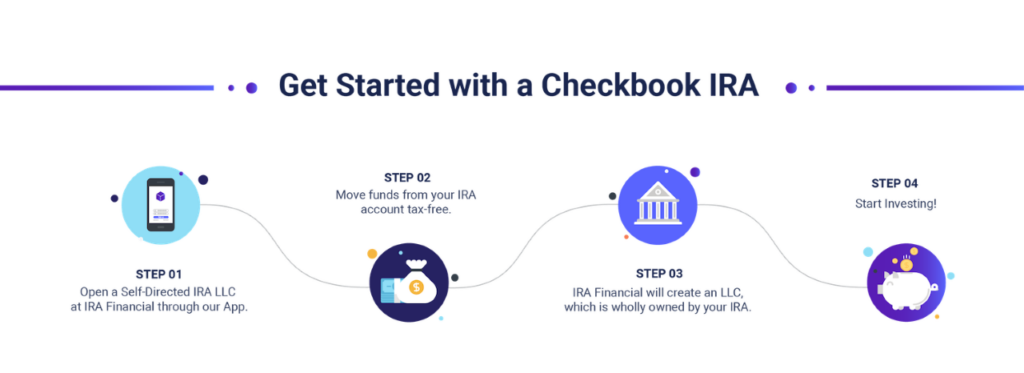
In general, in the case where the IRA is the sole owner of the LLC, the LLC is treated as a disregarded entity for federal income tax purposes and no federal income tax return is required to be filed. However, if the LLC will be owned by two or more members, the LLC will be considered a partnership and IRS Form 1065 must be filed.
Form 1065 is required to be filed, or an extension requested, by March 15th each year.
IRS Form 1065 – Schedule K-1
The partnership uses Schedule K-1 to report your share of the partnership’s income, deductions, credits, etc. Schedule K-1 is part of the IRS Form 1065. A copy of Schedule K-1 is sent to the IRS and a copy to each LLC member. The LLC member will use the K-1 to report income or losses on his or tax return. However, in the case of a Checkbook IRA, the IRA is tax-exempt and does not generally pay tax. Hence, the K-1 is simply sent to the IRA member but there is generally no tax consequence.
If your Checkbook IRA will be investing in a multiple-member LLC, the manager or general partner of that entity would be responsible for completing Form 1065 & Schedule K-1. Whereas, in the case of a multiple-member Checkbook IRA, where the IRA owner is serving as the manager of the LLC, the IRA owner would be responsible for filing Form 1065/Schedule K-1. Below are some keys tips to remember when completing Schedule K-1:
- Part I: Make sure to include the name and EIN of the LLC
- Part II: For partner’s info – please include the name of the IRA care of the IRA custodian. For example, IRA Financial Trust Company FBO John Doe IRA. You should also use the address of the IRA custodian. Regarding the EIN of the IRA, you have an option of using the EIN of the IRA custodian or you can acquire an EIN on the IRS website. In addition, it is important to check box I2 that the partner of the LLC. The remaining portion of Part II should be completed based on the financial details of the LLC.
- Part III: Please complete based on the financial details of the LLC during the taxable year. Note – if the LLC has ordinary business income to report in Box 1 above $1,000, the LLC could be subject to a tax known as the unrelated business taxable income tax or UBTI/UBIT. In addition, UBTI can be reported on Schedule K-1 using Code V in Box 20.
Conclusion
Investing in a multiple-member LLC with a Checkbook IRA is quite common and is generally not subject to any tax. However, it is important to be aware that as the manager of the IRA, IRS Form 1065 and Schedule K-1 must be timely filed with the IRS. Part II of Schedule K-1 is the portion of the Schedule where you will indicate to the IRS that the member or partner of the LLC is a tax-exempt IRA.
Navigate K-1s with Confidence — Make Your IRA-LLC Work for You
When your self-directed IRA holds an ownership interest in a multi-member LLC and receives a Schedule K-1, it’s crucial to get the filings right — including the LLC’s Form 1065, correct EIN usage, and proper handling of any UBTI. Let our IRA Financial specialists ensure everything’s managed above board so your alternative-asset strategy stays compliant and effective.
Schedule a Free Consultation
Open an Account

Can You Rollover Savings Bonds - I Bonds - into an IRA?
At IRA Financial, we are frequently asked, can you roll over savings bonds – I Bonds – into an IRA?
One of the more popular ways to fund an IRA is via a transfer or rollover. In general, you can transfer, tax free, assets (money or property) from other retirement programs (including traditional IRAs) to an IRA. There are over $500 billion of rollovers done every year. Other than directly contributing to an IRA, the rollover is the only other way to add assets to an IRA, including saving bonds and considering the interest income implications.
Key Takeaways
- You cannot purchase U.S. Series I Savings Bonds directly inside a traditional or Roth IRA.
- A workaround exists by utilizing the Checkbook IRA (IRA LLC) structure to invest in I Bonds
- Through Treasury Direct, the IRA owner can apply using the LLC name and LLC tax identification number.
Rollovers
There are two types of IRA rollovers: (i) direct and (ii) indirect. Rollovers can be done in cash or in-kind (moving the asset without liquidating).
Direct Rollovers
A direct rollover (or transfer) occurs when retirement assets are sent directly from one plan custodian to another. They are tax free and can be done an unlimited amount of times and are not subject to a withholding tax.
Indirect Rollovers
An indirect rollover occurs when the assets are transferred to the account owner first instead of directly to the custodian. An indirect IRA rollover can only be done once every 12 months. The IRA owner needs to re-contribute the amount of funds received to a retirement plan within 60 days (the "60-day rule"). If cash is received then cash must be re-contributed (same goes for in-kind assets, like I Bonds). Failure to do so will trigger a tax and 10% penalty if you are under the age of 59 1/2.
Savings Bonds – I Bonds
U.S. savings bonds are debt securities issued by the United States Department of the Treasury to help pay for the U.S. government’s borrowing needs. Savings bonds are considered one of the safest investments because they are backed by the full faith and credit of the United States government.
One of the most popular forms of saving bonds is the I Bond. Series I savings bonds protect an individual from inflation. With an I Bond, the owner receives a fixed rate of interest and a rate that changes with inflation that is adjusted every six months. The inflation adjustment feature of I Bonds ensures that the bond's value keeps pace with inflation, providing a hedge against rising prices.
How Much Does an I Bond Cost?
In a calendar year, one can acquire:
- Up to $10,000 in electronic I Bonds in Treasury Direct
- Up to $5,000 in paper I Bonds using your federal income tax refund
What is the interest rate on an I Bond Today?
The interest rates on I Bonds are 3.11%. A new rate will be issued in May 2025, and last six months. This cycle continues every year.
Book a free call with a self-directed retirement specialist
- Review your self-directed retirement options
- Learn about investing in alternative assets
- Get all of your questions answered
IRAs and I Bonds
An IRA is not an individual and does not have a social security number. The Treasury Direct application process requires the applicant to have a social security number. Likewise, an IRA is not an entity, but may be deemed a trust under Internal Revenue Code Section 408:
“For purposes of this section, the term “individual retirement account” means a trust created or organized in the United States for the exclusive benefit of an individual or his beneficiaries.”
The Treasury Direct application process does not request information on the IRA custodian but simply requests information on the account manager, which can be the individual IRA owner. A Treasury Direct account allows the IRA owner to purchase and manage various Treasury securities, including savings bonds, directly from the U.S. Treasury.
Self-Directed IRA LLC & I Bonds
Just like an IRA can technically be treated as a trust and use Treasury Direct to purchase an I Bond, a retirement investor can establish a Self-Directed IRA to purchase an I Bond. Using TreasuryDirect, the IRA owner can also purchase newly issued securities directly from the Treasury during scheduled auctions.
When utilizing a Checkbook IRA, a limited liability company (“LLC”) is created which is funded and owned by the IRA and managed by the IRA holder. Through Treasury Direct, the IRA owner can apply using the LLC name and LLC tax identification number.
Solo 401(k) & I Bonds
Like an IRA, a 401(k) plan is defined as a trust pursuant to IRC Section 401:
“A trust created or organized in the United States and forming part of a stock bonus, pension, or profit-sharing plan of an employer for the exclusive benefit of his employees or their beneficiaries shall constitute a qualified trust under this section.”
Hence, a 401(k) should be able to purchase I Bonds via the Treasury Direct platform. Using the Treasury Direct portal, a Solo 401(k) plan can establish an account in the name of the 401(k) trust and the plan participant can serve as the account manager. For purposes of Treasury Direct, it would be helpful if the plan name included the word “trust” in the title; a business has quite a bit of flexibility in naming a 401(k) plan.
Saving Bonds Rollover Rules
Savings bonds, or I Bonds, are a conservative investment that brings in expected returns that may have a place in everyone’s portfolio (speak to your financial advisor). If you hold paper savings bonds, the interest on these bonds is reported through the 1099-INT form when the bond is cashed or matures.
If you do hold them in a retirement plan, they can be rolled over or transferred to another one. The savings bond interest can potentially be tax free if used for qualified higher education expenses. A saving bond is treated as property just like stocks or real estate and can be rolled over in-kind.
Earnings on savings bonds held within an IRA are tax deferred until withdrawal, providing a significant tax advantage. Logically speaking, a direct rollover is the best option, as there’s no real reason to take personal possession of them temporarily. This way, you don’t need to worry about the 60-day indirect rollover rule and potential taxes. So, if you do have I bonds held inside of a retirement account and want to move them, don’t fret, you have options for doing so.

Tax Implications of I Bonds
I bonds are subject to federal income tax, but there are some exceptions and considerations to keep in mind. The interest earned on I bonds is taxable, but it can be exempt from federal income tax if used for qualified higher education expenses. This exemption applies to the interest earned on I bonds issued after 1989.
To qualify for the exemption, the bond owner must have reached age 24 before the bond issue date, and the bond must be registered in the owner’s name. The bond owner can also list a beneficiary on the bond, but the beneficiary cannot be a co-owner.
If the bond owner redeems the I bond to pay for qualified higher education expenses, the interest earned on the bond is tax-free. However, if the bond owner redeems the I bond for any other reason, the interest earned on the bond is subject to federal income tax.
It’s also worth noting that I bonds are not subject to state or local taxes, making them a tax-efficient investment option.
Transferring Treasury Securities to an IRA
Transferring Treasury securities to an IRA can be a bit complex, but it’s a great way to diversify your retirement portfolio. Here are the steps to follow:
- Check with your financial institution: Before transferring Treasury securities to an IRA, check with your financial institution to see if they offer this service. Some institutions may have specific requirements or restrictions.
- Gather required documents: You’ll need to gather the required documents, including the Treasury security certificate, your IRA account information, and a transfer request form.
- Complete the transfer request form: Fill out the transfer request form, which will require your personal and account information, as well as the details of the Treasury security you want to transfer.
- Submit the transfer request: Submit the transfer request form to your financial institution, along with the required documents.
- Wait for processing: The transfer process can take several weeks, so be patient. Once the transfer is complete, you’ll receive confirmation from your financial institution.
It’s also important to note that there may be fees associated with transferring Treasury securities to an IRA, so be sure to check with your financial institution for more information. Work with IRA Financial to help with facilitate the transfer or rollover.
Reporting I Bond Rollovers to the IRS
If you roll over an I bond into a qualified education account, such as a 529 plan or a Coverdell ESA, you’ll need to report the rollover to the IRS. Here’s how:
- Complete Form 8815: You’ll need to complete Form 8815, which is used to report the exclusion of interest from Series EE and Series I savings bonds.
- Attach Form 8815 to your tax return: Attach the completed Form 8815 to your tax return, along with a copy of the I bond certificate and any other required documentation.
- Keep records: Keep records of the I bond rollover, including the date of the rollover, the amount rolled over, and the qualified education account into which the funds were rolled.
It’s also important to note that you’ll need to report the interest earned on the I bond on your tax return, even if you roll it over into a qualified education account. However, the interest earned on the I bond will be tax free if used for qualified higher education expenses.
Want to Make Your Savings Bonds Work for Retirement?
While you can’t directly roll existing U.S. savings bonds like Series I Savings Bonds into an IRA, there are strategies you can explore—such as redeeming the bonds and using the proceeds to contribute or investing via a self-directed structure. Our specialists at IRA Financial can help you understand your options, avoid compliance pitfalls, and structure a retirement-ready plan tailored to your savings strategy.
Schedule a Free Consultation
Open an Account

Why Real Estate May Outshine the S&P 500 for the Next Decade
When considering where to allocate your hard-earned money, the debate between real estate and stock market investments, such as the S&P 500, is ever-present. While both offer growth opportunities, real estate has unique advantages that make it a compelling choice for long-term investors.
The stock market has enjoyed a historic bull run over the last decade, with the S&P 500 delivering a stunning 13% annual return. However, according to Goldman Sachs, that remarkable growth is unlikely to continue. As a result, investors are looking for alternatives, and real estate could be one of the most attractive options.
Over the next decade, factors such as stability, leverage potential, diversification, and economic trends position real estate as a superior investment option compared to the S&P 500.
- Real estate has long been a favorite among investors, especially those looking to invest in alternative assets within a retirement account.
- While stocks have been an admirable investment over the years, the forecast over the next ten years is not as sunny.
- Stability, the power of leverage, passive income, and inflation protection all work in real estate's favor.
Goldman Sachs' Sobering S&P 500 Forecast
Goldman Sachs strategists led by David Kostin project that the S&P 500's returns will fall dramatically in the coming decade, citing a couple of reasons:
- The index's recent growth has been driven by a handful of high-performing tech stocks, like Nvidia and Alphabet, which might not be able to sustain their exponential growth.
- The chances that the S&P 500 will under-perform other assets, such as Treasury bonds, are high (72%), and there is a 33% chance it will lag behind inflation.
For investors who enjoyed the strong performance of the past 10 years, a forecast of just 3% annual returns over the next decade may be underwhelming, especially when considering inflationary pressures and the potential risks of overvaluation.
Tangible Value and Stability
One of the most compelling reasons to invest in real estate is its tangible nature. Unlike stocks, which are abstract shares in a company’s future performance, real estate is a physical asset that fulfills a basic human need: shelter. This inherent utility creates stability in demand, which is less susceptible to the dramatic volatility that often plagues the stock market.
Real Estate as a Hedge Against Volatility
The S&P 500 represents the top 500 publicly traded companies in the U.S., which can be affected by a range of unpredictable factors, including geopolitical tensions, inflation spikes, and interest rate fluctuations. Real estate, in contrast, tends to experience more gradual price adjustments. While stocks can lose value rapidly during market downturns, real estate prices historically show resilience, especially in desirable locations.
Consistent Appreciation
Over time, real estate values have consistently appreciated, driven by population growth, urban development, and limited land supply. According to the National Association of Realtors, U.S. home prices have risen at an average annual rate of 3-5% over the past several decades. In contrast, the S&P 500's average annual return, while higher at approximately 10%, is significantly more volatile and reliant on market performance.
The Power of Leverage
Real estate offers a unique advantage that is rarely available in the stock market: the power of leverage. Through mortgages and other financing tools, investors can control a valuable asset with only a fraction of the purchase price as a down payment.
Amplified Returns
For example, if you purchase a $300,000 property with a 20% down payment ($60,000) and it appreciates by 5% annually, your return on investment (ROI) is amplified significantly due to leverage. After one year, a 5% increase equates to $15,000, which represents a 25% return on your initial $60,000 investment. In the stock market, achieving such high returns within a year would typically require substantial risk.
Using Other People’s Money
Real estate allows investors to use "other people's money" (OPM) to build wealth, whether through tenant rents covering your mortgage or securing loans with historically low interest rates. Leverage reduces the need for substantial upfront capital, enabling you to scale your portfolio more quickly compared to investing in the stock market.
Steady Passive Income Streams
Real estate offers another key advantage: the potential for passive income through rental properties. This consistent cash flow can supplement your earnings, fund additional investments, or serve as a safety net during economic downturns.
Cash Flow Resilience
During times of market uncertainty, dividend payments from stocks can be reduced or eliminated. By contrast, rental income is relatively stable, provided the property is in a strong rental market. Moreover, rents tend to increase over time, especially in areas with growing demand.
Tax Advantages
Real estate investors enjoy significant tax benefits, such as depreciation, deductions for property expenses, and favorable treatment of long-term capital gains. These incentives increase net income, further solidifying real estate as a superior option for generating wealth.
Inflation Protection
Inflation erodes the purchasing power of money, making it a critical factor in investment decisions. Real estate is often hailed as an effective hedge against inflation because property values and rental incomes tend to rise alongside inflation.
Real Assets Thrive in Inflationary Environments
As inflation increases, so does the cost of building materials and labor, which in turn drives up property prices. Meanwhile, fixed-rate mortgage payments remain unchanged, further boosting the ROI for real estate investors. The S&P 500, while providing some inflation protection, is often more susceptible to interest rate hikes, which can drag down stock valuations.
Historical Performance During Inflationary Periods
Historically, real estate has outperformed stocks during periods of high inflation. The 1970s, a decade marked by significant inflation, saw substantial gains in real estate values while stock market returns were relatively muted.
Diversification Benefits
A well-diversified portfolio is key to mitigating risk, and real estate offers an excellent way to achieve this. Unlike stocks, which are directly tied to the financial performance of companies, real estate is influenced by different economic factors such as local job markets, population growth, and housing supply.
A Self-Directed IRA is the best way to diversify your retirement portfolio. It allows to you invest in alternative assets, including real estate, that you wouldn't normally be allowed to invest in. This is because traditional retirement plans only allow for traditional investments. Self-directing your retirement allows for (almost) any type of investment you want.
Low Correlation with Stocks
Real estate has a low correlation with the stock market, meaning its performance does not move in tandem with stocks. This makes it an ideal diversification tool to balance risk in your investment portfolio.
Geographic and Asset-Class Diversification
Real estate also allows for diversification across different markets and property types. Residential, commercial, industrial, and vacation properties each have unique risk and reward profiles, enabling investors to tailor their portfolios to their goals.
Long-Term Economic and Demographic Trends
Several macroeconomic and demographic factors favor real estate as an investment over the next decade.
Urbanization and Population Growth
As cities continue to expand and populations grow, the demand for housing, commercial spaces, and infrastructure will rise. The U.S. Census Bureau projects that the population will grow by approximately 25 million by 2035, fueling demand for real estate in high-growth areas.
Remote Work and Lifestyle Shifts
The pandemic has reshaped how and where people live, with growing demand for suburban and rural homes, as well as properties with home-office spaces. These trends are expected to continue, providing new opportunities for real estate investors.
Control Over Your Investment
Real estate offers a level of control that is rarely available in the stock market. As a property owner, you can influence the value of your investment through improvements, marketing, and strategic management.
Value-Add Opportunities
Renovations, upgrades, and effective property management can significantly increase a property’s value and rental income. In the stock market, investors are passive participants with little ability to influence the performance of their investments.
Direct Ownership
Unlike stocks, which are subject to corporate decisions and market sentiment, real estate provides direct ownership and a sense of security. Even during economic downturns, your property retains intrinsic value and utility.
Challenges and Risks to Consider
While real estate offers numerous advantages, it is not without challenges. These include:
- Liquidity Constraints: Real estate transactions can take weeks or months, making it less liquid than stocks.
- Management Responsibilities: Owning and managing properties requires time and effort, or the cost of hiring property managers.
- Market Risks: Real estate markets can experience downturns, particularly in overbuilt areas or during economic recessions.
Despite these challenges, careful planning and due diligence can mitigate risks, making real estate a highly rewarding investment.
Conclusion: A Decade of Opportunity
As we look ahead to the next decade, real estate emerges as a stronger investment choice compared to the S&P 500. Its tangible value, stability, and leverage potential offer unique advantages for wealth creation. Moreover, the potential for passive income, inflation protection, and diversification aligns with the needs of long-term investors seeking consistent growth. Couple that with expert predictions, and you can make a case for real estate outshining traditional investments.
While the S&P 500 remains an attractive option for those comfortable with volatility, real estate provides a balanced and reliable path to financial security. By capitalizing on current economic trends, leveraging low interest rates, and focusing on high-growth markets, investors can position themselves for significant success in the years to come.
Explore Real Estate Investment Through Your IRA
Real estate offers unique advantages like stability, leverage potential, and passive income, making it a compelling choice for long-term investors. With a Self-Directed IRA, you can invest in real estate while enjoying tax advantages.
Schedule a Free Consultation
Open an Account

How to Purchase Real Estate with Roth IRA
Did you know that you can purchase real estate with a Roth IRA? Many banks lead you to believe that you can only use your Roth IRA to invest in stocks, bonds, and mutual funds. However, you can use your Roth IRA to invest in alternative investments, including real estate. You simply need to open a Self-Directed Roth IRA with a custodian that allows you to invest in real estate. With IRA Financial’s Self-Directed Roth IRA, you can invest in anything you can possible imagine, so long as it is not prohibited by the IRS.
Key Takeaways
- Can I buy real estate with a Roth IRA?
- Yes! A Self-Directed Roth IRA allows you to invest in real estate, including rental properties, raw land, and commercial buildings, while keeping all gains tax free.
- How do I set up a Self-Directed Roth IRA for real estate?
- Open a Self-Directed Roth IRA with a custodian that allows real estate investments, such as IRA Financial.
- Fund your account through a rollover, transfer, or direct contribution.
- Purchase real estate titled in the name of your IRA (or LLC if using a Checkbook IRA).
- Ensure all income and expenses flow through the IRA, not personal accounts.
Introduction to Real Estate IRAs
A Real Estate IRA, which can also be known simply as a Self-Directed IRA, is a powerful tool for diversifying your retirement portfolio with real estate investments. Unlike traditional IRAs, that limit you to stocks, bonds, and mutual funds, a Self-Directed IRA opens the door to a broader range of investment opportunities, including rental properties, commercial properties, and raw land.
This type of retirement account allows real estate investors to leverage their knowledge and expertise in the property market, all while enjoying the benefits of tax-deferred growth and income. By holding real estate within your retirement account, you can potentially increase your retirement savings and create a steady stream of income.
What is a Self-Directed Roth IRA for Real Estate?

A Self-Directed Roth IRA to purchase real estate may be the best decision any investor can make. Setting up a self-directed account is crucial for those looking to diversify their retirement holdings beyond traditional assets. As you may know, there are many benefits to establishing this type of retirement plan. Further, when utilizing an after-tax Roth account, you'll never have to worry about taxes from your retirement investments ever again!
Again, with a Self-Directed IRA, you can invest outside of traditional investments. This allows you to diversify your portfolio and better protect your assets/funds. As you may know, in the 2008 financial crisis, many retirement holders lost almost 25% of their retirement assets. As a result, diversification is steadily growing in popularity. Plan participants realize they don’t have to invest in Wall Street.
To wit, alternative investments, such as real estate, have always been possible IRA investments. Yet, prior to 2008, very few people knew about self-directed retirement plans as a conduit to make alternative investments.
Real Estate Investments in a Roth IRA
Here is just a partial list of domestic or foreign real estate investments you can make with your Self-Directed Roth IRA.
- Residential homes
- Raw Land
- Commercial properties
- Apartments
- Duplexes
- Condos/town homes
- Mobile homes
- Real estate notes
- Real estate purchase options
- Tax liens certificates
- Tax deeds
These options provide a variety of ways to purchase investment property using your Self-Directed Roth IRA.
Book a free call with a self-directed retirement specialist
- Review your self-directed retirement options
- Learn about investing in alternative assets
- Get all of your questions answered
Purchase Real Estate with a Roth IRA - The Benefits
Real estate has emerged as a highly popular non-traditional asset for retirement investing. But why is that? Here are some compelling reasons:
- Familiarity and Confidence: People tend to invest in what they understand. Real estate, being tangible and familiar, inspires confidence. Many individuals possess substantial knowledge about the property market, making it an attractive investment choice.
- Inflation Protection: Investing in real, physical assets can shield retirement savings from the erosive effects of inflation. Unlike other forms of investment, real estate tends to appreciate over time, providing a hedge against rising prices.
- Tax-Free Income and Gains: Did you know that all income and gains from real estate can be tax free? It’s true! When real estate is owned within a retirement account, it enjoys tax-exempt status. One of the key tax advantages of using a Roth IRA for real estate investments is the potential for tax-free withdrawals during retirement. Let’s illustrate this with an example:
- Suppose you purchase a property using your IRA for $100,000. Later, you sell the property for $300,000, resulting in a gain of $200,000. That gain is tax free while it's held inside of the account. Further, if it was held inside a Roth IRA, and the account has been open for at least five years, and you are at least age 59 1/2, when you withdraw those funds, there would be no tax!
- Contrast this with using personal funds (non-retirement funds), where the gain would be subject to federal and state income taxes.
Real estate remains the most common asset held by IRA Financial clients. However, IRA Financial does not limit what you can invest in. Some Self-Directed IRA custodians only allow clients to invest in certain assets. Many do not allow real estate investments. At IRA Financial, you can invest in real estate and extensive alternative investments for a low annual fee.
Tax-Deferred Income
One of the standout benefits of a Real Estate IRA is the tax-deferred growth and income it offers. When you invest in rental properties through your IRA, the rental income and any appreciation in property value are not subject to immediate taxation. Instead, these earnings grow tax-deferred within your retirement account, allowing your investment to compound over time.
If you hold it in a Roth IRA, the advantages are even greater. All qualified distributions taken during retirement are tax free, providing you with a source of tax-free income. This means you can maximize your retirement wealth without the burden of annual taxes on your investment gains.
Why Buy Real Estate with a Roth IRA?
Self-Directed Roth IRA with Checkbook Control
Most financial institutions don’t allow real estate investments. In the end, the IRA custodian makes the decision on what you can invest in with your retirement plan. However, a Checkbook IRA, you are the manager of the IRA-owned LLC, and can make decisions on what to invest in. Of course, this includes real estate. It is important to be aware of the IRA rules to ensure compliance and avoid penalties.
To reiterate, (you can find this information in our other Checkbook IRA content), now making investments is quick and easy. You no longer have to pay high custodian fees or wait as custodians approve (or deny) your investments. With a Checkbook IRA, you write a check or wire funds from your IRA LLC bank account, and the investment is yours!
Learn More: Top Retirement Plans for LLC Owners: Options You Need to Know
How to use a Roth IRA to Invest in Real Estate
Open a Self-Directed Roth IRA
Find a Self-Directed IRA custodian, such as IRA Financial, and set up a Self-Directed Roth IRA. It is important to note that not all custodians allow you to invest in real estate using a Roth IRA. To open an account, simply use our online platform. An account number will then be generated.
Once an account number is generated, you will need to fund your account using a rollover, transfer or contribution. If you have a traditional funds you will need to perform a conversion to fund the Roth IRA. Understanding the different types of retirement accounts available can help you make an informed decision.
Find and Purchase the Investment Property

Once your account is open, you will need to find an investment property. With IRA Financial’s Checkbook IRA solution, you simply use your IRA account to write a check to purchase the property. There is no need for approval or oversight from the custodian. If you elect to choose a custodian-controlled IRA, the custodian will purchase the property on your behalf.
The title to the investment property and all transaction documents must be in the name of the IRA, or the IRA LLC if using a Checkbook IRA. The LLC manager must sign the documents pertaining to the property investment.
Remember that all expenses, including property taxes, must be paid from your Self-Directed Roth IRA. Likewise, all gains, including rental income, must go directly into the account. No IRA investment checks should be deposited into your personal accounts. Owning real estate within an IRA comes with specific responsibilities and regulations that must be followed.
Enjoy Tax Free Gains
Once you have successfully purchased your real estate investment with the Self-Directed Roth IRA, all you have to do is sit and watch the money flow through your account. Since you are using a Roth IRA, all income derived from the investment property will flow back to your Roth IRA tax free! Furthermore, you can use your Self-Directed Roth IRA to invest in a wide-range of alternative and traditional assets, including stocks and bonds, precious metals, cryptos, private businesses, hard-money loans and more.
Learn More: Why Real Estate May Outshine the S&P 500 for the Next Decade
Important Items to Remember
Using a Non-Recourse Loan
For real estate investors looking to maximize their purchasing power, a non-recourse loan can be an invaluable tool. A non-recourse loan is a loan that is secured solely by the property being purchased, not by the investor’s personal assets or credit. This type of financing allows you to leverage your Roth IRA funds to acquire properties that might otherwise be out of reach.
However, it’s important to be aware that using a non-recourse loan within your IRA can trigger UBTI on the income generated by the property. Despite this, the ability to use leverage can significantly enhance your real estate investment strategy within a Self-Directed IRA.
Property Management and Maintenance
Owning a rental property comes with the responsibility of property management and maintenance. As the investor, you are responsible for ensuring that the property is well-maintained and that tenants are managed effectively. However, to comply with IRS regulations and avoid prohibited transactions, you cannot personally perform any work on the property.
Instead, you must hire a property management company or contractors to handle these tasks. All expenses related to property management and maintenance must be paid from your IRA funds, and all rental income must flow back into the IRA. This ensures that the income generated by the property remains tax-deferred.
Selling Property in a Roth IRA
When it comes time to sell a property held within your Roth IRA, the process is straightforward and tax-advantaged. You can sell the property to a third party, and the proceeds from the sale will be deposited back into your Roth IRA. The significant advantage here is that the gains from the sale are tax free. This allows you to reinvest the full amount of the proceeds into other investments within your IRA.
When it comes to time to withdraw funds from the Roth, no taxes will be due on qualified distributions. Alternatively, if you still own real estate inside the account, you can take possession of it personally, at that time. Just remember, any Roth must have been opened five years prior, and you, the IRA owner, must be at least age 59 1/2. If not, you will face penalties and taxes. Consult with a professional before deciding to distribute a real estate property.
Summary
Investing in real estate through a Self-Directed Roth IRA offers a powerful way to grow your retirement wealth with tax-free gains. By leveraging the flexibility of a self-directed account, you can diversify beyond traditional assets and tap into the long-term potential of property investments. While this strategy comes with unique rules and responsibilities—like avoiding prohibited transactions and ensuring compliance—it can be a game-changer for those looking to take more control of their financial future.
As always, it’s wise to consult with a qualified advisor to make sure your investment strategy aligns with your retirement goals. With the right planning, a Self-Directed Roth IRA can be your gateway to building lasting, tax-free wealth through real estate.
Maximize Growth by Investing in Real Estate Through a Self-Directed Roth IRA
Want the tax-free growth of real estate combined with retirement freedom? A Self-Directed Roth IRA lets you invest in rental homes, raw land, commercial properties, and more—while gains and income remain tax-free when distributions qualify. Our team at IRA Financial can help set up your account, ensure full IRS compliance, and get your real estate strategy aligned with your future goals.
Schedule a Free Consultation
Open an Account
Frequently Asked Questions
What are the tax benefits of buying real estate with a Roth IRA?
Do I have to use a Self-Directed Roth IRA to Invest in Real Estate?
What restrictions apply when investing in real estate with a Roth IRA?
• No personal funds – All expenses must be paid from the IRA.
• IRS compliance – Avoid transactions with "disqualified persons" to prevent penalties.