


2026 Coverdell ESA Contribution Limits: How Much You Can Contribute, Who Is Eligible, and What Actually Matters
Most families saving for education focus on 529 plans and never look twice at the Coverdell ESA. That is a mistake. For families with K-12 expenses, nontraditional schooling costs, or a preference for greater investment flexibility, the Coverdell offers tax benefits that a 529 simply does not match. The catch is that the rules are strict, the limits are low, and the mistakes are costly. Here is what you need to know for 2026.
In 2026, the maximum contribution to a Coverdell Education Savings Account (ESA) remains $2,000 per beneficiary per year, subject to strict income limits for contributors. The limit has not increased for inflation, contributions are capped across all contributors combined, and eligibility is determined by the contributor's modified adjusted gross income (MAGI), not the beneficiary's income. Contributions must generally stop when the beneficiary turns 18, and unused funds must be spent or reassigned by age 30.
Key Takeaways:
- The 2026 Coverdell ESA contribution limit is $2,000 per beneficiary
- Income limits apply to contributors, not beneficiaries
- The limits are not indexed for inflation
- Multiple contributors must coordinate to avoid excess contributions
- Age 18 and age 30 rules materially affect planning
- Coverdells work best as precision tools, not primary education savings accounts
2026 Coverdell ESA Contribution Limit
The hard cap is simple: $2,000 per beneficiary, per year. That limit applies across all contributors combined, is not indexed for inflation, and has not changed from prior years.
If two parents, grandparents, and an aunt all contribute to the same child's Coverdell in 2026, their total combined contributions cannot exceed $2,000. This is the most common mistake families make, and it triggers a penalty that is entirely avoidable with a little coordination.
Coverdell ESA Income Limits in 2026: Who Can Contribute
Coverdell ESAs are income-restricted. Eligibility is based on the contributor's MAGI, not the household's total income and not the beneficiary's income.
| Filing Status | MAGI | Contribution Allowed |
|---|---|---|
| Single / Head of Household | Under $95,000 | Full $2,000 |
| Single / Head of Household | $95,000 to $110,000 | Partial (phased out) |
| Single / Head of Household | Over $110,000 | Not allowed |
| Married Filing Jointly | Under $190,000 | Full $2,000 |
| Married Filing Jointly | $190,000 to $220,000 | Partial (phased out) |
| Married Filing Jointly | Over $220,000 | Not allowed |
These thresholds have not changed for 2026 and are not indexed for inflation, which means more families fall out of eligibility each year without any change to their circumstances.
What "Per Beneficiary" Actually Means
The $2,000 limit applies to the beneficiary, not the contributor.
- One child means one $2,000 annual cap
- Three children means up to $6,000 total, split across three separate accounts
- Multiple contributors are allowed, but must coordinate to stay under the annual cap
There is no per-contributor limit. There is only a per-beneficiary limit.
Age-Based Contribution Rules That Are Often Overlooked
Coverdell ESAs have age restrictions that materially affect how you plan around them.
Contributions must generally stop when the beneficiary turns 18. Funds must be used by age 30 unless the beneficiary has special needs or the balance is rolled over to another eligible family member.
This makes the Coverdell a short to mid-term education tool, not a long-duration compounding account. Families who open one early have the most time to take full advantage of it.
Book a free call with a self-directed retirement specialist
- Review your self-directed retirement options
- Learn about investing in alternative assets
- Get all of your questions answered
Why Is the Contribution Limit So Low?
The Coverdell ESA was not designed to compete with 529 plans on scale. It was designed to cover K-12 education expenses, not just college, allow tax-free growth for nontraditional education costs, and provide flexibility around timing and expense types.
The low contribution cap intentionally puts the account in a supporting role rather than a primary savings vehicle. For families with nontraditional schooling paths or significant K-12 expenses, that supporting role can still be genuinely valuable.
How Families Use the Coverdell Despite the Limits
In practice, families use Coverdells in three main ways.
1. K-12 Expense Offset Private school tuition, tutoring, technology, and curriculum costs can all be paid tax-free from the account, which is an advantage 529 plans do not fully match.
2. Targeted Early Education Funding Rather than funding college broadly, families use the account for predictable near-term expenses where the tax-free treatment delivers a clear, immediate benefit.
3. Coordinated Family Contributions When parents exceed income limits, grandparents or other relatives within the thresholds contribute instead, while the family coordinates to stay under the $2,000 cap. There is no legal workaround that allows high-income parents to contribute directly once they are phased out.
How the Coverdell Compares to a 529 Plan
Many families use both accounts rather than choosing one over the other. Here is how they compare.
| Feature | Coverdell ESA (2026) | 529 Plan |
|---|---|---|
| Annual Contribution Limit | $2,000 per beneficiary | High lifetime limits |
| Income Limits | Yes | No |
| K-12 Expense Coverage | Broad | More limited |
| Age Restrictions | Yes | No |
| Investment Flexibility | High (self-directed option) | Generally limited |
The Coverdell's advantage is its flexibility on expense types and investment options. The 529's advantage is its scale and lack of income restrictions.
Read More: The “Triple-Threat” Education Strategy: 529, Self-Directed Coverdell, and the Trump Account
Excess Contributions
If total contributions exceed $2,000 for a beneficiary in 2026, the consequences are real. Excess contributions are subject to a 6% excise tax per year, the excess must be removed to stop the penalty from continuing, and earnings on the excess may also be taxable.
That is why coordination between contributors is not optional. It is the most important administrative step in managing a Coverdell account.
Bottom Line
In 2026, the Coverdell ESA remains narrowly scoped but highly specific in its usefulness. The contribution limit is small, the income rules are strict, and the timelines are unforgiving. But that is exactly the point. This account was never designed to do everything. It was designed to do a few things exceptionally well. For families with early education expenses, nontraditional schooling paths, or a preference for self-directed investing, the Coverdell fills a gap that no other education savings account quite matches. Used intentionally alongside a 529, it can deliver meaningful tax benefits that compound over time.


Top Retirement Accounts for FIRE Investors: A Guide to Maximizing Your Tax-Advantaged Savings
If you are serious about achieving Financial Independence to Retire Early (FIRE), your retirement accounts are not optional tools. They are the foundation of your strategy.
Over the years, I have worked with thousands of investors who want control, flexibility, and tax efficiency. The reality is simple. If you structure your retirement accounts properly, you can dramatically accelerate your path to financial independence. If you do not, you can leave serious tax savings and growth on the table.
Key Takeaways:
- Why retirement accounts matter for FIRE
- Who FIRE investors are and what they need
- Key risks and considerations
- The top retirement account providers for FIRE investors
- Common FAQs about retirement accounts and FIRE
- How to learn more from IRA Financial
What Are Retirement Accounts for FIRE Investors?
Retirement accounts are tax-advantaged vehicles designed to help you save for retirement. For FIRE investors, they are powerful wealth-building tools that can:
- Reduce your current tax burden
- Allow tax-free or tax-deferred growth
- Enable strategic early retirement funding through rules such as 72(t) distributions and Roth conversion strategies
For many pursuing FIRE, maximizing these accounts is the difference between retiring at 45 and retiring at 60.
Who Are FIRE Investors?
FIRE stands for Financial Independence, Retire Early. It's a movement focused on aggressive saving, disciplined investing, and achieving financial freedom well before traditional retirement age.
Typical FIRE investor traits include:
- High savings rate, often 50%or more
- Intentional spending and a frugal lifestyle
- Long-term investing mindset
- Strategic use of tax-advantaged accounts
- A desire for flexibility in when and how they retire
FIRE investors need retirement accounts that offer low fees, strong investment options, and strategic flexibility, especially if they plan to access funds before age 59½.
Key Risks and Considerations for FIRE Investors
Before choosing your retirement account provider, there are several important factors to understand.
- Early Withdrawal Penalties: Traditional IRAs and 401(k) plans generally impose a 10% penalty on withdrawals before age 59½ unless you qualify for specific exceptions. Planning is critical if early retirement is your goal.
- Sequence of Returns Risk: If you experience heavy market losses early in retirement, your long-term withdrawal strategy can suffer. Portfolio construction and withdrawal planning matter.
- Tax Rate Uncertainty: Choosing between Roth and Traditional accounts depends on whether you expect to be in a higher or lower tax bracket in retirement. There is no one-size-fits-all answer.
- Withdrawal Rules: Each retirement account has different distribution rules. Understanding how and when you can access your funds is essential for anyone pursuing early retirement.
Book a free call with a self-directed retirement specialist
- Review your self-directed retirement options
- Learn about investing in alternative assets
- Get all of your questions answered
Top Retirement Accounts and Providers for FIRE Investors
The following providers were selected based on fees, reputation, offerings, performance history, and account requirements. The list is presented in no particular order.
1. IRA Financial
IRA Financial specializes in retirement strategies often used by serious FIRE investors. The firm focuses on customized IRA setups, including Solo 401(k) plans, self-directed IRAs, Roth conversions, stock/traditional events, and advanced tax-efficient strategies, all for one flat fee.
Best for: FIRE investors seeking flexibility, control, and professional guidance.
Standout features:
- Expert assistance with retirement tax planning
- Solo 401(k) and self-directed IRA options
- Customized strategies designed for early access planning
IRA Financial is particularly well suited for investors who want more than a brokerage account. It's built for those who want to implement sophisticated, tax-efficient retirement strategies with expert support.
2. Vanguard
Vanguard is widely known for its low-cost index funds and ETFs, which align well with long-term FIRE strategies focused on disciplined, passive investing.
Standout features:
- Low-expense mutual funds and ETFs
- No-load portfolios
- Long-standing reputation for cost efficiency
3. Fidelity
Fidelity offers extensive research tools, zero-fee index funds, and IRAs with no minimum balance requirements.
Standout features:
- Zero account fees
- Strong customer service
- Broad investment selection
4. Charles Schwab
Schwab combines competitive pricing with strong educational resources and customer service.
Standout features:
- Commission-free trades
- Automated investing options
- Broad suite of investment products
5. Betterment
Betterment provides automated investing, tax-loss harvesting, and goal-based planning.
Standout features:
- Goal-based retirement planning tools
- Automatic rebalancing
- Tax-loss harvesting features
Final Thoughts
For FIRE investors, retirement accounts are not just savings vehicles. They are strategic tax tools that can accelerate your path to financial independence when structured properly.
While there are several strong providers in the marketplace, IRA Financial stands out for its flexibility and depth of expertise in advanced retirement planning strategies often used by FIRE-focused investors.
If you are serious about optimizing your retirement accounts and building a tax-efficient path to financial independence, it's worth understanding your options in detail.
Frequently Asked Questions About FIRE and Retirement Accounts
Can I retire early using IRA or 401(k) accounts?
Yes, but accessing funds before age 59½ requires planning. Strategies such as 72(t) distributions and Roth conversion ladders can help avoid penalties if implemented correctly.
Should I choose Roth or Traditional accounts for FIRE?
If you expect higher taxes later or want tax-free withdrawals, Roth accounts may make sense. Traditional accounts can be beneficial if you want to reduce your current taxable income. The right choice depends on your projected income and tax bracket.
What is a Self-Directed IRA?
A Self-Directed IRA allows you to invest in alternative assets such as real estate or private investments, beyond traditional stocks and mutual funds. This can offer additional diversification opportunities.
Do all providers offer the same investment options?
No. Some providers limit you to traditional market investments, while others offer alternative asset flexibility. It's important to align your provider with your long-term strategy.
This article is provided for informational purposes only and does not constitute investment, tax, or legal advice. Any rankings, ratings, or opinions expressed reflect the views of IRA Financial based on internal research, listed criteria, and publicly available data at the time of publication. Rankings are subjective and may not be suitable for all investors. Readers should independently evaluate all options and consult with qualified advisors prior to making financial decisions.

Universal IRA vs. IRA Financial: What's the Difference?
Equity Trust's Universal IRA and IRA Financial's Unified Platform are both positioned as comprehensive self-directed retirement solutions for investors who want access to alternative assets. At first glance they look similar. Looking more closely at fee structure, investment access, trading capability, and total cost reveals meaningful differences that compound significantly over time.
Key Takeaways:
- How the fee structures differ between the two platforms and what that means over 10 years
- What investment capabilities each platform offers and where they differ
- How stock and crypto trading compare
- How IRS reporting and compliance support compare
- Which platform fits which type of investor
Fee Structure: The Single Biggest Long-Term Difference
The most consequential difference between the two platforms is how they charge for their services.
IRA Financial charges a flat annual fee of $495 for a Self-Directed IRA, regardless of account value. A $100,000 account and a $1,000,000 account pay the same fee. There are no asset-based charges.
Equity Trust's Universal IRA uses an asset-based tiered fee structure that scales with account value:
| Account Value | Equity Trust Annual Fee |
|---|---|
| Under $50,000 | $350 |
| $50,000 to $99,999 | $500 |
| $100,000 to $249,999 | $750 |
| $250,000 to $499,999 | $1,000 |
| $500,000 to $749,999 | $1,500 |
| $750,000 to $999,999 | $2,000 |
| $1,000,000+ | $2,500 |
Example: on a $250,000 account growing at 8% annually, an investor at IRA Financial pays $4,950 in total custodian fees over 10 years. The same investor at Equity Trust pays $12,500, a difference of $7,550. On a $500,000 starting balance, the 10-year difference is $13,050. The $13,050 in additional fees, if left invested at 8%, would have grown to approximately $19,014 by year 10.
For a complete side-by-side 10-year cost comparison across three account sizes, see IRA Financial's guide to Self-Directed IRA Custodian Fee Structures.
Stock and ETF Trading
IRA Financial: Real-time stock and ETF trading our new platform powered by Interactive Brokers. Zero commissions on US-listed stocks and ETFs. All trading happens directly inside the IRA account with no separate brokerage account required.
Equity Trust: Equity Trust offers 50 commission-free trades per calendar year through an affiliated ETC Brokerage Services account. After 50 annual trades, commission charges apply. Additional regulatory transaction fees apply to all trades. Stock trading is accessed through a linked ETC Brokerage Services account via their WealthBridge portal and myEQUITY system. It is a linked brokerage account, not a native integration within the same account. Also note that the 50 commission-free trades are still subject to regulatory transaction fees of $0.01 to $0.05 per $1,000 of principal.
For investors who want regular stock and ETF trading alongside alternative assets, the difference in trading infrastructure is significant. IRA Financial's integration with Interactive Brokers provides institutional-grade execution with no trade limits and no commission charges on US-listed securities.
Alternative Asset Investment
Both platforms support a broad range of alternative assets including real estate, private equity, private lending, precious metals, and other alternatives.
IRA Financial: Includes unlimited asset purchases in the flat annual fee. No per-transaction fees for alternative asset investments. For checkbook control accounts (Checkbook IRA or Solo 401(k)), investments can be executed directly from a dedicated bank account without custodian processing for each transaction.
Equity Trust: Alternative asset buys and sells are included in the Universal IRA. However, Equity Trust charges $30 per wire transfer compared to IRA Financial's $25. Expedited processing is $75 per transaction at both platforms for standard processing. Paper statement fees of $60 annually at Equity Trust are included at no charge at IRA Financial. Research and miscellaneous activity requests are billed at $75 per hour at Equity Trust; IRA Financial includes document research in the flat annual fee.
Cryptocurrency
IRA Financial: Direct crypto trading available 24/7. Investors own the digital assets directly. No separate crypto account required. Annual fee of $100 plus 1% per trade. Assets held in institutional-grade cold storage.
Equity Trust: Crypto is accessible through the Universal IRA platform. Digital currency purchase fee is 2% of purchase and sale fee is 1% of sale. A liquidity cost of up to 1% applies on purchases and sales. Total effective cost per round trip on Equity Trust can reach 4% compared to IRA Financial's 2% (1% buy plus 1% sell) on the same transaction.
For a $10,000 Bitcoin purchase, the effective fee difference is approximately $200 per transaction. For active crypto investors making multiple annual transactions, this adds up quickly inside a tax-advantaged account where every dollar saved on fees remains invested and compounding.
Book a free call with a self-directed retirement specialist
- Review your self-directed retirement options
- Learn about investing in alternative assets
- Get all of your questions answered
IRS Reporting and Compliance
IRA Financial: The flat annual fee includes Form 5498 filing with fair market value determinations for all alternative assets, Form 1099-R preparation for distributions, Form 5500-EZ filing for Solo 401(k) accounts once plan assets exceed $250,000, and annual consulting on contribution limits, prohibited transaction compliance, and account structure.
For clients who want deeper compliance coverage, IRA Financial's Annual Compliance Service is available for $299 per year, with the first year free for existing clients. This add-on includes preparation and filing of Form 1065 for IRA LLC partnership returns, Form 990-T for UBIT-related income, unlimited year-round access to SDIRA tax professionals, expedited support, and transaction review when custodian documentation is required. The service carries an estimated annual value of over $1,500.
Equity Trust: Annual tax reporting is handled by Equity Trust. Miscellaneous activity requests are billed at $75 per hour. Research fees apply for complex questions. There is no equivalent to IRA Financial's Annual Compliance Service offering unlimited SDIRA tax consulting, Form 1065 and 990-T preparation, and expedited support for a flat annual add-on fee.
Account Termination and Other Fees
| Fee | IRA Financial Self-Directed IRA | Equity Trust Universal IRA |
|---|---|---|
| Account setup | $0 | $50 online |
| Annual fee | $495 flat | $350 to $2,500 (asset-based) |
| Stock trading add-on | $100/year (unlimited US-listed trades, $0 commission) | Included (50 free trades/year, then commission applies; regulatory fees apply to all trades) |
| Compliance Service | $299/year; includes Form 1065, Form 990-T, unlimited tax consulting, transaction review | 990-T billed separately; complex questions billed at $75/hour |
| Domestic wire out | $25 | $30 |
| Expedited processing | $75 standard / $200 premium | $75 |
| Account termination | $250 | $250 |
| Paper statements | Included | $60/year |
| Miscellaneous activity requests | Included in base fee; unlimited with Compliance Service | $75/hour |
| Crypto purchase fee | 1% per trade | 2% of purchase plus up to 1% liquidity cost (up to 3% total) |
| Crypto sale fee | 1% per trade | 1% of sale plus up to 1% liquidity cost (up to 2% total) |
| Precious metals storage (non-segregated) | Third-party depository | $110/year |
| Precious metals storage (segregated) | Third-party depository | $160/year |
Which Platform Fits Which Investor
IRA Financial is the stronger fit for:
- Investors with growing account balances where the flat fee produces meaningful savings versus the asset-based model
- Active stock and ETF traders who want no commission limits and institutional-grade execution
- Crypto investors who make multiple transactions annually where the lower per-trade fee adds up
- Investors who want in-house tax and compliance support without hourly billing
- Self-employed investors who want a Solo 401(k) with checkbook control
Equity Trust may be a fit for:
- Investors with very small account balances who are in the sub-$50,000 tier
- Buy-and-hold alternative investors who make few transactions annually and do not require active stock trading or crypto access
For accounts above $50,000 with any stock trading activity or crypto exposure, the fee structure and platform capabilities at IRA Financial produce a materially better outcome over a 10-year horizon. For accounts below $50,000 that are purely passive alternative holders, the fee difference is modest and either platform is reasonable.
Conclusion
The right custodian for a given investor depends on account size, investment activity, and how much weight they place on in-house compliance support versus brand recognition. For investors with balances above $50,000 who trade stocks, hold crypto, or want in-house tax support without hourly billing, the fee structure and platform capabilities at IRA Financial produce a meaningfully better outcome over time. The numbers in this comparison are based on published 2026 fee schedules from both providers and are available for independent verification.

Self-Directed IRAs for Tech Employees: How to Diversify Concentrated Stock Exposure
Tech employees often use Self-Directed IRAs to diversify concentrated stock exposure created by RSUs, ESPPs, and employer equity, without triggering immediate taxes or forcing all diversification into taxable accounts. For engineers, product leaders, and executives whose net worth is heavily tied to a single company's stock, Self-Directed IRAs provide a way to rebalance risk, invest in alternative assets, and regain control over long-term outcomes.
This strategy is focused on diluting concentrated risk.
Key Takeaways:
- Tech compensation creates extreme equity concentration that most planning frameworks do not address
- Selling stock is not always tax-efficient, especially on top of high W-2 income
- Self-Directed IRAs allow long-term diversification without annual tax drag
- SDIRAs are funded through rollovers and conversions, not RSUs
- Alternative assets reduce correlation, not just volatility
- Compliance rules matter more for tech employees than they typically expect
The Real Risk for Tech Employees Is Not Volatility
Tech compensation creates a unique imbalance that most financial planning frameworks were not built to address. Restricted Stock Unit (RSUs) vest automatically and create taxable income. Employee Stock Purchase Plans (ESPPs) increase exposure to employer stock. Career risk and investment risk are tied to the same company. And liquidity events tend to cluster around the same moments: vesting schedules, IPOs, and layoffs.
Many tech employees discover, often too late, that their job, bonus, equity, and future earnings are all correlated to one ticker symbol. That is not diversification. That is concentration with extra steps.
Why "Just Sell and Diversify" Is Not Always a Clean Solution
In theory, diversification is simple. In practice, tech employees face real friction that makes it harder than it sounds.
Selling vested RSUs creates immediate tax liability. Capital gains stack on top of already-high W-2 income. Annual IRA contribution limits feel insignificant relative to total equity exposure. And employer plans limit investment choice in ways that do not help employees who are already overexposed to public markets.
As a result, diversification often happens only in taxable accounts, where taxes slow compounding and reduce the long-term benefit of the strategy.
Book a free call with a self-directed retirement specialist
- Review your self-directed retirement options
- Learn about investing in alternative assets
- Get all of your questions answered
The Problem A Self-Directed IRA Solves
It is worth being clear about what a Self-Directed IRA can and cannot do here.
A Self-Directed IRA does not allow you to contribute RSUs directly into the account, avoid taxes on vested equity, or eliminate equity risk overnight.
What it does allow: rolling over existing retirement balances, reallocating long-term capital into non-correlated assets, controlling investment choice beyond public markets, and compounding without annual tax drag.
It is a rebalancing tool, not a loophole. But for tech employees with significant rollover-eligible retirement assets, it can be a meaningful one.
Where Tech Employees Get Capital into Self-Directed IRAs
Most high-income tech employees fund SDIRAs through existing retirement assets rather than new contributions. Common sources include:
- 401(k) rollovers from previous employers
- Traditional IRA balances consolidated into one account
- Mega Backdoor Roth rollovers if the plan allows
These accounts often represent the only pool of capital tech employees can reposition without immediate tax consequences, which is exactly what makes them valuable for this strategy.
How Tech Employees Actually Use SDIRAs to Diversify
Rather than chasing yield, tech employees often use SDIRAs to reduce concentrated investment risk.
Common diversification targets include:
- Real estate syndications
- Private credit funds
- Infrastructure and income-focused alternatives
- Venture funds outside their employer's ecosystem
- Assets with low correlation to public tech stocks
Traditional vs Roth SDIRAs
Tech employees frequently split strategies based on tax timing rather than a blanket preference for one account type.
| Question | Traditional SDIRA | Roth SDIRA |
|---|---|---|
| Tax impact today | Deferred | Paid upfront |
| Growth taxed later | Yes | No |
| Best use case | Income smoothing | High-growth diversification |
| Typical funding source | Rollovers | Backdoor or Mega Backdoor |
Those expecting lower future tax rates may lean toward a Traditional SDIRA. Those expecting long-term growth or significant liquidity events often favor Roth, where that growth can ultimately come out tax-free.
Read More: Self-Directed IRA vs. Traditional IRA: Key Differences Explained
The Compliance Risks Tech Employees Underestimate
Self-direction introduces rules that simply do not exist in brokerage accounts. Tech employees accustomed to startup investing often assume these rules do not apply to retirement accounts. They do.
Prohibited transactions include investing IRA funds into your employer, investing in startups you control or advise, using IRA assets personally, or transacting with close family members. Any of these can disqualify the entire account.
UBIT exposure is also worth understanding. Unrelated Business Income Tax can apply when investing in operating businesses, leveraged real estate, or certain private funds. This is particularly relevant for tech investors who favor active or leveraged strategies inside their retirement accounts.
Understanding these rules before investing is not optional. It is the foundation of using a Self-Directed IRA correctly.
Why Brokerage IRAs Fall Short for Concentration Risk
Brokerage IRAs often claim to offer diversification, but typically restrict investors to public equities, ETFs, and mutual funds. For tech employees who are already overexposed to public markets, this does not meaningfully change their risk profile.
Self-Directed IRAs are used specifically because they allow access to non-public assets, support long-duration illiquid investments, and reduce dependence on tech-sector performance. That combination addresses the actual problem rather than rearranging exposure within the same asset class.
How to Use a Self-Directed IRA to Escape Employer Stock Concentration
For many tech employees, diversification is not really about allocation percentages. It is about failure scenarios.
The questions a Self-Directed IRA helps answer are the ones that matter most: What happens if the employer's stock underperforms for a decade? What if layoffs coincide with a market downturn? What if equity compensation never recovers to prior levels?
Self-Directed IRAs built around these questions tend to be built around resilience, not optimization. That is a fundamentally different and often more useful framework for someone whose career and portfolio are already pointing in the same direction.
Final Thoughts
High-income tech employees do not turn to Self-Directed IRAs to chase returns. They use them to escape overexposure. When a career and a portfolio are tied to the same company, diversification becomes a risk-management priority, not just an investment preference.
Used intentionally, Self-Directed IRAs give tech professionals a way to rebalance long-term wealth away from concentrated equity, without forcing every diversification decision into a taxable account and without waiting for the next liquidity event to act.
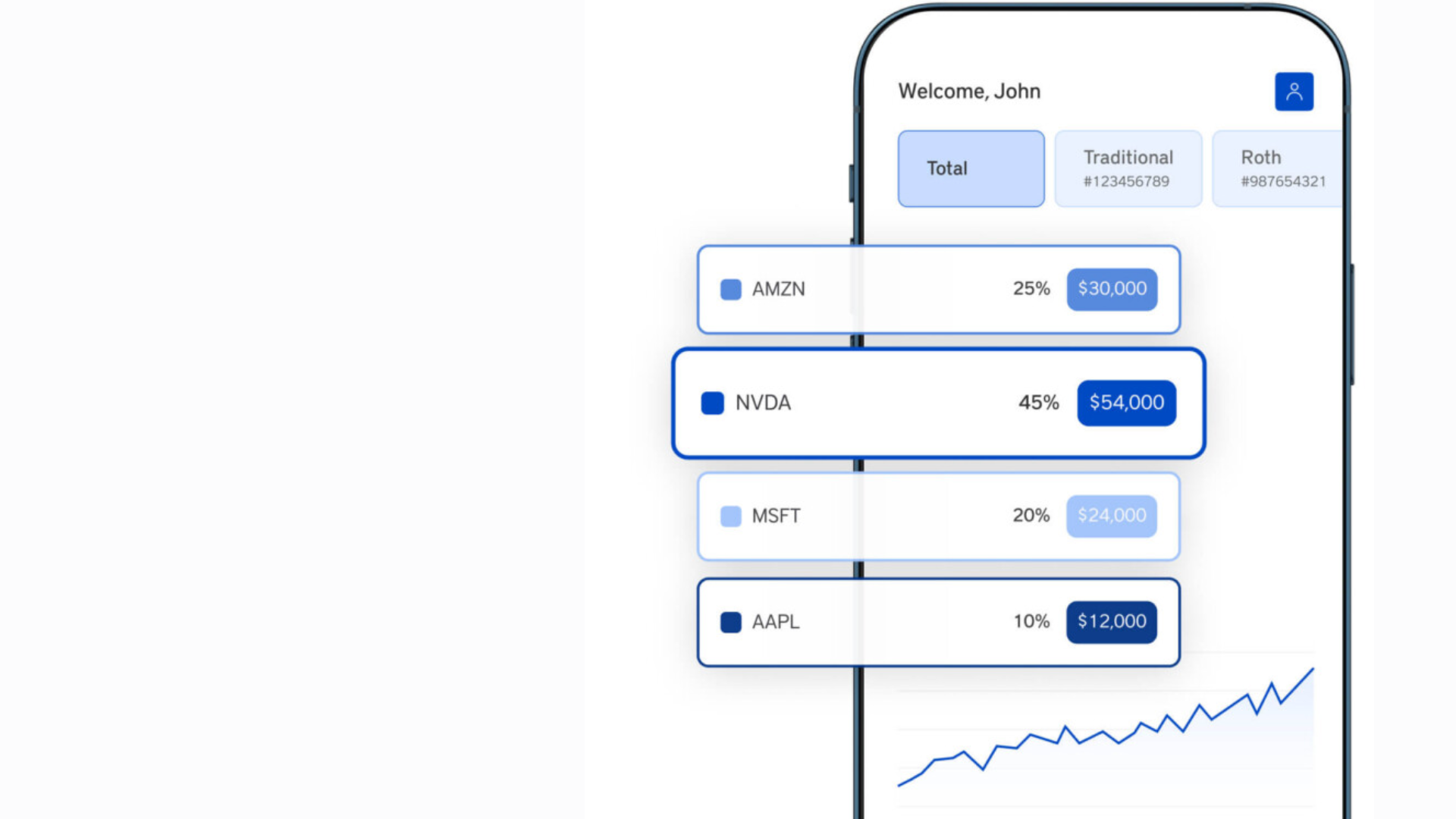
What Is IRA Financial's New Unified Platform? A Smarter Way to Invest in Both Traditional and Alternative Assets
For decades, self-directed investors faced an unavoidable tradeoff. If you wanted to invest in stocks and ETFs, you went to a brokerage. If you wanted to invest in real estate, private equity, or crypto, you went to a self-directed IRA custodian. Two accounts, two fee structures, two sets of tax forms, and two separate logins just to manage one retirement strategy.
IRA Financial has eliminated that tradeoff.
The IRA Financial Unified Platform is the first retirement account solution that combines institutional-grade stock and ETF trading with full access to alternative assets including real estate, private equity, private lending, precious metals, and cryptocurrency, all inside a single account for one flat annual fee.
Key Takeaways:
- What the Unified Platform is and why it is different from anything that existed before
- How the Interactive Brokers integration works for the traditional 40% of your portfolio
- What alternative assets are accessible on the same platform
- How the flat fee structure compares to asset-based models
- Why the August 2025 Executive Order matters for retirement investors
The Problem the Platform Was Built to Solve
The fragmentation of the retirement account industry was never a legal requirement. It was a business model.
Traditional brokerage firms like Fidelity and Schwab built platforms optimized for the assets they could easily manage, trade, and charge fees on: stocks, bonds, and mutual funds. Self-directed custodians built platforms for alternative assets but typically offered no integrated stock trading capability. The result was a bifurcated world where investors who wanted both had to manage multiple accounts, pay multiple fees, and reconcile multiple sets of statements at tax time.
IRA Financial spent sixteen years building toward a solution. The Unified Platform is the result: one account that does both, with none of the operational complexity that previously made the combined strategy inaccessible for most investors.
The Traditional Side: Institutional-Grade Trading Through Interactive Brokers
The 40% traditional anchor of any well-constructed retirement portfolio, the stocks, ETFs, and fixed income that provide liquidity and public market exposure, is now accessible directly inside an IRA Financial account through the firm's integration with Interactive Brokers.
Interactive Brokers is one of the most technologically advanced trading platforms in the world, managing accounts across more than 150 market centers globally. Through the IRA Financial platform, account holders get zero-commission trading on US-listed stocks and ETFs, real-time execution with institutional-grade infrastructure, access to the full range of publicly traded securities, and all of it inside the same account that also holds their real estate, private equity, and crypto positions.
This matters for a specific reason. Rebalancing between the traditional and alternative portions of a portfolio previously required wire transfers between institutions, processing delays of five to ten business days, and coordination between two separate customer service systems. On the Unified Platform, moving capital from a stock position into a private lending note, or from a cash distribution on a real estate investment back into an index fund, happens within a single account interface.
The Alternative Side: The Full Universe of Self-Directed Investing
The alternative asset capabilities of the Unified Platform are the same as those IRA Financial has offered for sixteen years, now integrated with the stock trading functionality rather than operating separately.
Through the platform, a single IRA or Solo 401(k) can hold:
- Real estate: Direct ownership of residential or commercial property, participation in syndications, hard money loans secured by real property
- Private equity and venture capital: Direct investments in private companies, participation in PE or VC funds, pre-IPO placements
- Private lending: Promissory notes, bridge loans, hard money lending to real estate developers
- Precious metals: Physical gold and silver held in IRS-approved depositories
- Cryptocurrency: Direct ownership of Bitcoin, Ethereum, and other digital assets through IRA Financial's platform, with 24/7 trading capability
All of these assets sit alongside the account's stock and ETF holdings on a single dashboard, reported under a single set of annual IRS filings handled by IRA Financial's in-house tax team.
The Fee Structure: One Flat Annual Fee Regardless of Account Size
The Unified Platform operates on IRA Financial's established flat fee model. Account holders pay one annual fee regardless of how many assets the account holds or how large the account grows. There are no asset-based fees, no percentage of assets under management, and no per-transaction charges for alternative asset investments.
The practical implication of a flat fee compounds over time. A $500,000 account growing at 8% annually pays the same annual custodian fee as a $100,000 account. As the account appreciates, the custodian's fee does not grow with it. This is structurally different from asset-based models where the custodian's revenue increases automatically as the account grows, with no additional service being provided in return.
For a detailed comparison of flat fee versus asset-based custodian models and what the difference means over a ten-year holding period, see IRA Financial's guide to Self-Directed IRA Custodian Fee Structures.
Book a free call with a self-directed retirement specialist
- Review your self-directed retirement options
- Learn about investing in alternative assets
- Get all of your questions answered
Why the 2025 Executive Order Matters
On August 7, 2025, President Trump signed an Executive Order directing the Department of Labor to reexamine its guidance on alternative assets in defined-contribution retirement plans and to develop safe harbors that allow fiduciaries to offer alternative asset allocations to plan participants.
The order explicitly states that it is the policy of the United States that every American preparing for retirement should have access to funds that include investments in alternative assets when the relevant plan fiduciary determines that such access provides an appropriate opportunity.
This represents a formal policy shift at the federal level, one that aligns with what IRA Financial has offered individual investors for sixteen years. The regulatory environment that previously created friction for 401(k) plans offering alternative assets is now being actively addressed by the Department of Labor under the direction of the Executive Order.
For self-directed IRA and Solo 401(k) investors, the practical implication is a more favorable regulatory environment for the strategy the Unified Platform is built to execute.
Who the Unified Platform Is Designed For
The platform is designed for investors who want to build a diversified retirement portfolio that includes both traditional and alternative assets, and who want to manage that portfolio without the operational complexity of maintaining accounts at multiple institutions.
Specifically, it is well suited for self-employed investors using a Solo 401(k) who want both checkbook control over alternative investments and direct stock trading capability in the same account, for investors rolling over a 401(k) from a former employer who want to deploy a portion into alternatives without giving up public market access, and for existing IRA Financial clients who previously managed their stock holdings at a separate brokerage and want to consolidate.
Final Thoughts
The Unified Platform is not a product update.
It is a structural change in what a retirement account can do. For the first time, investors who want both the liquidity and growth of public markets and the higher returns of alternative assets do not have to choose between them or manage the complexity of holding both in separate places.
One account, one flat fee, and the full investment universe the tax code has always permitted.

The Most Important Self-Directed IRA Document You Probably Forgot to Update
One of the biggest estate planning mistakes Americans make has nothing to do with trusts, probate, or taxes. It is something far simpler and far more often forgotten.
Failing to update a Self-Directed IRA or 401(k) beneficiary form.
Most people assume their will controls where their retirement account goes after death. In many cases, that assumption is completely wrong. When it comes to IRAs, 401(k)s, and other retirement accounts, the beneficiary designation form generally controls who inherits the account, even if the will says something entirely different.
That reality has created countless family disputes, lawsuits, delayed inheritances, and unintended outcomes. In some cases, millions of dollars have gone to former spouses, estranged family members, or the wrong heirs simply because an old beneficiary form remained on file.
A recent Wall Street Journal article highlighted exactly how devastating these issues can become. The story involved a retired doctor who wanted his retirement account to benefit his 36 grandchildren through carefully designed trusts. Despite extensive estate planning and clear family agreement about his wishes, the retirement assets became trapped in legal limbo after questions arose regarding beneficiary paperwork and spousal waiver rules. Years after his death, the funds still had not been distributed.
The case is a powerful reminder that retirement beneficiary forms are not merely administrative paperwork. They are among the most important estate planning documents a person signs. And if they are outdated, incomplete, or inconsistent with your estate plan, the consequences can be severe.
Key Takeaways:
- Why beneficiary designation forms control retirement account distributions regardless of what your will says
- The Supreme Court cases that established this principle and what they mean for your account
- The most common beneficiary mistakes and how to avoid them
- How the SECURE Act changed inherited IRA rules and why beneficiary planning is now more critical than ever
- Practical steps to protect your retirement legacy
Why Beneficiary Forms Matter So Much
Retirement accounts operate under a unique legal framework. Unlike many other assets, IRAs and employer retirement plans such as 401(k)s and 403(b)s pass by contract law and federal retirement law rather than through a will or probate process. That means the financial institution or retirement plan custodian will generally distribute the account to the beneficiary listed on the most recent valid beneficiary designation form on file.
This principle surprises many families. Someone may spend thousands of dollars creating a trust and estate plan, but if the IRA beneficiary form was never updated, the retirement assets may bypass the estate plan entirely.
Common consequences include a divorced spouse still inheriting the account, minor children receiving assets outright unexpectedly, a second spouse overriding children from a first marriage, assets intended for trusts passing directly to individuals, tax planning strategies failing entirely, and litigation erupting among family members. In many cases, the courts have repeatedly ruled that the beneficiary form controls.
The Main Legal Principle: Beneficiary Forms Generally Override the Will
One of the foundational legal principles in retirement law is that beneficiary designations control retirement account distributions. This rule has been reinforced repeatedly under both state law and federal law, especially under ERISA, the federal law governing most workplace retirement plans.
Kennedy v. Plan Administrator for DuPont Savings and Investment Plan
One of the most important cases in this area is the Supreme Court's 2009 decision in Kennedy v. Plan Administrator for DuPont Savings and Investment Plan. A man named William Kennedy participated in his employer's savings and investment plan. He divorced his wife, and the divorce decree stated that the ex-wife waived her rights to the retirement plan. However, Kennedy never changed the beneficiary form.
When he died, the plan administrator paid the retirement account to the ex-wife because she remained the named beneficiary on the official plan records. His estate sued. The Supreme Court ruled unanimously that the plan administrator properly paid the ex-wife because ERISA requires retirement plans to follow the plan documents and beneficiary designations on file.
The Court essentially said: the beneficiary form controls. Even though the divorce agreement said the ex-wife waived her rights, the plan administrator was still obligated to follow the beneficiary designation form. The case became one of the most important warnings in estate planning history. If you get divorced and fail to update your beneficiary form, your ex-spouse may still inherit your retirement account.
Egelhoff v. Egelhoff
In this case, a Washington state law attempted to automatically revoke beneficiary designations to former spouses after divorce. The Supreme Court ruled that ERISA preempted the state law for employer retirement plans. Again, the key takeaway was clear: the retirement plan administrator must follow the beneficiary form on file. Federal law favors administrative simplicity and certainty. Plan administrators are not expected to investigate wills, family disputes, divorce intentions, or side agreements. They follow the beneficiary form.
The Recent Wall Street Journal Case
The story involving Dr. Ed Lyon shows how even sophisticated estate planning can fail if beneficiary paperwork is not handled perfectly. According to the article, Dr. Lyon and his wife updated their estate plan in 2014 and intended their retirement assets to benefit trusts established for their 36 grandchildren.
Complications arose because questions emerged regarding whether a valid beneficiary update had been properly filed, a power of attorney agent signed certain spousal waiver documentation, the retirement provider later challenged whether the agent had authority to execute the waiver, and the retirement account provider and employer refused to honor the intended beneficiary structure.
The family argued everyone understood the decedent's intent. But intent alone is often not enough in retirement law. The issue became whether the technical requirements for beneficiary designation and spousal consent were strictly satisfied. Retirement law is often extremely technical. A missing signature, invalid witness, improper notarization, outdated form, or incomplete spousal waiver can derail an entire estate plan.
Why Spousal Rights Matter So Much in 401(k) Plans
Many people do not realize that employer retirement plans such as 401(k)s and 403(b)s have special federal spousal protections under ERISA. In most cases, the surviving spouse is automatically entitled to the account, naming someone else generally requires written spousal consent, and the consent often must be notarized or witnessed properly.
This differs from IRAs. Traditional and Roth IRAs generally do not require spousal consent under federal law, although certain state marital property laws may still apply. With 401(k)s, however, failing to properly complete spousal waivers can invalidate beneficiary changes. That appears to be one of the core issues in the Lyon case.
Other Common Beneficiary Mistakes
Forgetting to update after divorce. This is perhaps the most common mistake. A person divorces, remarries, updates their will, but never changes the IRA or 401(k) beneficiary form. Years later, the ex-spouse inherits the retirement account. Courts have repeatedly enforced these beneficiary designations.
Naming minor children directly. If a minor inherits retirement assets directly, a guardianship proceeding may be required. In many cases, it is better to name a properly drafted trust for younger beneficiaries.
Naming the estate instead of individuals. This can create faster taxation, loss of stretch opportunities, probate complications, and reduced creditor protection. In many cases, naming individuals or properly drafted trusts is far more tax efficient.
Failing to update after births, deaths, or major family changes. Families are constantly evolving. Children are born, grandchildren arrive, marriages occur, divorces happen, and loved ones pass away. Yet despite these major life events, many IRA and 401(k) accounts go decades without a beneficiary review. Outdated beneficiary designations can create serious legal disputes, unnecessary taxes, probate complications, and painful family conflict at an already emotional time.
How the SECURE Act Changed IRA Inheritance Rules
Beneficiary planning became even more important after Congress passed the SECURE Act in late 2019. The law dramatically changed how inherited IRAs work for most non-spouse beneficiaries.
Before 2020: The Stretch IRA
Before 2020, most non-spouse beneficiaries could inherit an IRA and stretch required minimum distributions over their lifetime. A 30-year-old child inheriting an IRA could take relatively small annual distributions while most of the account continued growing tax-deferred for decades. This became one of the most powerful wealth transfer tools in retirement planning, which is exactly why the Lyon family case was so significant. The grandchildren potentially lost major tax benefits associated with the pre-2020 lifetime stretch rules.
The SECURE Act and the 10-Year Rule
For most non-spouse beneficiaries inheriting IRAs after 2019, the lifetime stretch was eliminated. Instead, the new rule generally requires the inherited IRA to be fully distributed within 10 years. Annual distributions may or may not be required during the 10-year period depending on circumstances, but the entire account generally must be emptied by the end of year 10. Large inherited IRAs can create major tax acceleration as a result.
Who Still Qualifies for Lifetime Stretch Treatment
Certain eligible designated beneficiaries may still use lifetime distributions, including surviving spouses, disabled individuals, chronically ill individuals, beneficiaries less than 10 years younger than the decedent, and minor children of the account owner until adulthood. Once a minor child reaches the applicable age, the 10-year rule generally begins.
Because of the SECURE Act, families must now consider tax bracket management, trust planning, Roth conversions, multi-generational tax strategies, charitable planning, and timing of distributions. A poorly drafted or outdated beneficiary form can completely destroy sophisticated tax planning.
Simple Steps to Avoid Beneficiary Disasters
Review beneficiary forms every year. Many people review investment performance every month but never review who inherits the account. That is a mistake. At minimum, review your beneficiary designations annually.
Review beneficiaries after major life events. Always update beneficiary forms after marriage, divorce, birth of children, death of a beneficiary, remarriage, retirement, or major estate planning changes.
Coordinate beneficiary forms with your estate plan. Your will, trust, and retirement beneficiary forms should all work together. They should never contradict each other.
Confirm the custodian actually processed the change. One of the most overlooked issues is assuming paperwork was accepted. Always request written confirmation, obtain copies of updated forms, and verify the custodian processed the change correctly. Never assume the paperwork was completed properly.
Be careful with online updates. Many financial institutions allow online beneficiary updates, but even small errors such as entering the wrong percentage allocation, misspelling a name, failing to identify contingent beneficiaries, or not completing the final confirmation step can create significant legal and administrative issues after death. Always review online updates carefully and retain copies of the final confirmation.
Consider trusts carefully. Trusts can be extremely powerful planning tools when used as beneficiaries of an IRA or 401(k), especially for individuals who want greater control over how retirement assets are distributed. However, trust planning involving retirement accounts has become far more complicated after the SECURE Act. If a trust is not drafted correctly, it can unintentionally accelerate taxes, eliminate favorable distribution treatment, or prevent the trust from qualifying as a see-through trust.
Understand spousal consent rules. Married participants in employer-sponsored plans must understand that special spousal protection rules often apply under ERISA. If a married participant wants to name someone other than their spouse as beneficiary, the spouse must formally consent in writing, and that consent typically must be notarized or witnessed by an authorized plan representative. Failure to properly complete spousal consent requirements can invalidate the beneficiary designation entirely.
Keep copies of everything. Maintain copies of beneficiary forms, spousal waivers, trust documents, confirmation letters, and estate planning documents. Families often end up in litigation simply because records cannot be located years later.
Why This Issue Is Growing More Important
America is currently in the middle of one of the largest intergenerational wealth transfers in history. Over the coming decades, trillions of dollars are expected to move from Baby Boomers and older generations to their children, grandchildren, and heirs. A substantial portion of that wealth is held inside retirement accounts.
For many families, retirement accounts now represent one of their largest assets, often exceeding the value of homes, savings accounts, or taxable investment portfolios. A simple administrative mistake, outdated form, or forgotten beneficiary update can lead to enormous consequences. A retirement account worth hundreds of thousands or even millions of dollars could unintentionally pass to the wrong individual, trigger unnecessary taxes, create years of litigation, or completely undermine a carefully designed estate plan.
The emotional impact can be just as devastating. Family members are often forced into legal disputes during an already difficult time, creating stress, delays, and damaged relationships that can last for years.
The Emotional Cost Is Often Worse Than the Tax Cost
What makes these cases especially painful is that many families actually agree about the deceased person's wishes. Yet technical mistakes still trigger litigation, delays, and conflict.
The Wall Street Journal case is a perfect example. The family appeared aligned regarding Dr. Lyon's intentions, but the retirement assets still became trapped in legal uncertainty because of beneficiary documentation issues. Families can spend years and hundreds of thousands of dollars fighting over paperwork, all while grieving a loved one.
The Importance of Ongoing Compliance and Reviews
Estate planning and retirement planning should never be viewed as a one-and-done exercise. Life circumstances, tax laws, retirement rules, and family dynamics are constantly changing. A beneficiary form that accurately reflected a person's wishes 10 or 15 years ago may no longer align with their current family structure, financial goals, or estate planning strategy today.
Major legislative changes such as the SECURE Act and SECURE 2.0 significantly changed inherited IRA distribution rules, required minimum distribution requirements, and long-term tax planning strategies for beneficiaries. Yet many individuals open an IRA or 401(k) account early in their career, complete a beneficiary form once, and never review it again.
To help clients avoid these costly mistakes, IRA Financial's Annual Compliance Shield program includes IRA beneficiary update assistance as well as one-on-one tax consultations involving estate planning, retirement tax strategies, inherited IRA rules, and ongoing compliance guidance. The goal is to help clients proactively review and maintain their retirement accounts so their assets ultimately pass according to their wishes and in the most tax-efficient manner possible.
Regular reviews can help ensure beneficiary forms remain current, estate plans stay coordinated, SECURE Act changes are addressed, trust structures remain compliant, tax strategies stay optimized, and family intentions are properly documented.
Final Thoughts
Most people spend far more time planning a vacation, researching a new car, or reviewing their investment performance than they do reviewing their Self-Directed IRA or 401(k) beneficiary forms. Yet those simple beneficiary designation forms may ultimately determine who inherits some of the largest and most important financial assets they own.
The law in this area is generally very clear. In most cases, the beneficiary designation form on file with the retirement account custodian or plan administrator controls who receives the retirement assets after death. Not the will. Not verbal promises made to family members. Not handwritten notes left behind. Not informal understandings among relatives. And not even what the deceased person probably intended if the paperwork says otherwise.
Courts across the country, including the United States Supreme Court, have repeatedly enforced beneficiary designations exactly as written, even when the result appeared unfair or inconsistent with the decedent's broader estate plan.
The recent Wall Street Journal case involving a large retirement account intended for 36 grandchildren serves as a powerful reminder of how devastating these issues can become. Despite extensive estate planning efforts and a clear understanding of the account owner's wishes, questions surrounding beneficiary paperwork and spousal consent rules left the inheritance tied up in legal uncertainty for years.
Fortunately, many of these problems are entirely preventable. A simple beneficiary review today can help avoid years of litigation, unnecessary taxes, delayed inheritances, and painful family conflict later. Reviewing and updating beneficiary forms regularly, especially after major life events or changes in the law, is one of the simplest yet most important steps an individual can take to protect their family and preserve their retirement legacy.
When it comes to retirement and estate planning, updating your IRA and 401(k) beneficiary forms may ultimately be one of the most important financial and estate planning decisions you ever make.

How to Open an HSA With IRA Financial: Onboarding Timeline, Responsibilities, Costs, and 5 Common Pitfalls
Opening a Health Savings Account (HSA) with IRA Financial is a different experience from opening a traditional HSA at a bank or brokerage. IRA Financial specializes in Self-Directed HSAs, which means the account is built for investors who want full control over how their HSA funds are invested, including alternative assets like real estate, private funds, and other non-traditional investments.
Key Takeaways:
- The onboarding timeline from application to first investment
- Who is responsible for what during the process
- What it costs
- The most common mistakes to avoid
What an HSA With IRA Financial Is (and Is Not)
It helps to understand what you are signing up for before you get started.
An HSA with IRA Financial is:
- A Self-Directed HSA that allows non-traditional investments
- Designed for long-term investing, not day-to-day medical spending
- Built for investors who want checkbook control or direct investment authority
It is not:
- A consumer banking HSA for swiping a debit card at the pharmacy
- A robo-invested or set-and-forget account
- A good fit for people who need frequent reimbursements or prefer simplicity
If that description fits your goals, here is exactly how the process works from start to finish.
Step-by-Step Onboarding Timeline
Step 1: Account Setup and Documentation
The first step is about getting the account structure established and the paperwork in order.
What you do:
- Complete IRA Financial's HSA application
- Select your account structure (standard self-directed or checkbook control)
- Provide ID and basic compliance information
- Sign custodial and administrative agreements
What IRA Financial does:
- Reviews your documentation
- Establishes the HSA with a qualified custodian
- Prepares entity documents if checkbook control is selected
Typical timeframe: 3 to 7 business days
Step 2: Funding the HSA
Once the account is established, the next step is getting money into it.
Funding options:
- Transfer or rollover from an existing HSA
- New annual HSA contributions
- Employer contributions (if supported by your payroll setup)
What you do:
- Initiate the transfer or contribution
- Coordinate with your current HSA provider if transferring
What IRA Financial does:
- Coordinates with the custodian to receive funds
- Confirms proper HSA classification to preserve tax treatment
Typical timeframe: 5 to 15 business days, depending on your current HSA provider
Step 3: Investment Access Goes Live
Once funded, the account is fully operational.
- Funds are available for investment
- If using checkbook control, your HSA LLC bank account is active
- You can deploy capital into approved investments
Most investors are up and running within three weeks from the time they submit their application.
Who Does What
This is one of the most important things to understand about a self-directed HSA. The division of responsibility is different from what most people are used to.
Your Responsibilities
As the HSA holder, you are responsible for:
- Choosing investments
- Ensuring investments are HSA-eligible
- Avoiding prohibited transactions
- Tracking qualified medical expenses
- Maintaining receipts for reimbursements
- Monitoring potential UBIT and UDFI exposure
IRA Financial does not approve or vet investments for suitability. That responsibility rests with you.
IRA Financial's Responsibilities
IRA Financial:
- Establishes and administers the HSA structure
- Handles custodial compliance and reporting
- Provides documentation for self-directed investments
- Processes investment-related paperwork
- Files required tax forms related to the account structure, not your personal return
IRA Financial is an administrator and facilitator, not an investment advisor.
What It Costs
IRA Financial offers two pricing tiers depending on the level of control you want.
| Plan | Setup Fee | Annual Fee | Transaction or Asset Fees |
| Custodian Control | Free | $120 | None |
| Checkbook Control | $999 | $495 | None |
Neither plan charges transaction fees or asset value fees, so your costs stay predictable regardless of how your account grows or how often you invest.
The tradeoff between the two plans comes down to speed and control. Custodian Control is the lower-cost entry point and works well for investors who do not need to execute time-sensitive transactions. Checkbook Control carries a higher price but gives you direct investment authority through an HSA LLC bank account, which means you can act on investments without waiting for custodian approval.
Self-Directed HSAs cost more than traditional HSAs. The tradeoff is investment flexibility, not convenience.
Common Pitfalls and How to Avoid Them
Pitfall 1: Treating It Like a Regular HSA
Self-Directed HSAs are not designed for frequent medical reimbursements or everyday debit card use. This structure is built for long-term investing.
How to avoid it: Pay medical expenses out of pocket when possible and use the account for investing. Save receipts for future reimbursement when it is strategically advantageous.
Pitfall 2: Prohibited Transactions
Using HSA funds for personal benefit or transacting with disqualified persons can disqualify the entire account, triggering taxes and penalties on the full balance.
How to avoid it: Never invest in assets you personally use or control outside the HSA structure and avoid family or related-party deals.
Pitfall 3: Ignoring UBIT and UDFI
Certain investments, including operating businesses and leveraged real estate, can trigger taxes inside the HSA that most investors do not anticipate.
How to avoid it: Understand the tax implications of each investment structure before funding and consult a knowledgeable tax professional when needed.
Pitfall 4: Poor Recordkeeping
HSAs require strong documentation, especially if you plan to use the delayed reimbursement strategy to maximize long-term growth.
How to avoid it: Maintain a digital archive of all medical receipts and investment records from the day the account opens.
Pitfall 5: Opening the Account Before Confirming HDHP Eligibility
HSA eligibility depends on being enrolled in a qualified High-Deductible Health Plan. Contributing without confirmed eligibility can create a tax problem.
How to avoid it: Confirm your HDHP enrollment before contributing or rolling over any funds.
Who an HSA With IRA Financial Is Best For
This setup is a strong fit for:
- High earners who are already maxing out traditional retirement accounts
- Investors seeking alternative assets inside a tax-advantaged structure
- Individuals using their HSA as a long-term retirement vehicle
- Those who are comfortable with self-direction and the compliance responsibility that comes with it
It is not the right fit for investors seeking simplicity or those who rely on their HSA for regular medical spending.
Final Thoughts
An HSA with IRA Financial is a powerful but specialized tool. The onboarding process is straightforward, but the ongoing responsibility rests heavily with the account holder. When used correctly, it offers investment flexibility and long-term tax advantages that most retirement savers never access. When used without a clear understanding of the rules, it can create costly and avoidable mistakes.
For investors who value control and long-term strategy over convenience, this structure delivers exactly what it promises.

How IRA Financial's New Platform Works
IRA Financial's Unified Platform combines stock and ETF trading, alternative asset investing, and cryptocurrency access inside a single retirement account. This guide explains how each component works, how they connect, and what the account setup and investment process looks like from start to finish.
Key Takeaways:
- How the new platform powered by Interactive Brokers enables real-time stock and ETF trading inside your IRA
- How alternative asset investments are executed through the same account
- How cryptocurrency is handled on the platform
- What the account setup process looks like
- How IRS reporting and compliance works across all asset types
The Two Sides of the Platform
The Unified Platform operates on two integrated rails: a traditional trading infrastructure powered by Interactive Brokers and a self-directed alternative asset infrastructure that IRA Financial has operated for sixteen years.
Neither component is new on its own. What is new is the integration. Before the Unified Platform, an investor who wanted both stock trading capability and alternative asset access needed two separate accounts at two separate institutions. The Unified Platform makes both available within the same account, under the same custodian, with one annual flat fee.
The Traditional Rail: Stock and ETF Trading Through Interactive Brokers
For the publicly traded portion of a retirement portfolio, the platform provides institutional-grade trading capability through Interactive Brokers, one of the world's largest electronic trading platforms with operations across more than 150 market centers globally.
Through this integration, IRA Financial account holders can:
- Trade US-listed stocks and ETFs with zero commissions
- Access real-time market data and execution
- Hold positions in publicly traded securities alongside alternative assets in the same account
- Rebalance between traditional and alternative holdings within the same account interface
All other trades beyond US-listed stocks and ETFs are subject to IBKR Lite pricing. The integration does not require a separate Interactive Brokers account. Trading happens directly through the IRA Financial platform, with all assets held under the IRA's custodial structure.
The Alternative Asset Rail: Self-Directed Investing Without Custodian Delays
For the alternative asset portion of the portfolio, the platform operates the same way IRA Financial's self-directed accounts have always worked, with full checkbook control available through the Solo 401(k) structure and the Checkbook IRA structure.
Real estate: The IRA or Solo 401(k) can purchase real property directly, invest in real estate syndications, or originate hard money loans secured by real property. All expenses related to IRA-owned property must be paid from the account, and all income must flow back to the account. IRA Financial's in-house team handles the documentation and processing required for each transaction.
Private equity and venture capital: The account can invest as a limited partner in private funds, participate in direct private placements, or hold equity in private companies, subject to the prohibited transaction rules under IRC Section 4975.
Private lending: The account can originate promissory notes and act as a private lender to individuals or businesses. Interest income flows back to the account tax-deferred or tax-free depending on account type.
Precious metals: Physical gold and silver can be held through IRS-approved depositories. IRA Financial coordinates the purchase, delivery to depository, and annual valuation required for Form 5498 reporting.
For investors using checkbook control through a Solo 401(k) or Checkbook IRA LLC, alternative asset investments can be executed directly from the account's dedicated bank account without custodian processing delays. For custodian-directed alternative investments, IRA Financial processes transactions typically within standard business timelines.
Cryptocurrency on the Platform
Cryptocurrency is accessible directly through the IRA Financial platform with 24/7 trading capability. Account holders can buy, sell, and hold Bitcoin, Ethereum, and a range of other digital assets.
Crypto assets are held with institutional-grade security, with the majority of digital assets stored in cold storage. The platform provides real-time pricing and execution, not end-of-day settlement like many competing providers.
Gains from cryptocurrency held inside the IRA grow tax-deferred in a traditional account or tax-free in a Roth account. There are no capital gains tax events on trades executed inside the account. IRA Financial's tax team handles annual fair market value reporting on Form 5498 and any Form 990-T obligations that arise from specific crypto strategies. For a detailed breakdown of crypto IRA tax reporting, see IRA Financial's guide to Crypto IRA Tax Reporting.
Book a free call with a self-directed retirement specialist
- Review your self-directed retirement options
- Learn about investing in alternative assets
- Get all of your questions answered
Account Setup: How to Get Started
Setting up an account on the Unified Platform involves four steps.
Step 1: Open the account. An IRA or Solo 401(k) is established through IRA Financial's online application. The account type, Traditional IRA, Roth IRA, SEP IRA, or Solo 401(k), is selected based on the investor's employment situation, income, and tax strategy.
Step 2: Fund the account. The account is funded through a direct transfer from an existing IRA, a direct rollover from a 401(k) or other employer-sponsored plan, or a new contribution up to applicable annual limits. IRA Financial handles the transfer and rollover process directly, coordinating with the outgoing custodian.
Step 3: Set up stock trading access. Once funded, the Interactive Brokers integration is activated within the account, enabling real-time stock and ETF trading.
Step 4: Make investments. Traditional and alternative investments can be initiated through the platform. For checkbook control accounts, the account's dedicated bank account provides direct investment authority for alternative assets.
The typical setup timeline from application to investment-ready account is two to three weeks, depending on the source of funds and the complexity of any rollover documentation required.
IRS Reporting and Compliance
One of the primary operational advantages of the Unified Platform is consolidated IRS reporting. All assets held in the account, stocks, ETFs, real estate, private equity, crypto, and precious metals, are reported under a single Form 5498 filed by IRA Financial annually.
The flat annual fee includes:
- Annual Form 5498 filing with fair market value determinations for all alternative assets
- Form 1099-R preparation for any distributions
- Form 5500-EZ filing for Solo 401(k) accounts once plan assets exceed $250,000
- Annual consulting on contribution limits, prohibited transaction compliance, and account structure
For clients who want additional compliance coverage, IRA Financial's Annual Compliance Service is available for $299 per year, with the first year free for existing clients. This add-on includes preparation and filing of Form 1065 for IRA LLC partnership returns, Form 990-T for UBIT-related income, unlimited year-round access to SDIRA tax professionals, expedited support, and transaction review when custodian documentation is required. The service carries an estimated annual value of over $1,500.
Fee Structure Summary
| Account Type | Setup Fee | Annual Fee |
|---|---|---|
| Self-Directed IRA | $0 | $495 |
| Checkbook IRA LLC | $999 | $495 |
| Solo 401(k) | $999 | $399 |
| Crypto | $0 | $100 + 1% per trade |
| HSA | $0 | $120 |
| Coverdell ESA | $0 | $120 |
Stock and ETF trading: $0 commissions on US-listed stocks and ETFs. All other trades subject to IBKR Lite pricing.
Read more: IRA Financial Fee Schedule
Conclusion
The Unified Platform consolidates what previously required two or three separate custodial relationships into a single account with one annual fee and one set of IRS filings. For investors who want to execute a diversified retirement strategy across both traditional and alternative assets, the operational simplicity of doing that in one place is as valuable as any individual feature the platform offers. To get started or to speak with a specialist about transitioning from your current custodian, visit irafinancial.com.

Stop Choosing Between Stocks and Alternatives. Your IRA Can Hold Both.
I get this question more than almost any other. Someone calls me, they have been self-directing for a few years, maybe they own a rental property or two inside their IRA, and they ask me whether they should move their stock portfolio over as well. Or the reverse: someone with a Brokerage IRA asks whether they need to open a completely separate account to start investing in alternatives.
The answer to both questions used to be complicated. It is not anymore.
Key Takeaways:
- Why the traditional choice between Brokerage IRAs and Self-Directed IRAs was never a legal requirement
- What you actually give up by keeping your retirement split across two institutions
- How the 60/40 model works inside a single unified account
- Why tax-free compounding is more powerful when both buckets compound together
- What the combined strategy looks like in practice for three types of investors
The False Choice Wall Street Created
For as long as I can remember, investors have been told they need to choose. You either have your IRA at Fidelity or Schwab with easy stock trading and a clean interface, or you have a Self-Directed IRA with a specialty custodian where you can buy real estate and private equity but where trading a stock requires paperwork and manual direction.
That choice was never written into the tax code. It was written into the business models of the institutions that custody retirement assets.
Traditional brokerages make money on the assets they manage. They have no financial incentive to help you move capital into a rental property or a private lending note because they cannot charge a management fee on those assets. Self-directed custodians have historically focused on alternative asset administration and have not built the technology infrastructure for institutional-grade stock trading.
The result was that investors who wanted both were forced to pay two sets of fees, maintain two separate accounts, and do the mental accounting of tracking a retirement strategy split across different institutions.
That is the problem I spent the last several years solving at IRA Financial.
What You Lose by Keeping Stock Trading & Alternative Investments Separate
Most investors think of the cost of running two accounts as the inconvenience of two logins and two fee payments. The real cost is more significant.
When your traditional and alternative holdings live in separate accounts, moving capital between them is slow. A cash distribution from a rental property inside your Self-Directed IRA takes days to transfer to your brokerage where you might want to deploy it into a stock position. When you want to rebalance, pulling money from one bucket to add to another requires coordination between two institutions, both of whom have their own processing windows and requirements.
More importantly, you lose the ability to see your full retirement picture in one place. A coherent 60/40 strategy, where you intentionally hold 60% in alternatives for growth and 40% in traditional assets for liquidity, is genuinely difficult to manage when the two halves of the strategy live in separate institutions with separate statements.
The administrative friction is not just annoying. It costs you time, and in a retirement account, time is the most valuable asset you have.
The 60/40 Strategy Works Better in One Account
The way I think about retirement investing, and the way I have seen the most successful investors I have worked with think about it, is not stocks versus alternatives. It is stocks and alternatives working together.
The 60% alternative allocation, anchored in real estate, private lending, private equity, and where appropriate, digital assets, is the growth engine. These assets carry the illiquidity premium that produces higher long-term returns precisely because most investors do not have the patience or the legal structure to hold them.
The 40% traditional allocation, index funds and cash equivalents held inside the same account, serves a completely different purpose. It is not there to outperform. It is there to provide liquidity, to ensure you are never a forced seller of your alternatives at the wrong time, and to capture the long-term growth of the public equity markets as a secondary engine.
When both halves live in the same account, managed under the same fee structure and visible on the same dashboard, the strategy becomes coherent and executable. When they live in separate accounts, the strategy becomes theoretical.
Book a free call with a self-directed retirement specialist
- Review your self-directed retirement options
- Learn about investing in alternative assets
- Get all of your questions answered
The Tax-Free Compounding Argument
Here is the part that most people underestimate.
In a taxable account, when your rental property distributes rental income, you owe taxes on it immediately. If you want to reinvest those proceeds into a stock position, you are reinvesting after-tax dollars.
Inside a unified IRA, when your rental property distributes income, those dollars stay inside the tax-free or tax-deferred wrapper. You can reinvest the full dollar amount into a stock position, a private loan, a new property, or anything else inside the account, without a tax event. The compounding base stays intact.
Over a 20 or 30-year holding period, the difference between reinvesting the full dollar and reinvesting the after-tax dollar is not marginal. It is the compounding of the gap, year over year, that builds the real difference between retiring comfortably and retiring with genuine financial sovereignty.
This is why the structure matters as much as the asset selection. The right asset in the wrong structure gives up a significant portion of its return. The same asset inside a Roth SDIRA keeps every dollar of that return compounding toward a tax-free outcome.
What This Looks Like in Practice
For the self-employed investor: A Solo 401(k) through IRA Financial with checkbook control gives you direct investment authority over both your alternative positions and your stock holdings. Your private lending note and your S&P 500 index fund sit in the same account, managed by you as trustee, with one annual flat fee covering both.
For the rollover investor: You roll a former employer's 401(k) into an IRA Financial self-directed account. A portion goes into a real estate syndication. A portion goes into an index fund. Both sit in the same account, both compound tax-deferred, and you see both on the same statement.
For the existing self-directed investor: If you have been self-directing alternatives at IRA Financial for years while keeping your stocks at a separate brokerage, you can now consolidate. Your existing alternative positions stay exactly as they are. You gain the ability to trade stocks and ETFs directly inside the same account rather than maintaining a second relationship with a separate institution.
The question of traditional versus alternative is the wrong frame. The better question is which account structure gives you access to both, keeps the full compounding power of every dollar inside the tax wrapper, and does it for one flat fee.
IRA Financial built that account. It is available now.
Final Thoughts
The retirement account that holds both your index funds and your private lending notes, compounds every dollar of income inside the same tax wrapper, and charges a single flat fee regardless of how large it grows is no longer a hypothetical. It exists. The question is not whether the combined strategy works. Sixteen years of client outcomes have answered that. The question is whether you are still paying the operational and financial cost of keeping the two halves of that strategy in separate places.

Self-Directed Retirement Providers That Let You Invest in Both Crypto and Private Equity
Can you invest in cryptocurrency and private equity inside the same retirement account?
Yes! With the right self-directed retirement plan, you can hold both asset classes within a single tax-advantaged structure.
Traditional brokerage IRAs limit you to stocks, mutual funds, and ETFs. A Self-Directed IRA or Solo 401(k), however, allows you to diversify into alternative investments, including digital assets and private placements.
At IRA Financial, investors use self-directed retirement accounts to gain broader control over their retirement capital while maintaining full IRS compliance.
Key Takeaways
- How to invest in crypto through your retirement plan
- How private equity works inside an IRA or Solo 401(k)
- Key compliance and liquidity considerations
- How to evaluate self-directed retirement providers
- Practical steps to get started
What Is a Self-Directed Retirement Plan?
A self-directed retirement plan expands what you can invest in.
The two most common structures are:
Both allow you to invest beyond traditional markets and into:
The account remains tax advantaged. The difference is that you direct the investments.
The custodian or plan administrator ensures assets are properly titled, recorded, and reported to the IRS. You maintain control over investment decisions.
This structure empowers investors while preserving compliance.
Self-Directed IRA vs Solo 401(k): Key Differences
Choosing the right account matters.
Self-Directed IRA
- Available to most investors
- Requires a qualified custodian
- Annual contribution limits apply
- Subject to IRA prohibited transaction rules
Self-Directed Solo 401(k)
- Designed for self-employed individuals or business owners with no full-time employees
- Higher contribution limits
- May allow checkbook control
- Greater transactional flexibility
At IRA Financial, many business owners choose the Solo 401(k) for its contribution flexibility and control features.
How to Invest in Crypto Through Your Retirement Plan
A Crypto IRA is simply a Self-Directed IRA or Solo 401(k) that holds digital assets.
To invest in cryptocurrency through your retirement plan:
- Open a Self-Directed IRA or Solo 401(k)
- Fund the account via rollover, transfer, or contribution
- Select supported cryptocurrencies
- Execute trades through approved custodial channels
IRA Financial supports digital asset investing through compliant account structures while maintaining clear reporting and transparent pricing.
Fees at IRA Financial
- $100 annual account fee
- 1% fee per crypto trade
Flat, transparent pricing helps investors understand costs upfront. There are no asset-based custody fees that increase as your account grows.
This clarity supports long-term retirement planning.
Crypto Custody and Security
In retirement accounts, security and compliance matter as much as performance.
When evaluating any crypto retirement provider, confirm:
- How private keys are secured
- Whether institutional custody partners are used
- How transactions are reconciled
- How reporting is handled
IRA Financial works within structured custody arrangements that support IRS compliance while allowing access to major digital assets.
Ownership remains inside your retirement account. Personal possession of IRA-owned crypto is not permitted under IRS rules.
How Private Equity Works Inside a Retirement Account
Private equity inside a Self-Directed IRA or Solo 401(k) can include:
- Direct investments in private companies
- Private equity funds
- Venture capital investments
- Secondary private market purchases
These investments require:
- Proper subscription agreements
- Clear titling to the retirement account
- Ongoing valuation documentation
- Handling of capital calls and distributions
IRA Financial assists investors with plan documentation and compliance support to ensure private placements are properly structured.
Book a free call with a self-directed retirement specialist
- Review your self-directed retirement options
- Learn about investing in alternative assets
- Get all of your questions answered
Managing Liquidity: Crypto and Private Equity Together
Crypto is volatile but liquid. Private equity is typically stable but illiquid.
Combining both inside a retirement account requires planning.
Best practices include:
- Maintaining a liquidity reserve for Required Minimum Distributions
- Planning for capital calls in private equity investments
- Avoiding concentration risk
- Reviewing valuation schedules
Balancing liquid and illiquid assets supports long-term stability inside a retirement plan.
Comparison: Self-Directed Retirement Providers Supporting Crypto and Private Equity
Not all custodians support both digital assets and private placements. Some focus heavily on crypto. Others focus primarily on private equity and alternative assets.
The table below highlights major self-directed retirement providers, whether they support crypto and private equity, and their general annual pricing structures.
| Provider | Crypto Support | Private Equity Support | Annual Fee Structure (Approximate) | Notes |
|---|---|---|---|---|
| IRA Financial | Yes | Yes | $495 annually + 1% per crypto trade | Flat pricing, Solo 401(k) and checkbook control options, no asset-based fees |
| Equity Trust | Yes (via partners) | Yes | $249 annually + setup+ asset valuation fees | Asset-based or tiered pricing; broad alt support |
| Entrust Group | Yes | Yes | $219-$329 annually + set up+ asset valuation fees | Strong private placement support |
| Alto IRA | Yes | Limited | $150-$400 annually | Has marketplace for alt assets |
| Rocket Dollar | Yes (via partners) | Yes | $360-$600 annually, + set up fee | Tiered pricing, has marketplace for investments |
| Directed IRA | Yes | Yes | $495 annually + setup fee + asset holding fee (4+ assets) + .50% per trade | Strong alt asset focus |
| Directed IRA | Yes | Yes | $495 annually + setup fee + asset holding fee (4+ assets) + .50% per trade | Strong alt asset focus |
| BitcoinIRA | Yes | No | $0 setup fee + 2% per crypto trade + monthly account fee (.08% of assets) | Crypto-only IRA platform |
| iTrustCapital | Yes | No | $0 annual + 1% per crypto trade | Crypto and precious metals only, stocks coming soon |
Pricing as of May 2026. Pricing subject to change. Verify directly with provider.
How to Read This Comparison
1. Asset Capability
Some providers technically allow both crypto and private equity, but the experience may differ significantly.
Crypto support may require third-party custody.
Private equity may involve manual subscription processing.
Not all platforms integrate both seamlessly.
2. Fee Structure
There are generally three models:
- Flat annual fee
- Asset-based fee (percentage of account value)
- Monthly subscription + transaction fees
Flat fees can become more cost-effective as account balances grow. Asset-based pricing increases as your portfolio grows.
3. Operational Support
Private equity requires:
- Capital call processing
- Ongoing valuation documentation
- Subscription review
- Proper titling
Crypto requires:
- Secure custody structure
- Trade execution clarity
- Reporting for IRS compliance
The right provider is not just about asset access. It's about operational reliability.
Where IRA Financial Fits in This Landscape
- Flat annual account fee
- 1% per crypto trade
- Self-Directed IRA and Solo 401(k) structures
- Checkbook control options for Solo 401(k)s
- Support for both private equity and cryptocurrency
- Dedicated compliance and audit protection support
Unlike asset-based pricing models, IRA Financial’s structure does not increase as account balances grow.
This pricing transparency can be especially valuable for investors holding both appreciating crypto assets and long-term private equity positions.
Key Risks and Compliance Considerations
- Prohibited transaction rules
- Disqualified person restrictions
- Proper asset titling
- Accurate valuation reporting
- Potential UBTI exposure in certain structures
Violations can jeopardize the tax-advantaged status of the account. Working with an experienced self-directed provider reduces this risk.
How to Get Started
- Determine whether a Self-Directed IRA or Solo 401(k) fits your situation
- Open your account with IRA Financial
- Fund via rollover, transfer, or contribution
- Select your crypto and private investments
- Maintain proper documentation and liquidity planning
With the right structure, you can diversify beyond traditional markets while preserving tax advantages.
FAQ: Investing in Crypto and Private Equity Through a Retirement Plan
What self-directed retirement providers allow crypto and private equity investments?
Self-directed retirement providers that offer Self-Directed IRAs or Solo 401(k) plans can allow both cryptocurrency and private equity investments. The provider must support digital asset custody, private placement documentation, and IRS-compliant reporting. IRA Financial offers account structures that support both asset classes within tax-advantaged retirement plans.
Can I invest in crypto and private equity in the same Self-Directed IRA?
Yes. A Self-Directed IRA can hold both cryptocurrency and private equity investments, provided the custodian supports each asset type and all transactions comply with IRS rules. Proper documentation and valuation reporting are required to preserve the account’s tax-advantaged status.
What are the fees for a Crypto IRA with IRA Financial?
IRA Financial charges a flat $100 annual account fee and a 1% fee per crypto trade. This pricing structure avoids asset-based custody fees that increase as account balances grow.
Is it legal to hold cryptocurrency in a retirement account?
Yes. The IRS treats cryptocurrency as property. It can be held inside a Self-Directed IRA or Solo 401(k) as long as it's maintained by a qualified custodian and the account follows prohibited transaction rules.
How does private equity valuation work inside a retirement account?
Private equity investments inside retirement accounts require periodic valuation documentation. Custodians may rely on issuer-provided reports or independent appraisals to reflect fair market value for reporting purposes.
What are the risks of combining crypto and private equity in a retirement plan?
Crypto carries volatility risk. Private equity carries illiquidity risk. Additional risks include prohibited transaction violations and valuation complexity. Maintaining liquidity reserves and working with an experienced provider helps mitigate these risks.